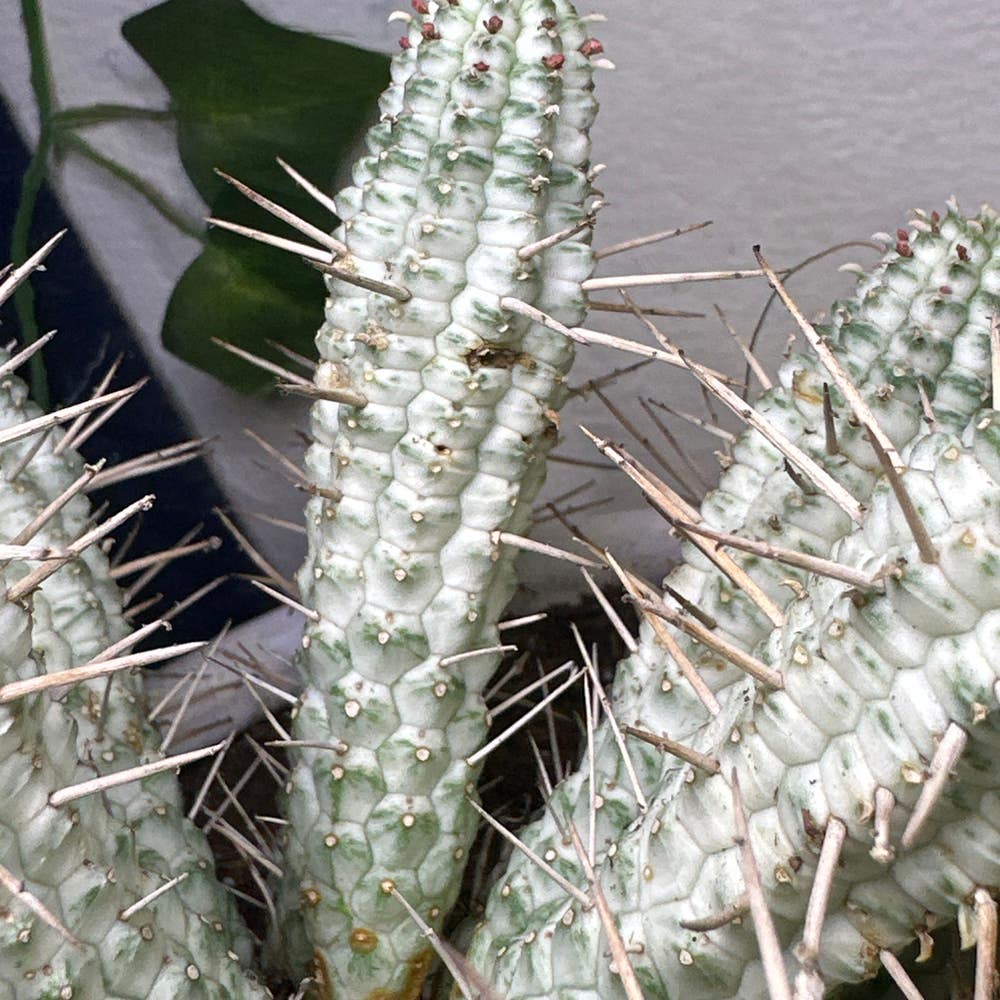
Why Are There Brown Spots on My Corncob Cactus Leaves?
Euphorbia venefica
By the Greg Editorial Team
Jun 18, 2024•5 min read
This article was created with the help of AI so we can cover more plants for you. May contain errors. See one? Report it here.
- Sunburn, overwatering, or infections cause brown spots on Corncob Cactus.
- Adjust light and water to prevent and treat brown spots effectively.
- Prevent with cleanliness and vigilance for early signs of trouble.
Spotting the Trouble: Identifying Brown Spots
🚨 Visual Symptoms
Brown spots on your Corncob Cactus can be alarm bells. They might show up as tiny dots or evolve into larger patches, and their texture can range from crispy to mushy. Sunburn typically leaves a pale brown mark, while a fungal issue might present with a yellowish ring.
🛑 Possible Immediate Causes
Common causes of these spots include sunburn, overwatering, and fungal infections. Overwatering invites fungal gatecrashers, while too much sun can scorch your cactus like a tourist who forgot their sunscreen. Keep an eye out for dark, concentric circles or dry, spreading patches—these are your cactus crying out for help.

Sunburn Strikes: When Your Cactus Gets Too Much Sun
⛱️ Recognizing Sunburn on Cactus
Cacti aren't immune to the scorching effects of the sun. Brown spots from sunburn often present as flat, discolored patches. These can range from light brown to nearly black, and they're not just unsightly—they're signs of distress. If the most sun-exposed side of your cactus resembles a well-done steak, it's time to reassess its sunbathing habits.
🕶️ Shading Strategies
Protection is key to prevent your cactus from turning into a crispy critter. Start by positioning your plant in a spot that enjoys bright, but indirect light. Think of it as putting your cactus in the plant equivalent of the shade under a palm tree. Sheer curtains can serve as sunglasses, filtering out the harshest rays. And remember, if your cactus has already taken a hit, shade it immediately to prevent further damage. It's all about creating a sun-safe zone—your cactus's personal oasis from the relentless sun.

Water Woes: The Over and Under of It
💧 Signs of Watering Issues
Identifying brown spots related to both overwatering and underwatering can be tricky. Overwatering often leads to a soggy soil feel and a swampy pot environment. Leaves may appear swollen and burst, creating brown spots. Underwatering, however, leaves the soil dry and your cactus looking deflated, with brown spots indicating a cry for moisture.
Fine-Tuning Your Watering Routine
To get your watering schedule just right, start with checking soil moisture. Stick your finger an inch deep; if it's dry, it's time to water. Ensure your pot has drainage holes to avoid waterlogging. Adjust for weather changes—more water during heat, less when cool. If overwatering is a habit, switch to a well-draining soil mix. Remember, consistency is key; erratic watering leads to stress and those dreaded brown spots.

Battling the Invisible: Fungal and Bacterial Foes
🦠 Spotting the Signs of Infection
Fungal and bacterial infections in cacti are the cloak-and-dagger enemies of plant health. Discolored spots with yellow halos or dark margins are the telltale signs of these stealthy invaders. Unlike sunburn, which results in flat, smooth patches, infections manifest as lesions that can be sunken or raised. If you see tiny black dots or a fuzzy white growth, consider it an SOS from your cactus. These are often fungal fruiting bodies or mold, and they signal it's time to take action.
🛡️ Infection Intervention
When it comes to treatment, think of fungicides and bactericides as your cactus's personal bodyguards. Copper-based fungicides are the heavy hitters in this fight, but they're not a one-size-fits-all solution. Check compatibility with your specific cactus species before application. For bacterial battles, bactericides can turn the tide, but timing is crucial—early intervention is key. Always apply treatments according to the label's instructions, and remember, less is often more.
Pruning infected areas is like cutting off a route of infection—do it with sterilized tools to prevent spreading the disease. Improving air circulation and ensuring the plant dries out properly between waterings are your preventive shields. And never underestimate the power of cleanliness; keeping the area free of fallen leaves and debris can stop spores from throwing their next party on your plant.
Prevention: The Best Cure for Brown Spots
🌞 Sunlight and Water Harmony
Balancing your Corncob Cactus's exposure to sunlight and water is crucial for preventing those unsightly brown spots. Just like you wouldn't want to spend a day in the desert without a water bottle, your cactus doesn't appreciate being parched—or drowned, for that matter.
☀️ Sun Savvy
Ensure your cactus gets its sunbathing in, but shade is your friend during those peak solar hours. Think of it as applying sunscreen to your plant; you're protecting it from the harsh rays that can scorch its delicate skin. Rotate the plant occasionally to give all sides a fair share of light and prevent one-sided sunburn.
💧 Water Wisdom
When it comes to watering, think of it as a Goldilocks scenario—not too much, not too little, but just right. Wait until the soil is dry before giving it another drink. Overwatering is like throwing a pool party without a lifeguard; it's all fun and games until someone gets hurt, or in this case, root rot sets in.
Cleanliness and Care
Keeping your Corncob Cactus clean is like maintaining good personal hygiene; it's essential for health and prevents a multitude of problems.
🧼 Sterilize to Sanitize
Sterilize your gardening tools as if you were a surgeon preparing for an operation. It's a simple step, but it's the plant equivalent of washing your hands—a first line of defense against infections.
🗑️ Debris Duty
Regularly remove fallen debris and dead leaves to thwart any fungal fiestas. It's like picking up trash in your living room; nobody likes a messy house, especially not your cactus.
👀 Vigilance is Key
Keep an eye out for the first signs of trouble. Early detection can turn a potential brown spot crisis into a minor hiccup. Remember, prevention isn't just better than cure—it's easier, too.
⚠️ Safety First
This content is for general information and may contain errors, omissions, or outdated details. It is not medical, veterinary advice, or an endorsement of therapeutic claims.
Always consult a qualified healthcare professional before using any plant as food, medicine, or supplement.
Never eat any plant (or feed one to pets) without confirming its identity with at least two trusted sources.
If you suspect poisoning, call Poison Control (800) 222-1222, the Pet Poison Helpline (800) 213-6680, or your local emergency service immediately.
Spotted an error? Please report it here.
Banish brown spots and keep your Corncob Cactus thriving 🌵 with Greg's tailored care plan, ensuring just the right balance of light and water.