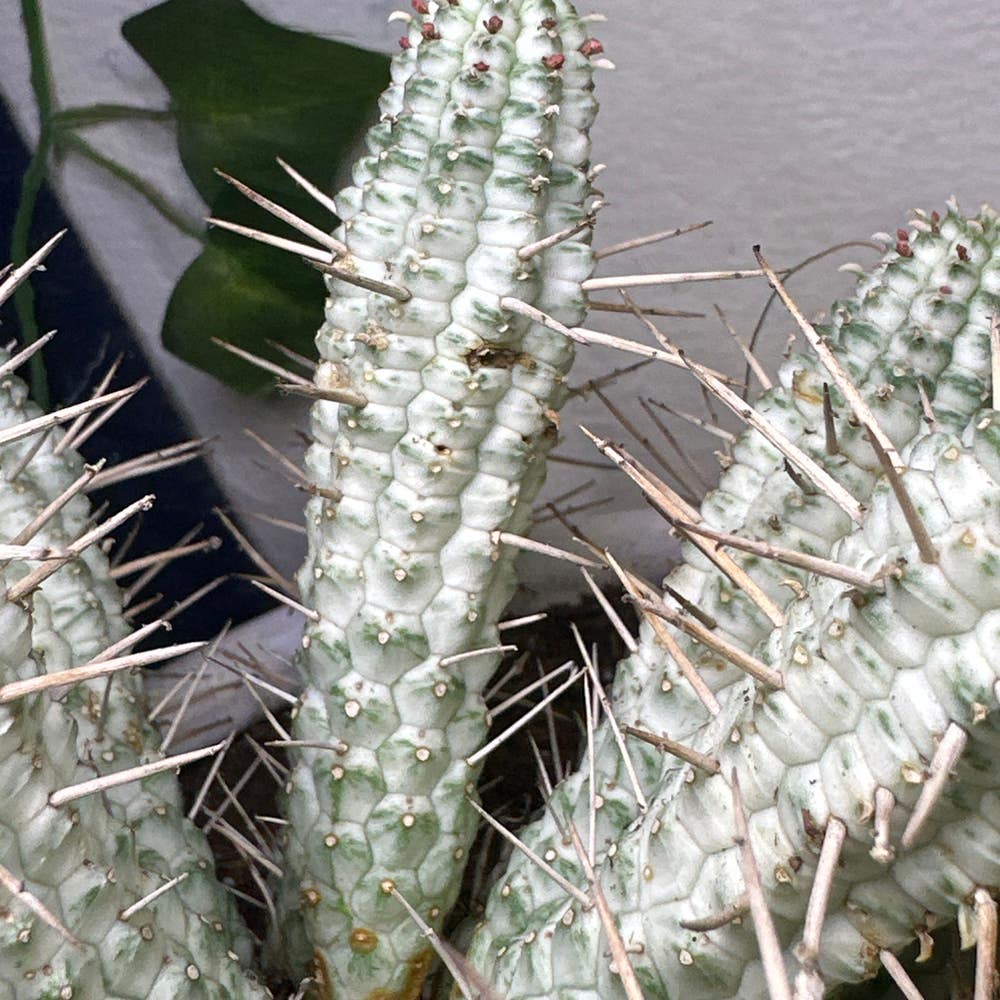
Why Is My Euphorbia venefica Dropping Leaves?
Euphorbia venefica
By the Greg Editorial Team
Jun 18, 2024•5 min read
This article was created with the help of AI so we can cover more plants for you. May contain errors. See one? Report it here.
- Visual signs like discoloration indicate Euphorbia venefica distress.
- 🌡️ Stable temperature and light prevent leaf drop.
- Consistent watering and inspection are crucial for health.
Spotting the Trouble Signs
🍂 Visual Symptoms of Distress
Inspecting your Euphorbia venefica for early signs of leaf drop means getting up close and personal. Look for discoloration, spots, or any abnormalities that scream "I'm not okay!" Leaves resembling overcooked veggies or sporting brown spots are your plant's way of waving a red flag. If they're dropping like flies in off-season, it's time to tune in to their distress signals.
🌱 Root Health Check-Up
Roots tell a story, and it's not always a fairy tale. Gently unearth a bit to see what's happening underground. Soggy roots are a no-go; they should feel like a moist, crumbly cake, not a swamp. If you're not keen on getting your hands dirty, a moisture meter can be your sidekick in this investigation. Remember, healthy roots are the lifeline of your plant – neglect them, and you're asking for trouble.

Environmental Factors Causing Leaf Drop
🌡️ Temperature Tantrums
Temperature swings can wreak havoc on your Euphorbia venefica, causing leaves to drop like flies. The plant prefers a steady climate, so sudden changes are a big no-no. If it's too cold, leaves might turn brown or black, signaling distress. Too hot, and they'll wilt or drop prematurely. Keep the thermostat consistent to avoid these dramatic episodes.
🌞 Light and Drafts
Inconsistent light and drafts are like the plant world's version of a bad relationship—stressful and unhealthy. Bright, indirect light is your Euphorbia venefica's best friend, while direct sunlight is its nemesis, potentially scorching the leaves. Drafts, whether from an open window or an air vent, can cause leaf loss as if it's going out of style. Find a draft-free spot with the right light, and you'll have a much happier plant.

Water Woes: A Common Culprit
💧 Overwatering vs. Underwatering
Overwatering transforms the soil into a soggy mess, suffocating roots and inviting rot. Leaves may turn yellow, wilt, or drop as a distress signal. To correct this, allow the soil to dry out before the next watering, and ensure pots have adequate drainage holes.
Underwatering, on the other hand, leaves your Euphorbia venefica gasping for moisture. Leaves become dry, brittle, and may curl. If the soil feels like a desert, it's time to increase watering frequency, ensuring the soil is consistently moist but not wet.
🚰 The Role of Water Quality
Water quality is not to be overlooked. High levels of minerals or chemicals in tap water can cause leaf burn or buildup in the soil, affecting the plant's ability to absorb water and nutrients. Use filtered or rainwater for a happier plant. Regularly flush the soil to prevent salt accumulation, which can also lead to leaf drop.

Unwanted Guests: Pests and Diseases
🐜 Pest Patrol
Pests are silent saboteurs of Euphorbia venefica, often causing leaves to drop as they feast or make themselves at home. Spider mites and aphids are common culprits, sucking sap and leaving behind a weakened plant.
To evict these pests, start with a gentle blast of water to knock them off their perch. If they're stubborn, escalate to insecticidal soap or neem oil, targeting the undersides of leaves where pests love to lurk. For severe infestations, a miticide may be the last resort.
Remember, regular leaf inspections are your best defense. Catching these freeloaders early can save your plant from a leaf-dropping fate.
🍄 Fungal Foes and Disease Dilemmas
Fungal diseases are the stealthy assassins in the plant world, often leading to leaf drop in Euphorbia venefica. Powdery mildew and leaf spot are the usual suspects, with telltale signs like white residue or brown/black spots.
If you spot these signs, isolate the plant immediately. Remove affected leaves carefully to prevent spreading. For fungal parties already in full swing, a fungicide may be necessary.
Prevent future fungal fiestas by watering at the base of the plant to keep leaves dry. And don't forget, good air circulation and avoiding wet leaves can go a long way in keeping your Euphorbia venefica healthy and leaf-drop-free.
Turning Over a New Leaf: Solutions and Prevention
💡 Stabilizing the Environment
Consistency is key for Euphorbia venefica. Avoid temperature extremes by keeping your plant away from drafty windows and direct heat sources. Rotate the plant periodically to ensure even light exposure, preventing the one-sided growth that can lead to stress and leaf drop.
🚰 Watering Wisdom
Watering should be predictable and tailored to your plant's needs. Only water when the soil feels dry to the touch, and ensure proper drainage to avoid waterlogged roots. Consider the season; your plant will likely need less water in the cooler months. Precision watering tools, like a long-spout watering can, help target the roots and avoid wetting the leaves, which can lead to fungal issues.
🛡️ Keeping Pests and Diseases at Bay
Regular inspections are like routine health check-ups for your plant. Remove any debris promptly to prevent pests from moving in. Introduce natural predators, such as ladybugs, for biological control. If you spot pests, isolate the affected plant and remove the bugs manually. For diseases, ensure good air circulation and consider preventative fungicide treatments if problems persist.
⚠️ Safety First
This content is for general information and may contain errors, omissions, or outdated details. It is not medical, veterinary advice, or an endorsement of therapeutic claims.
Always consult a qualified healthcare professional before using any plant as food, medicine, or supplement.
Never eat any plant (or feed one to pets) without confirming its identity with at least two trusted sources.
If you suspect poisoning, call Poison Control (800) 222-1222, the Pet Poison Helpline (800) 213-6680, or your local emergency service immediately.
Spotted an error? Please report it here.
Keep your Euphorbia venefica from shedding leaves 🍂 with Greg's custom care plan that monitors your home environment and alerts you to water just right, fight pests, and maintain perfect conditions.