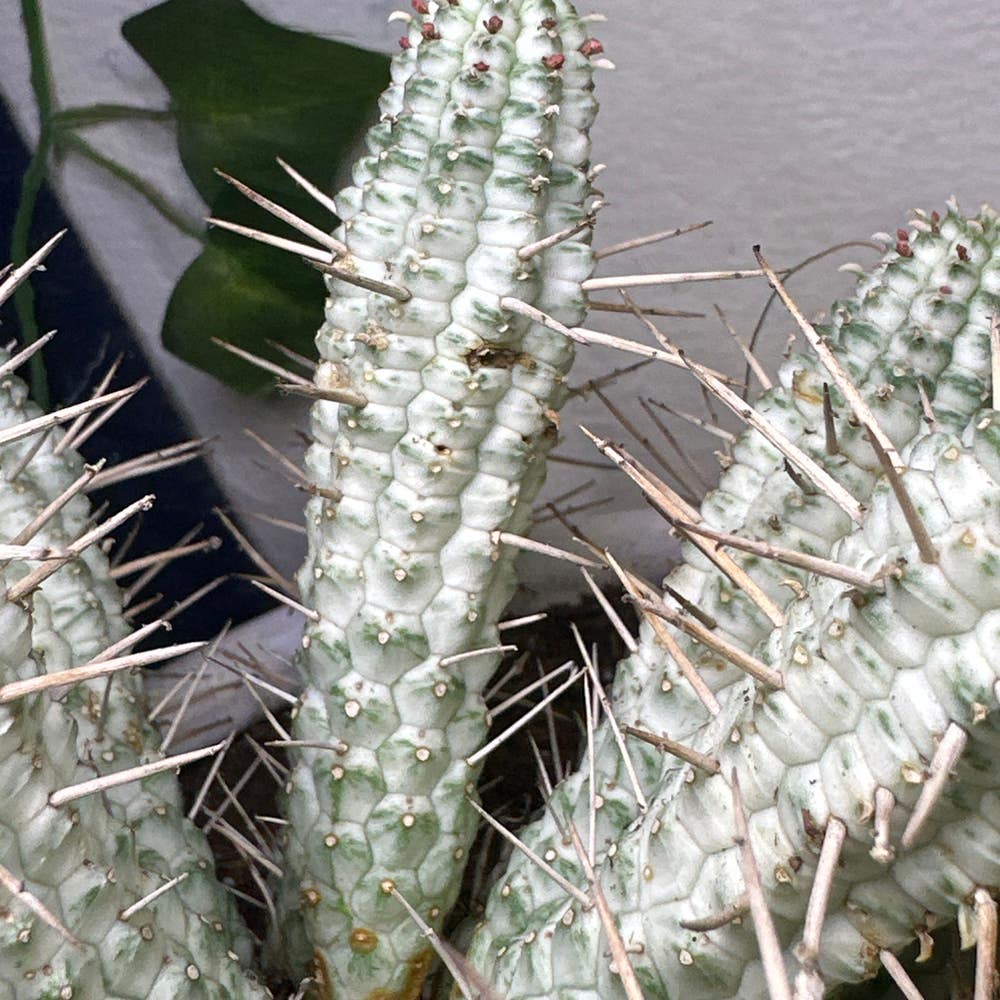
🌵 How to Get a Corncob Cactus to Bloom
Euphorbia venefica
By the Greg Editorial Team
Jun 19, 2024•4 min read
This article was created with the help of AI so we can cover more plants for you. May contain errors. See one? Report it here.
- 🌞 Bright, indirect light and seasonal adjustments are key for blooms.
- 💧🌡️ Balance water, temperature, and humidity to mimic natural habitat.
- ✂️ Pruning and slight root-binding can trigger flowering.
Light the Way to Blooms
🌞 Sunlight: The Ultimate Flower Power
Bright, indirect light is the sweet spot for your Corncob Cactus to strut its stuff with flowers. It's like a backstage pass to the blooming show—too much direct sunlight, and you're looking at a no-show. Seasonal light adjustments are key; as the earth tilts, so should your cactus's spot in your home.
💡 Artificial Lighting: Can it Coax Out the Blooms?
When your cactus's natural spotlight dims, grow lights step in to save the day. Choose a bulb that's a doppelganger for the sun—6500k should do the trick. It's not just about keeping the light on; it's about mimicking the ebb and flow of natural daylight to cue the grand flowering finale.

Temperature and Humidity: Setting the Stage for Flowers
🌵 Warmth and Cool Nights: The Perfect Combo
To mimic the Corncob Cactus's natural habitat, balance daytime warmth with cooler nights. Aim for a temperature range between 70°F and 90°F (21°C and 32°C) during the day. As dusk falls, let the temperature drop slightly to signal the cactus that it's time to bloom.
💧 Humidity Hacks for Happy Blooms
Humidity levels should be low to moderate. Keep it around 40%-60%—this is the sweet spot for flowering without inviting unwanted fungal guests. Use a hygrometer to monitor and adjust indoor humidity levels, ensuring your cactus gets the arid conditions it craves for blooming.

Water and Food for Thoughtful Bloomers
💧 Watering Wisdom: Quenching Thirst Without Drowning Dreams
Watering your Corncob Cactus is a balancing act. Too much, and you risk root rot; too little, and your cactus might as well be in a desert. Aim for moist soil, but let the top layer dry out before the next watering. This approach ensures your cactus has adequate moisture without compromising its health.
🌼 Feeding Frenzy: Fertilizers to Fuel the Flower Show
Fertilization is critical for blooming but overfeeding is a no-no. Choose a balanced fertilizer, rich in phosphorus to encourage blooms. Apply it bi-weekly during the growing season, but pull back during the plant's rest period in winter. Remember, a little goes a long way—think of fertilizer as a supplement, not a main course.

Stress for Success: Unconventional Tricks to Trigger Blooms
🌱 Pruning Practices: Tough Love for More Flowers
Pruning isn't just a haircut for your Corncob Cactus; it's a strategic signal. The goal is to encourage the cactus to focus on flowering rather than branching out. Snip with purpose during the growth seasons of spring and summer. This is when your cactus is most resilient and can recover quickly, channeling its energy into blooming.
Remember, over-pruning is like an overzealous diet—it does more harm than good. Aim for a few selective cuts to promote branching where you want it. This can lead to more flowers without putting the plant under too much stress. After pruning, give your cactus the equivalent of a spa day: proper watering and the right amount of light.
🏡 The Tight Squeeze: How Being Root Bound Can Help
A snug pot might seem counterintuitive, but it's like a cozy studio apartment for your Corncob Cactus—it encourages blooming. Being somewhat root-bound signals the plant to focus on reproduction, not just growth. It's a delicate balance, though. Too tight, and you'll stress the plant; just right, and you'll see more flowers.
Don't repot too often; once every two to three years is usually enough. This controlled stress is like a gentle nudge, telling your cactus it's time to show off its flowers. But watch for signs of distress. If your cactus seems unhappy, it might be time to give it a little more room to breathe.
⚠️ Safety First
This content is for general information and may contain errors, omissions, or outdated details. It is not medical, veterinary advice, or an endorsement of therapeutic claims.
Always consult a qualified healthcare professional before using any plant as food, medicine, or supplement.
Never eat any plant (or feed one to pets) without confirming its identity with at least two trusted sources.
If you suspect poisoning, call Poison Control (800) 222-1222, the Pet Poison Helpline (800) 213-6680, or your local emergency service immediately.
Spotted an error? Please report it here.
Ensure your Corncob Cactus is poised to bloom 🌵 with Greg's personalized care reminders, from sunlight tracking to perfect watering schedules.