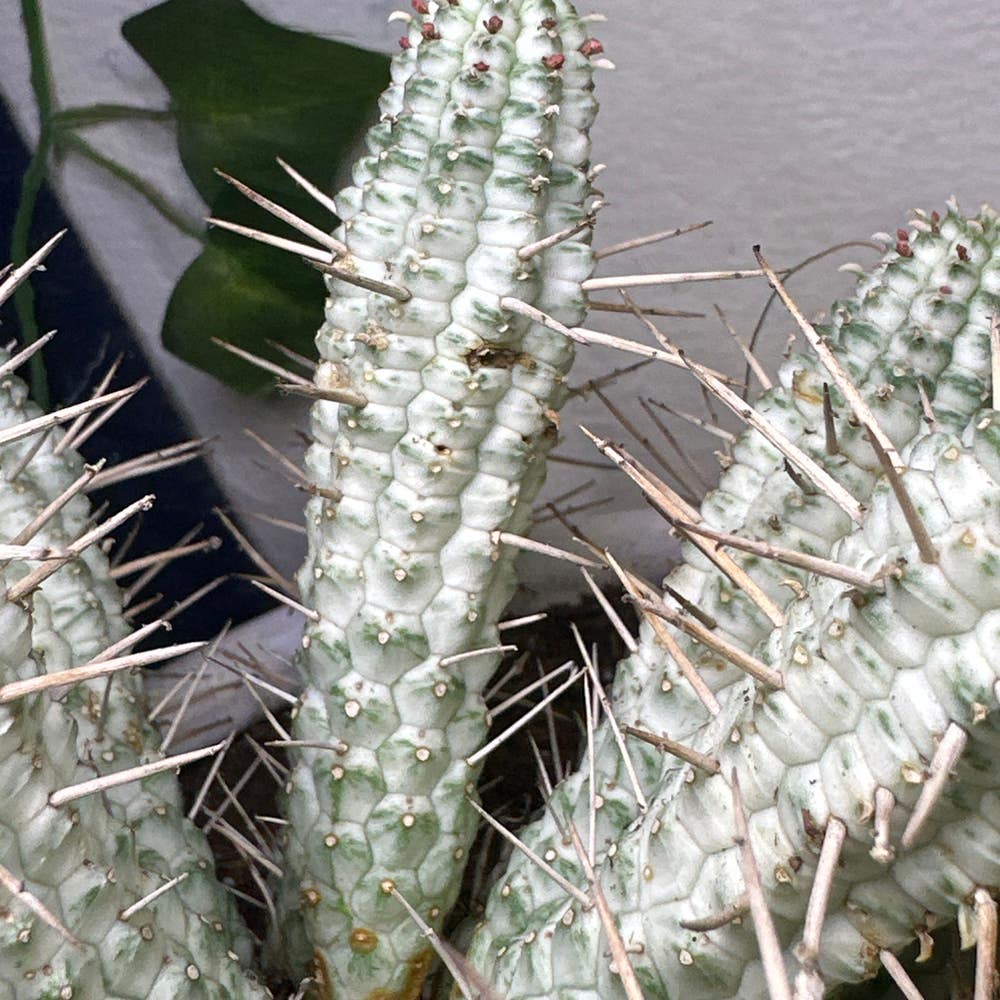
💩 Corncob Cactus - Fertilizing 101
Euphorbia venefica
By the Greg Editorial Team
Jun 19, 2024•4 min read
This article was created with the help of AI so we can cover more plants for you. May contain errors. See one? Report it here.
- Low-nitrogen fertilizer is ideal for Corncob Cactus health.
- Fertilize monthly during growth, reduce in dormancy.
- Dilute and apply sparingly to prevent over-fertilization symptoms.
Picking the Perfect Fertilizer for Your Corncob Cactus
💡 Understanding NPK Ratios
The NPK ratio is like a cactus's dietary label, spelling out the balance of nitrogen (N), phosphorus (P), and potassium (K). For the Corncob Cactus, it's not about bulking up with nitrogen. Instead, aim for a low-nitrogen formula, something like a 1-1-1 or 2-1-1, to avoid turning your cactus into a squishy mess. Phosphorus keeps the roots and blooms in check, while potassium is the silent guardian, ensuring overall plant health.
🍽️ Micronutrients Matter Too
Micronutrients might not get the limelight, but they're the secret sauce to your cactus's success. These tiny titans, like iron, manganese, and zinc, are the unsung heroes that keep your cactus's photosynthesis concert rocking. Without them, expect a lackluster performance.
🚰 Liquid vs. Granular Fertilizers
When it comes to liquid versus granular fertilizers, it's a showdown of convenience vs. control. Liquid fertilizers are like a quick shot of espresso for your cactus, fast-acting and easy to apply. Granular types, on the other hand, are the slow-burning logs in the fire, releasing nutrients gradually. Choose liquid for a quick fix or granular for a steady supply, but remember, the Corncob Cactus isn't a heavy feeder, so whatever you do, don't overdo it.

Timing is Everything: When to Fertilize
🌱 Growing Season Guidelines
During the active growing months of spring and summer, your Corncob Cactus is like an athlete in training—it needs regular nutrition to perform. Fertilize once a month, or every other month, but remember to halve the strength of your fertilizer to prevent overwhelming your plant.
🛌 Dormancy Do's and Don'ts
When the cooler months roll in, your cactus slows down. This is the time to reduce or halt fertilization. Think of it as giving your plant a break; it's not in the mood for a feast, it's preparing for a nap.

Fertilizing Your Corncob Cactus Without the Guesswork
💧 Step-by-Step Fertilization
Fertilizing a Corncob Cactus isn't rocket science, but it does require a light touch. Here's the lowdown:
- Check the calendar. Only fertilize during the growing season—spring to fall.
- Go easy. Use a cactus or succulent fertilizer, diluted to half-strength.
- Apply sparingly. Once every 4-6 weeks is plenty.
- Focus on the soil, not the plant. Pour the diluted mixture around the base, avoiding the cactus itself.
🌱 Dilution Directions
Overzealous with fertilizer? That's a recipe for disaster. Follow these tips to avoid turning your cactus into a chemistry experiment gone wrong:
- Mix it right. Half-strength is your friend. Ignore this, and you might as well be pouring salt on a slug.
- Use quality water. If you wouldn't drink it, don't mix your fertilizer with it.
- Stir thoroughly. Uneven dilution is the enemy of precision.
- Observe. After fertilizing, keep an eye out for any signs of distress. If your cactus starts looking like it's had better days, you might need to adjust your mix.
Remember, your Corncob Cactus craves a gentle boost, not a nutrient nuke. Keep it subtle, and you'll be rewarded with a happy, healthy plant.

Recognizing and Rescuing from Over-Fertilization
🚨 Spotting the Signs
Over-fertilization can ambush your Corncob Cactus, leaving tell-tale signs of distress. Yellowing or browning leaves are the cactus crying out for help. If you notice a crusty layer of fertilizer on the soil, that's a red flag. Roots may appear darkened or limp, and the plant might wilt despite moist soil. These symptoms often show up soon after fertilization, helping you distinguish them from overwatering woes.
🛠 Quick Fixes for Fertilizer Fiascos
Caught in the act of over-fertilization? Don't panic. First, remove any visible fertilizer from the soil to halt further damage. Next, flush the soil with water to wash away excess nutrients. This might need repeating every few days. Keep an eye on your plant's recovery, and consider pruning away any damaged parts to focus energy on new growth. In severe cases, repotting with fresh soil can be the clean slate your cactus needs. Remember, when it comes to fertilizing, less is often more.
⚠️ Safety First
This content is for general information and may contain errors, omissions, or outdated details. It is not medical, veterinary advice, or an endorsement of therapeutic claims.
Always consult a qualified healthcare professional before using any plant as food, medicine, or supplement.
Never eat any plant (or feed one to pets) without confirming its identity with at least two trusted sources.
If you suspect poisoning, call Poison Control (800) 222-1222, the Pet Poison Helpline (800) 213-6680, or your local emergency service immediately.
Spotted an error? Please report it here.
Ensure your Corncob Cactus flourishes with just the right nutrients, and count on Greg 🌵 to guide your green thumb with timely fertilizing tips.