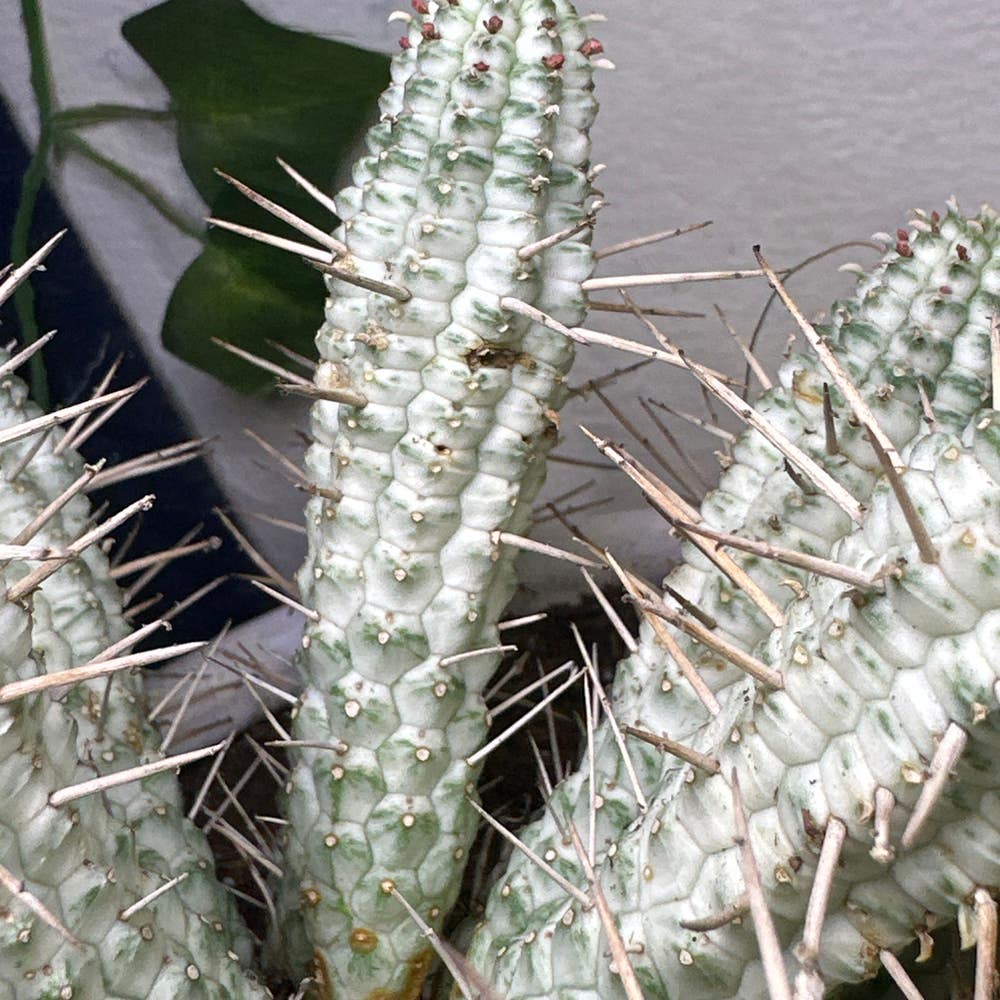
Why Are There Black Spots on My Corncob Cactus Leaves?
Euphorbia venefica
By the Greg Editorial Team
Jun 18, 2024•4 min read
This article was created with the help of AI so we can cover more plants for you. May contain errors. See one? Report it here.
- Overwatering and sunburn cause black spots; adjust water and light exposure.
- Fungal infections? Improve air circulation and use fungicide.
- Preventive care: Perfect watering technique, provide shade, ensure good airflow.
Spotting the Culprit: Identifying Causes of Black Spots
🚰 Overwatering Woes: Signs and Solutions
Soggy soil is a telltale sign you're giving your Corncob Cactus the underwater bear hug it never asked for. Check for mushy roots—they're the cactus's silent scream for less H2O.
To correct your watering routine, wait for the soil to dry out completely. Think desert, not swamp. Your cactus craves neglect; it's a tough love kind of plant.
🌞 Sunburn Scars: Prevention and Care
If your cactus is sporting what looks like a crispy tan, it's probably been sunbathing too long. Brown or black patches on the most sun-kissed areas spell out 'too much light'.
Dial down the sun exposure. Create a shady haven for your cactus to prevent future sunburn. It's like applying SPF 50 but with less mess and no reapplication needed.
💉 Fungal Foes: Detecting and Dealing with Infections
Fungi love a good, damp party. If your cactus is living the high life in moist conditions, you're practically sending fungi an engraved invitation.
Spot fungal infections by their distinctive spots—they're the uninvited guests that overstay their welcome. Treat with a fungicide, and improve air circulation. It's like turning on the exhaust fan at a steamy party.

First Aid for Your Cactus: Treating Black Spots
🌵 Drying Out: Steps to Take if Overwatering is the Issue
If your cactus is sitting in soggy soil, cease all watering immediately. Let the soil dry out completely—think desert levels of dry. If the cactus feels more like a sponge than a plant, it's time to cut away the mushy parts. Use sterilized tools to prevent further infection, and let the healthy tissue callous in a dry, shaded area before considering any more water.
🌞 Healing from the Heat: Recovering from Sunburn
Sunburned cacti need a break from the spotlight. Move your plant to a location with bright, indirect light and let it recover on its own. No special ointments or potions required—just a cooler spot away from the harsh rays. Think of it as putting your cactus in the witness protection program, hiding it from the blazing sun.
🍄 Battling the Fungus Among Us: Fungicide and Beyond
When fungus gatecrashes your cactus party, it's time to bring out the fungicide. But don't go wild with the spray; follow the instructions like they're the only thing standing between your cactus and the apocalypse. If the infection is more like a zombie outbreak, snip off the affected areas with a sterilized blade, dust with sulfur, and wave goodbye to the spores. Remember, isolation is key—keep the infected cactus away from its healthy neighbors to prevent a full-blown fungal uprising.

Keeping Spots at Bay: Prevention Strategies
💧 Water Wisdom: Perfecting Your Watering Technique
Watering your Corncob Cactus is less about sticking to a strict schedule and more about observing and responding to its needs. The soil should be your guide; water only when it's dry a few inches down. Use your finger or a moisture meter to check—no guesswork needed.
🌤 Shady Solutions: Protecting from Excessive Sun
Your cactus loves the sun, but like a pale-skinned beachgoer, it can only handle so much. Shade cloths or strategic placement can protect it from the harshest rays. Aim for a spot that offers a healthy mix of light and shadow throughout the day.
💨 Circulation is Key: Ensuring Good Air Flow
Good airflow is like an invisible shield against fungal threats. Don't cramp your cactus in a corner; give it space. A fan on a low setting or a breezy room can keep the air moving without creating a wind tunnel. Remember, stagnant air is the enemy.
By embracing these strategies, you're not just reacting to issues; you're setting up a fortress against them. It's proactive cactus care at its best.

⚠️ Safety First
This content is for general information and may contain errors, omissions, or outdated details. It is not medical, veterinary advice, or an endorsement of therapeutic claims.
Always consult a qualified healthcare professional before using any plant as food, medicine, or supplement.
Never eat any plant (or feed one to pets) without confirming its identity with at least two trusted sources.
If you suspect poisoning, call Poison Control (800) 222-1222, the Pet Poison Helpline (800) 213-6680, or your local emergency service immediately.
Spotted an error? Please report it here.
Keep your corncob cactus spotless 🌵 with Greg's custom watering reminders and environmental tips tailored to your home's unique conditions.