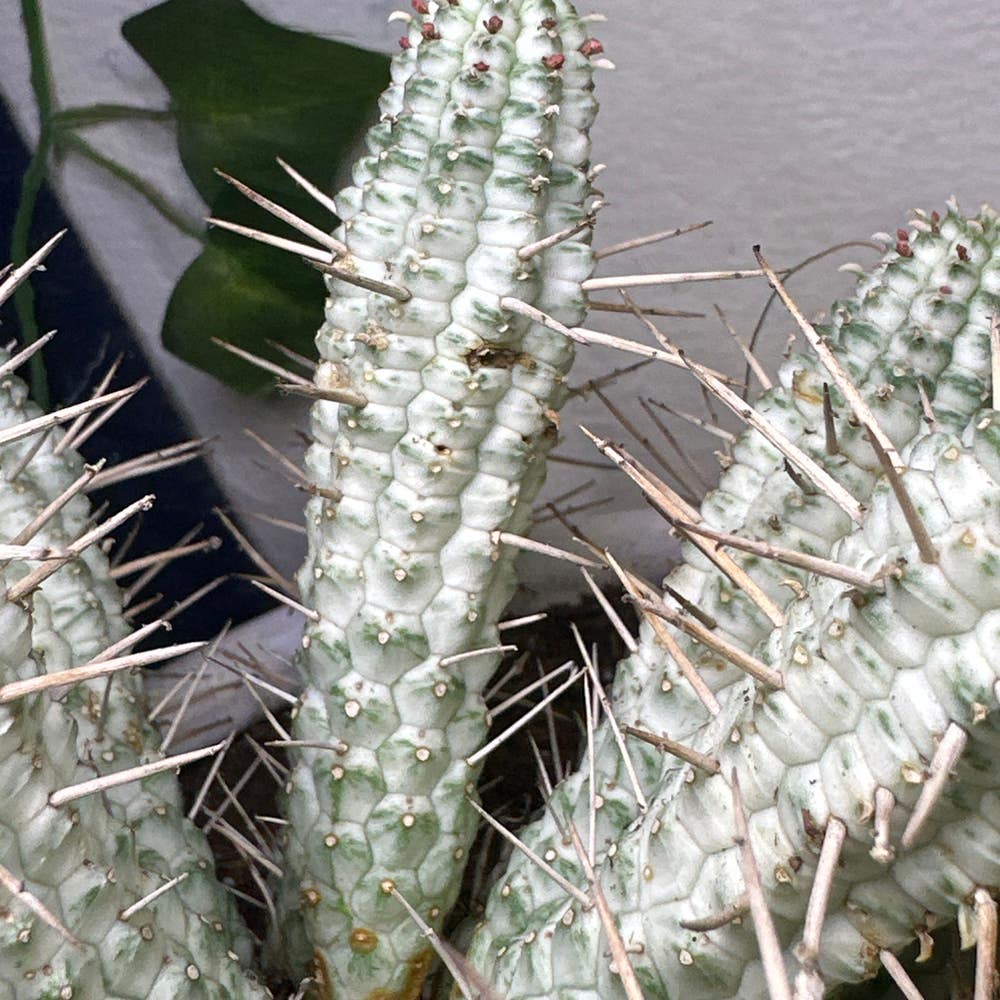
🌽 When and Where Should I Trim My Corncob Cactus?
Euphorbia venefica
By the Greg Editorial Team
Jun 18, 2024•3 min read
This article was created with the help of AI so we can cover more plants for you. May contain errors. See one? Report it here.
- Spring pruning encourages vibrant new growth.
- 🌵 Post-bloom trimming fortifies form and health.
- Use sharp tools, prune with restraint to prevent shock and damage.
Best Times for Snipping: When to Prune Your Corncob Cactus
🌱 Seasonal Timing
Pruning your Corncob Cactus isn't a when-you-remember affair. Spring is your golden ticket, aligning with the plant's natural growth spurt. This timing lets the cactus bounce back with gusto, ready to channel energy into new, vibrant growth.
Fall is a no-go; it's like asking your cactus to run a marathon with weights on. The plant is winding down, and your cuts could lead to stunted regrowth or worse.
🌸 Post-Flowering Care
Once the show's over and the flowers have taken their final bow, it's time to get snippy. Pruning post-bloom allows your cactus to redirect its efforts from sustaining spent flowers to fortifying the rest of its form. This isn't just about aesthetics; it's a health intervention, preventing disease and promoting a fuller life for your spiky companion.

Making the Cut: Where and How to Prune
🌵 Identifying Pruning Zones
To ensure your Corncob Cactus stays in top shape, spot areas that need a trim. Look for damaged or overgrown segments that detract from the plant's appearance or health.
✂️ Pruning Techniques and Tools
Sharp, clean tools are non-negotiable for a successful prune. Use pruning shears for precision and avoid tearing the plant's flesh.
- Assess the cactus for dead or damaged spines and segments.
- Disinfect your shears with alcohol or a bleach solution to prevent disease spread.
- Make cuts just above a node at a 45-degree angle to encourage healing and prevent water accumulation.
- Avoid cutting too close to the node to prevent damage to emerging buds.
- Step back periodically to check the plant's shape, making additional cuts as needed.
- After pruning, clean your tools again to keep them ready for next time.
Remember, less is more. Aim to remove no more than 25% of the plant to avoid shock.

Pruning for Perfection: Shaping Your Corncob Cactus
🌵 Encouraging Symmetry and Growth
Pruning isn't just about trimming; it's an art form that balances aesthetics with plant health. To encourage symmetry, rotate your Corncob Cactus periodically for even light exposure, preventing a lopsided "lean towards the sun." This routine not only shapes your cactus but also doubles as a mini workout for you.
When pruning, aim for a shape that complements the cactus's natural form. Strategic cuts promote branching and influence future growth patterns. Remember, you're not entering a topiary contest; it's about enhancing the cactus's rugged charm while maintaining its health.
🚫 Avoiding Common Mistakes
Over-pruning is the equivalent of a bad haircut that lasts an entire growing season. To avoid this, prune with purpose and restraint. Less is more; remove only what's necessary—damaged or overgrown segments.
Cut at a slight angle to promote healthy growth and avoid leaving stubs that could rot. If you accidentally damage the stem, apply a bit of pruning sealer to prevent infection. Keep in mind that every snip affects your cactus's future, so prune with the precision of a surgeon.

After the Trim: Post-Pruning Care
🩹 Healing and Recovery
After pruning, your Corncob Cactus enters a critical recovery phase. Avoid watering immediately to let the cuts heal. Instead, place the cactus back in a spot with bright, indirect sunlight to promote scarring and prevent infection.
👀 Monitoring and Maintenance
Keep a watchful eye for signs of distress, such as discoloration or soft spots. These could indicate infection. New growth is the thumbs-up you're looking for; it signifies a job well done. Adjust care as needed, and remember, patience is key—cacti don't bounce back overnight.
⚠️ Safety First
This content is for general information and may contain errors, omissions, or outdated details. It is not medical, veterinary advice, or an endorsement of therapeutic claims.
Always consult a qualified healthcare professional before using any plant as food, medicine, or supplement.
Never eat any plant (or feed one to pets) without confirming its identity with at least two trusted sources.
If you suspect poisoning, call Poison Control (800) 222-1222, the Pet Poison Helpline (800) 213-6680, or your local emergency service immediately.
Spotted an error? Please report it here.
Trim your Corncob Cactus at the ideal time and avoid over-pruning with Greg's custom reminders 🌵, ensuring vibrant and balanced growth every spring.