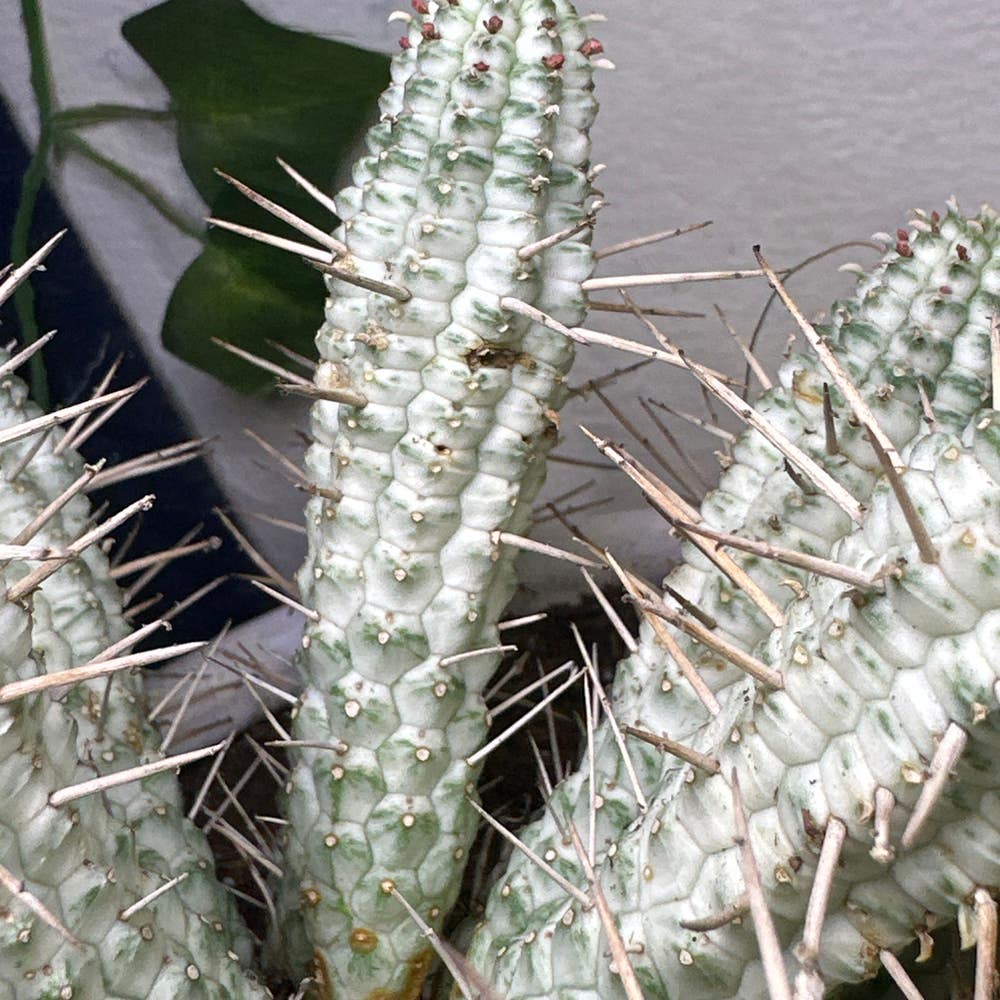
Why Are My Corncob Cactus Leaves Mushy?
Euphorbia venefica
By the Greg Editorial Team
Jun 18, 2024•5 min read
This article was created with the help of AI so we can cover more plants for you. May contain errors. See one? Report it here.
- Overwatering? Stop watering, let soil dry, and prune mushy parts.
- Root rot? Remove rotted roots, air out, repot with well-draining soil.
- Prevent future mushiness with proper watering, sunlight, and air circulation.
Spotting the Signs of Trouble
💧 Overwatering Clues
Yellowing leaves on your Corncob Cactus? That's a classic cry for help. Swollen leaves are another red flag; they're not just plump, they're waterlogged. If the soil feels like a soggy sponge, it's time to cut back on watering. And if the pot feels heavier than usual, that's a sign the soil is retaining too much moisture.
🚫 Root Rot Red Flags
Root rot is the silent assassin of cacti. If your plant's base is turning yellow, or if there are soft spots on the stem, be alarmed. Mushy roots with brown lesions are a clear indicator of root rot. A squishy core is a distress signal; your cactus is in trouble. Also, if your cactus is wilting during hot weather, it's a sign that its roots can't take up enough water. Spot any white to tan fungal strands on the roots or around the plant? That's the mark of Texas root rot.

First Aid for Your Cactus
🚱 Immediate Actions to Take
Stop watering immediately. Your cactus isn't a fish; it can't swim in soggy soil. Let the soil go bone-dry before you even consider another watering session.
✂️ Pruning with Purpose
Grab those sterilized scissors. It's time to snip away the mushy parts, but steer clear of the healthy tissue. After the operation, let the plant wounds callous. This isn't a quick trim; it's a precise intervention to prevent a mushy meltdown.
🩹 Root Rot Surgery
If the roots are blackened or soft, it's time for a root rot rummage. Gently remove your cactus from its pot and shake off excess dirt. With clean tools, cut above the rotted areas. Let the roots air out for a day before replanting to avoid the rot spreading like bad gossip.
🏞️ Soil SOS
If your soil is more swamp than desert, repot your cactus stat. Toss the old soil and introduce a well-draining mix. Remember, a pot with drainage holes isn't just nice to have; it's essential.
☀️ Sunburn and Scrapes
If your cactus has been sunbathing too hard or has physical damage, clean the wounds with a half water, half rubbing alcohol solution. No dish soap needed. Let it air dry; cacti are tough cookies and often heal on their own.
🌱 Fertilizer Flush
If you've been a little too generous with the fertilizer, it's time to flush it out. Remove any visible fertilizer and water the soil to leach out the excess. Keep an eye on your plant and prune any damaged foliage to help it focus on new growth.
🦠 Quarantine for Pests
Black spots? Isolate your cactus faster than you'd unfriend a spoiler-happy acquaintance. Clean it gently with a soft brush, and if fungus is the culprit, a dab of fungicide is your new best friend.
🌱 What to Do With Pruned Off Parts
Don't just toss the pruned parts; they could root and become new plants. Consider this the silver lining to your cactus first aid—more plants for your collection or to gift to your plant-loving pals.

The Road to Recovery
💧 Adjusting Your Watering Ways
Watering your Corncob Cactus correctly is the linchpin of its recovery. Check the top inch of soil; if it's dry, it's time for a drink. Remember, deep but infrequent watering is key. This means thoroughly soaking the soil, then letting it dry out before the next watering session. Light and temperature are your plant's drinking buddies; they dictate its thirst levels. Bright light and heat mean grab the watering can more often, while cooler, dimmer conditions tell you to put a lid on it. Pot size matters too—smaller pots dry out quicker, so they'll need watering more often than their larger counterparts.
🌱 Repotting for Relief
When it's time to repot, think of it as moving your cactus to a better neighborhood. Start with a pot that has drainage holes to prevent water from overstaying its welcome. A layer of gravel at the bottom isn't just for looks; it helps with drainage too. Choose a soil mix that's like the perfect mattress—firm yet fluffy, providing support while allowing water to drain. A mix of peat, perlite, and sand is your go-to. After the move, water your cactus sparingly, like it's on a strict diet post-holiday binge. Then, keep an eye on it like a hawk, adjusting light and temperature to make sure it's comfortable in its new digs.

Keeping Mushiness at Bay
💧 Mastering Moisture Control
To prevent overwatering, use a moisture meter or the finger test to ensure the soil is dry before watering. Consistency is key; water based on the plant's needs, not a set schedule.
💦 Watering Wisdom
Water deeply but infrequently, mimicking desert rainfall. Adjust your approach with the seasons, watering less in cooler months.
Environment Tweaks
🌞 Sunlight and Airflow
Place your cactus in a spot with ample sunlight to promote soil drying. Ensure good air circulation to prevent stagnation and excess humidity.
🌡️ Humidity and Temperature
Use a hygrometer to monitor humidity levels, aiming for a moderate range. Protect your cactus from temperature extremes and drafts.
🌱 Soil and Repotting
Ensure your potting mix is well-draining to avoid water retention. Repot every few years to refresh the soil and prevent compaction.
🛠️ Tools and Techniques
Consider self-watering pots or drip irrigation for consistent moisture. Use rainwater or de-chlorinated tap water for quality hydration.
⚠️ Safety First
This content is for general information and may contain errors, omissions, or outdated details. It is not medical, veterinary advice, or an endorsement of therapeutic claims.
Always consult a qualified healthcare professional before using any plant as food, medicine, or supplement.
Never eat any plant (or feed one to pets) without confirming its identity with at least two trusted sources.
If you suspect poisoning, call Poison Control (800) 222-1222, the Pet Poison Helpline (800) 213-6680, or your local emergency service immediately.
Spotted an error? Please report it here.
Ensure your corncob cactus bounces back from mushiness by mastering moisture 🌵 with Greg's tailored watering reminders and soil dryness tracking.