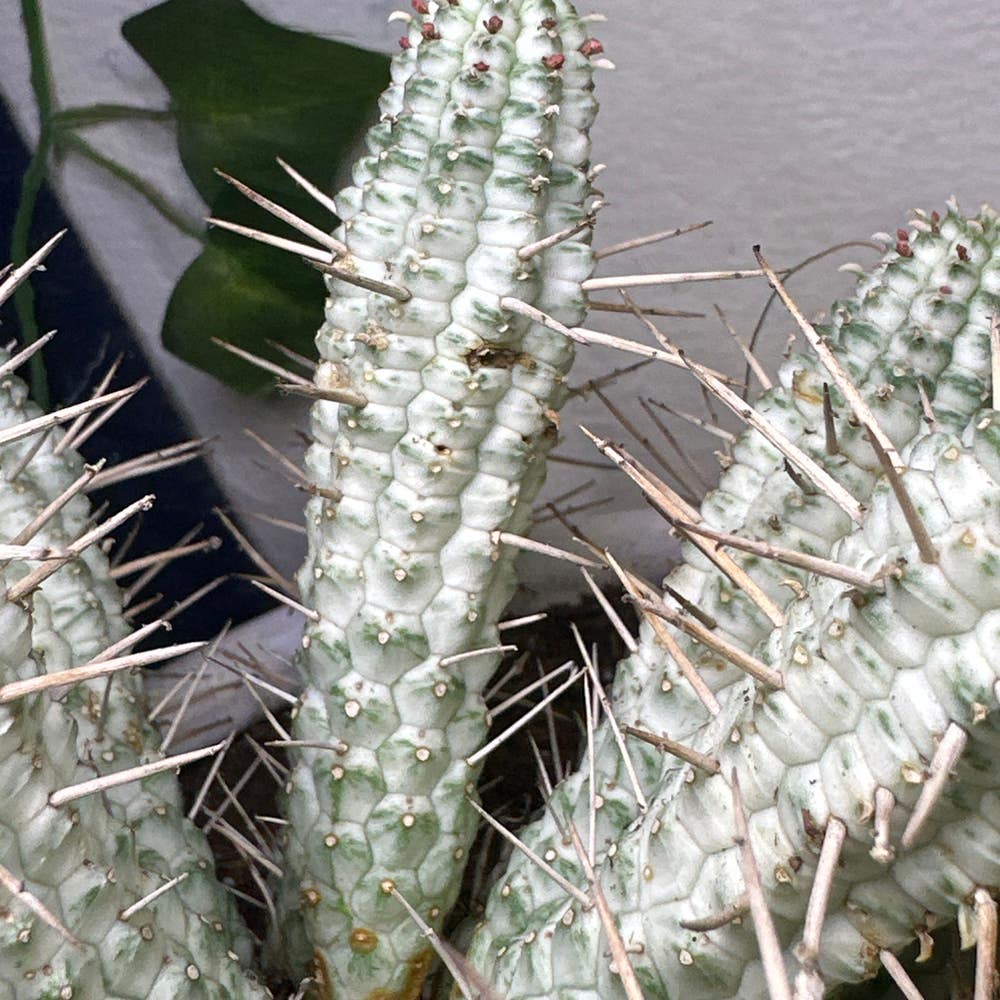
🌽 Why Is My Corncob Cactus Not Doing Well?
Euphorbia venefica
By the Greg Editorial Team
Jun 18, 2024•4 min read
This article was created with the help of AI so we can cover more plants for you. May contain errors. See one? Report it here.
- Over-watering? Look for soft stems and foul smells; let soil dry out.
- Under-watered cactus? Shriveled stems need deep, well-drained watering.
- Consistent care prevents crises: Regular checks for pests, rot, and proper lighting.
Water Woes: Too Much or Too Little
💧 Over-watering Hazards
Spotting the signs: Soft stems and foul smells
Over-watered cacti are like overindulged children—squishy and smelly. If your Corncob Cactus feels like a soggy sponge, it's time to intervene. A foul odor is a distress signal from the soil, indicating that rot might be setting in.
Drying out: Steps to rescue an over-watered cactus
Stop watering—your cactus needs a drought, stat. Let the soil dry out completely, and if the pot's as heavy as your conscience after skipping the gym, it's too wet. If the roots are rotting, repot in fresh, well-draining soil and consider it a cactus CPR.
🏜️ Under-watering Symptoms
Recognizing thirst: Shriveled stems and loss of firmness
Under-watered cacti look like last week's forgotten leftovers—shriveled and sad. If the stems have more wrinkles than a linen shirt at a yard sale, it's time for a drink. Firmness loss is a cry for hydration.
Quenching the need: How to properly hydrate your cactus
Water deeply but don't make it a pool party. Ensure the water drains out freely, like your cactus is sipping a cocktail through a straw. Check the soil's dryness before watering again; it should feel as dry as a stand-up comedian's wit.

Light and Temperature Tango
🌞 Getting the Light Right
- Scorch marks and color loss are telltale signs your Corncob Cactus is getting too much sun.
- The ideal lighting for a Corncob Cactus is bright, indirect sunlight; it's like the plant's favorite sunscreen.
Temperature Consistency
- Wilting and discoloration are the cactus's way of saying the temperature isn't right.
- Aim for a consistent temperature range between 70-100°F (21-37°C) to keep your cactus from throwing a fit.

Uninvited Guests: Pests and Pathogens
🐜 Pest Patrol
Identifying Common Critters
Spider mites are tiny terrors, leaving yellow speckles and fine webs. Mealybugs masquerade as white fluff, hiding in crevices. Scale insects are the clingy types, latching onto stems with shield-like armor.
🚪 Eviction Notice
For a natural pest purge, neem oil is your ally. Apply with gusto. Introduce predator insects like ladybugs for an eco-friendly assist. Insecticidal soap? Another trusty weapon in your anti-pest arsenal.
🍄 Fungal Foes and Mold
Spotting Mold and Fungus
White fuzz or a musty smell signals a fungal fiesta. Mold thrives in the damp and dim, so keep an eye out for unwelcome growths.
💨 Clearing the Air
Boost airflow to crash the spore party. Fungicides act as your clean-up crew, but prevention beats cure. Keep your cactus quarters well-ventilated and dry to deter the mold marauders.

Root Rot: The Silent Killer
🚨 Recognizing Root Rot
Root rot is the stealthy saboteur of your Corncob Cactus's health. Look out for stem discoloration and a base that's softer than your favorite plush toy. These are the distress signals of a cactus in dire straits.
🏥 Surgery for Survival
When root rot strikes, it's time to don your imaginary scrubs. Unpot your cactus with the tenderness of a brain surgeon. Inspect the roots: healthy ones are as firm and white as a new tennis ball, while rotten ones are as appealing as soggy bread. Snip off the bad parts with sterilized scissors—be as merciless as a game show elimination round. Repot in fresh, well-draining soil, and consider this a lesson in tough love.
Prevention and Proactive Care
💧 Watering Wisdom
- Perfecting your watering routine for Corncob Cactus is less about sticking to a strict schedule and more about understanding its needs. During the growing season, a thorough watering every 2-3 weeks is the sweet spot, allowing the soil to dry out in between. In the dormant season, ease up; your cactus is not as thirsty.
🌞 Light and Temperature Tips
- Corncob Cactus basks in bright, direct light. Place it close to a window but watch out for scorch marks. If your cactus starts looking like it's had a bit too much sun, pull back to a spot with bright, indirect light. Temperature-wise, keep it in a consistent range, avoiding extremes that could send your cactus into shock.
🕵️ Regular Check-ups
- Like a car, your cactus needs regular inspections. Look for signs of pests, discoloration, or changes in texture. Early detection can mean the difference between a quick fix and a cactus crisis. Make it a habit to check in with your spiky friend, ensuring it's not sending out any SOS signals.
⚠️ Safety First
This content is for general information and may contain errors, omissions, or outdated details. It is not medical, veterinary advice, or an endorsement of therapeutic claims.
Always consult a qualified healthcare professional before using any plant as food, medicine, or supplement.
Never eat any plant (or feed one to pets) without confirming its identity with at least two trusted sources.
If you suspect poisoning, call Poison Control (800) 222-1222, the Pet Poison Helpline (800) 213-6680, or your local emergency service immediately.
Spotted an error? Please report it here.
Avoid a cactus crisis by spotting early distress signs, and let Greg keep your spiky friend flourishing 🌵 with tailored care reminders and proactive tips from the article!