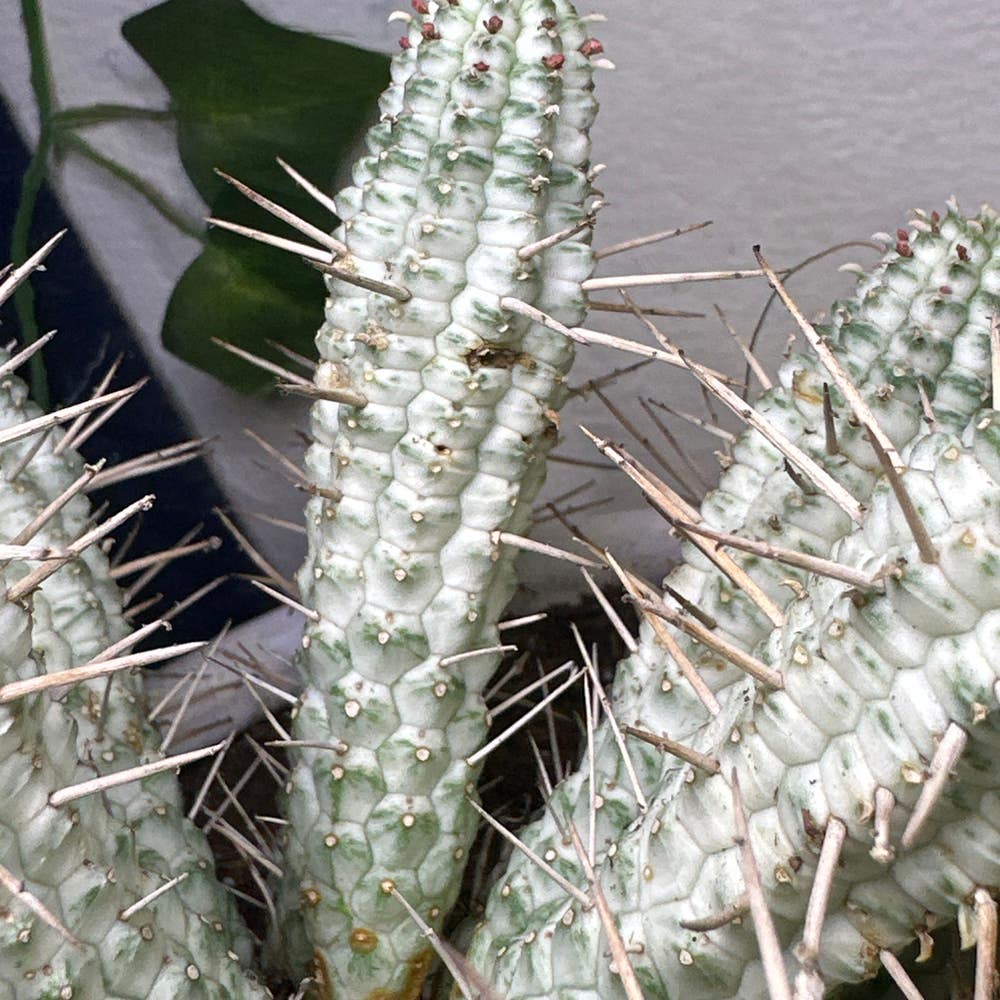
Propagating My Euphorbia venefica: Step-by-Step Guide
Euphorbia venefica
By the Greg Editorial Team
Jun 18, 2024•6 min read
This article was created with the help of AI so we can cover more plants for you. May contain errors. See one? Report it here.
- Choose healthy stems and use rooting hormone for better root growth.
- Offsets need gentle separation and well-draining soil for successful propagation.
- Grafting requires compatible plants and sterile tools for a strong union.
Snip & Plant: Stem Cutting Magic
🌱 Choosing Your Champion Stem
In the quest for the perfect stem, eye those that are vibrant and disease-free. Aim for a semi-hardwood specimen, roughly 4-6 inches in length, with a few leaf nodes—these are the hotspots for root growth.
🛠 Prepping Your Stem
First, sterilize your tools—think of it as surgery for plants. Snip your chosen stem at a 45-degree angle just below a node to maximize rooting potential. Strip the lower leaves to dodge rot, leaving a couple up top for photosynthesis to do its thing.
💪 Rooting Hormone: A Helping Hand
Not a must, but consider rooting hormone the pep talk your cuttings need. Dip the cut end into this growth elixir to encourage roots to come out and play. Natural alternatives? Honey and cinnamon have entered the chat.
⏳ The First Few Weeks
Patience is key. Resist the pull test—it's not a weed. Give your cutting a few weeks of undisturbed growth. Keep the soil moist but not waterlogged—no one likes soggy feet, especially your new plant buddy.

Baby Plants on Board: Offsets Propagation
🌱 Spotting and Separating Offsets
Euphorbia venefica offsets are your ticket to new plants without the fuss of seeds. Look for the little clones around the base of the parent plant, each a potential independent Euphorbia. Size is key; they should be large enough to stand on their own, with a few roots peeking out. Gently twist them off, like unscrewing a lightbulb, ensuring you don't damage their roots. It's a straightforward task—think of it as plucking apples from a tree, only much gentler.
🏺 Potting Offsets
Once you've liberated the offsets, it's time to pot them up. Choose a container that's snug but not tight—think of a cozy shoe that fits just right. The soil should be well-draining; Euphorbia venefica despises soggy feet. Pop them in, give them a drink, and place them in bright, indirect light. They're like young adults moving into their first apartment; they need the right balance of support and independence. Keep the soil lightly moist and watch as they grow roots and establish themselves. It's like nurturing a fledgling bird—careful attention now ensures they'll soar later.

Grafting: Advanced Propagation Techniques
🌱 Choosing Your Match
Selecting the right pair for grafting Euphorbia venefica is like picking a dance partner; compatibility is key. The rootstock should be a robust Euphorbia species, like Euphorbia neriifolia or Euphorbia canariensis, known for their vigorous growth. The scion, your Euphorbia venefica, must be healthy with a clear, recent growth. Same genus rootstocks and scions usually hit it off, but don't play matchmaker with distant relatives; stick to the Euphorbia family to avoid a grafting faux pas.
💃 The Grafting Dance
🍶 Step 1: Sterilize Your Tools
Start by sterilizing your grafting knife with alcohol. This isn't just a neat freak's mantra; it's a non-negotiable step to prevent infection.
🌳 Step 2: Prepare the Rootstock
Make a clean, straight cut across the rootstock's stem. Aim for a smooth surface; jagged edges are the enemy of a successful graft union.
🌿 Step 3: Prepare the Scion
Cut the base of your Euphorbia venefica scion at a slight angle. This increases the surface area that will contact the rootstock, which is like increasing your chances of a second date.
🤝 Step 4: Join the Pair
Align the scion's cut end with the rootstock's fresh cut. It's crucial that the cambium layers (think plant veins) meet. If they don't, it's like a missed high five - awkward and unsuccessful.
🎀 Step 5: Secure the Union
Use grafting tape or a rubber band to bind the scion to the rootstock. Not too tight, not too loose; think snug hug, not a chokehold.
🌱 Step 6: Aftercare
Place the grafted plant in a moderately lit area and avoid direct sunlight. Water sparingly, as the rootstock needs to focus on healing, not swimming.
Remember, grafting is an art as much as a science. Patience and practice will lead to a beautiful, flourishing Euphorbia venefica.

Post-Propagation Care: The First Steps Home
🌱 The Perfect Pot and Soil Mix
After your Euphorbia venefica cuttings have taken root, selecting the right pot is crucial. This isn't just about aesthetics; it's about ensuring the health and growth of your plant. The pot should be slightly larger than the root ball, with adequate drainage holes to prevent water from turning your Euphorbia's new home into a swamp.
For the soil mix, aim for well-draining characteristics. A combination of potting soil and sand or perlite will provide the right texture to keep those roots happy. Remember, the goal is to create an environment that retains some moisture but doesn't hold onto it like a grudge.
🌞 Early Days Care
In the early days, your propagated Euphorbia venefica needs a careful balance of light and water. Place it in a spot with bright, indirect sunlight. Direct rays can be too intense, like an overzealous coach at a peewee football game.
When it comes to watering, think of it as a suspense thriller—too much and you'll drown the suspense, too little and the plot dries up. Wait until the top inch of soil is dry before watering again. And keep the temperature around your plant warm but not hot, ideally between 68°F to 75°F (20°C to 24°C).
Remember, these first steps are like the first few weeks at a new job; it's about acclimatizing and finding the right rhythm. Keep an eye out for stress signals—a droopy stem or yellowing leaves—and adjust your care routine accordingly.
Overcoming Propagation Pitfalls
🌱 Common Hiccups
When diving into the world of Euphorbia venefica propagation, expect to hit a few snags. Root rot is the bane of many plant propagators, often due to overzealous watering. Keep the soil moist but not soggy to avoid this pitfall. Pest infestations can also derail your efforts. If aphids or mealybugs make an appearance, show no mercy—use an insecticide or a homemade soap spray to send them packing.
🌵 Euphorbia venefica-Specific Tips
Euphorbia venefica comes with its own set of quirks. The milky sap is not just messy; it's also toxic. Always wear gloves when handling to avoid skin irritation, and keep it away from curious pets and kids. If you're seeing slow growth, don't panic. Patience is key with this plant. Ensure you're providing bright, indirect light and resist the urge to overwater. Remember, it's a marathon, not a sprint, to grow these succulent beauties.
⚠️ Safety First
This content is for general information and may contain errors, omissions, or outdated details. It is not medical, veterinary advice, or an endorsement of therapeutic claims.
Always consult a qualified healthcare professional before using any plant as food, medicine, or supplement.
Never eat any plant (or feed one to pets) without confirming its identity with at least two trusted sources.
If you suspect poisoning, call Poison Control (800) 222-1222, the Pet Poison Helpline (800) 213-6680, or your local emergency service immediately.
Spotted an error? Please report it here.
Ensure your Euphorbia venefica thrives 🌱 from stem to soil with Greg's personalized care reminders and environmental tracking, making propagation a breeze.