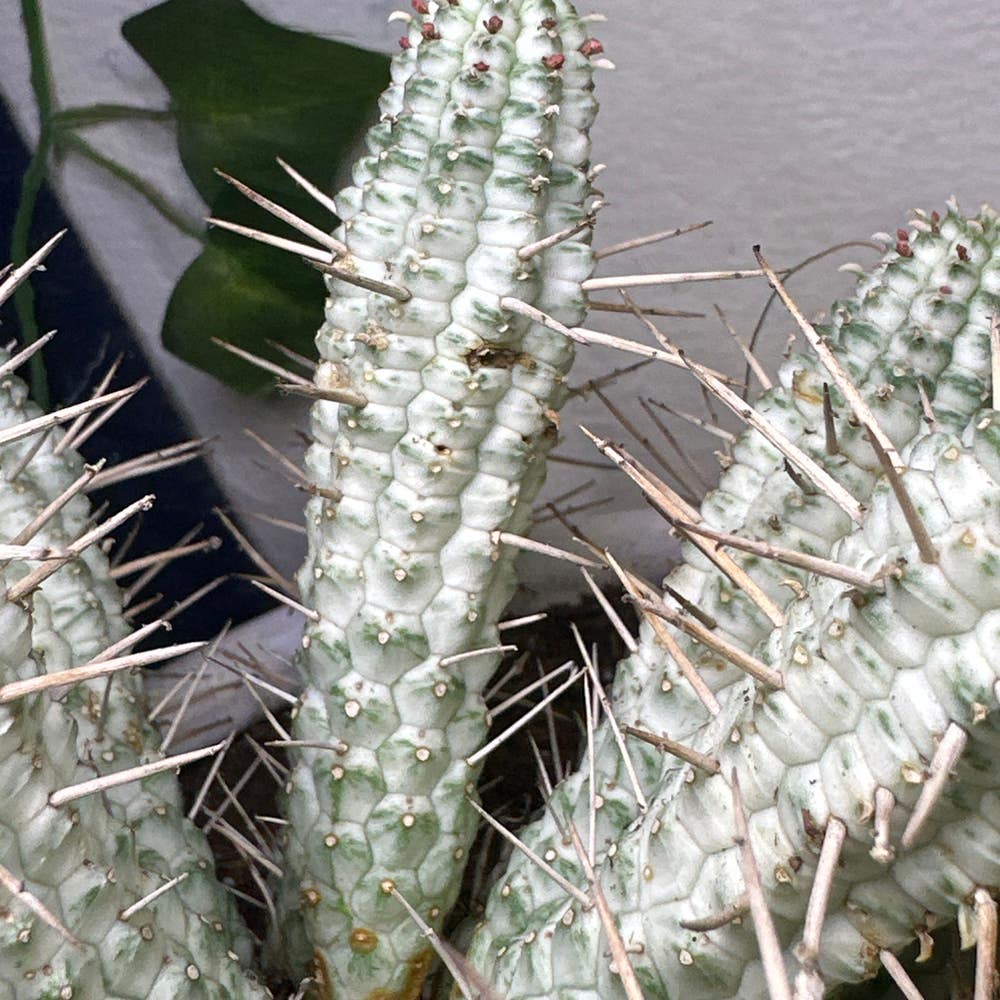
Common Euphorbia venefica Problems
Euphorbia venefica
By the Greg Editorial Team
Jun 18, 2024•4 min read
This article was created with the help of AI so we can cover more plants for you. May contain errors. See one? Report it here.
- Over-watering causes yellowing; let soil dry to rescue.
- Under-watered? Wrinkled leaves signal it's time to hydrate.
- Pests and root rot threaten; inspect and treat promptly.
When Watering Goes Wrong
💦 Over-Watering Woes
Yellowing leaves and edema are the plant's version of waving a white flag. If your Euphorbia venefica is sporting a mushy stem or shedding leaves like a dog in summer, you've been too generous with the H2O. Brown spots with a yellow halo? That's your cue to cut back on the waterworks.
To rescue your over-loved plant, stop watering and let the soil dry out like a desert. If you're lucky, you'll spot parts of the plant that still have some backbone—those firm stems are your lifeline. With careful attention, your Euphorbia venefica can bounce back from its soggy state.
🏜️ Under-Watering Uh-Oh
Wrinkled leaves on your Euphorbia venefica are a sign of thirst that's more intense than a Monday morning coffee craving. Stunted growth? That's your plant telling you it's not getting the hydration it needs to strut its stuff.
To quench your plant's thirst, hydrate properly. Start by giving the soil a good soak until it feels like a wrung-out sponge—moist but not waterlogged. Consistency is key; water when the top inch of soil feels dry, and you'll have a plant that's happier than a cat in a sunbeam.

Light and Temperature Tangles
🌞 Too Much Sun, Too Little Fun
Identifying Leaf Scorch
Leaf scorch in Euphorbia venefica looks like sunburn on your skin—crispy, discolored patches that scream for shade. Prevention is about positioning; keep your plant in bright, indirect light, away from the harsh midday sun.
Shifting Shades
Find the perfect spot for your Euphorbia venefica where it gets enough light without the burn. East-facing windows or behind a sheer curtain can be ideal. Rotate the plant regularly to ensure even exposure.
❄️ Chilly Plant, Unhappy Plant
Spotting Temperature Trauma
Temperature stress shows up as wilted or mushy leaves. It's a sign your plant is saying, "I'm not okay with this chill." Keep an eye out for discoloration or stunted growth, which can also indicate temperature issues.
Keeping it Cozy
Euphorbia venefica likes it warm but not hot. Aim for a stable temperature between 60-75°F (15-24°C). Avoid drafty spots and direct heat sources like radiators to prevent those temperature-induced mood swings.

Pesky Pests and How to Defeat Them
🐜 Mealybugs and Mites
Spotting these unwanted guests is step one. Mealybugs leave a cottony deposit, while mites spin fine webs. If your Euphorbia venefica is a bug buffet, it's time to take action.
Eviction notice: Start with a swab dipped in alcohol to remove mealybugs manually. For a hands-off approach, insecticidal soap or neem oil are your allies. Apply diligently, as these pests are tenacious.
🍄 Fungus Among Us
Fungal issues? Look for mold or mildew on leaves and soil. These are the red flags that your Euphorbia venefica is hosting a fungal fiesta.
Fungicide to the rescue: When natural remedies don't cut it, fungicides are your next line of defense. Use them sparingly and rotate types to avoid resistance. Always follow the label—your plant's health depends on it.

The Dreaded Root Rot
🍄 Root Rot Revelation: Early Detection and Diagnosis
Root rot is the stealthy saboteur of Euphorbia venefica, often going unnoticed until it's almost too late. Visual cues are your first line of defense. If your plant's leaves start looking like they've seen better days, or if the growth has hit a standstill, it's time to play detective. Gently remove your plant from its pot and inspect the roots. Healthy roots should be firm and white, while rotten ones are the plant's cry for help—mushy and dark.
🚑 Saving the Roots: Steps to Take When Root Rot Strikes
Caught root rot red-handed? It's time for some plant surgery. First, isolate the patient to prevent any contagion spread. With sterilized precision, cut away the affected roots. Think of it as pruning the dead weight. After the operation, give your Euphorbia venefica a fresh start in new, well-draining soil and a clean pot. Remember, overwatering is a no-go; it's what got you into this mess. Keep the soil moist but not soggy, and ensure proper drainage to avoid a repeat performance.
⚠️ Safety First
This content is for general information and may contain errors, omissions, or outdated details. It is not medical, veterinary advice, or an endorsement of therapeutic claims.
Always consult a qualified healthcare professional before using any plant as food, medicine, or supplement.
Never eat any plant (or feed one to pets) without confirming its identity with at least two trusted sources.
If you suspect poisoning, call Poison Control (800) 222-1222, the Pet Poison Helpline (800) 213-6680, or your local emergency service immediately.
Spotted an error? Please report it here.
Avoid the common pitfalls of Euphorbia venefica care and ensure your plant thrives 🌿 with Greg's personalized watering reminders and spot-selection advice.