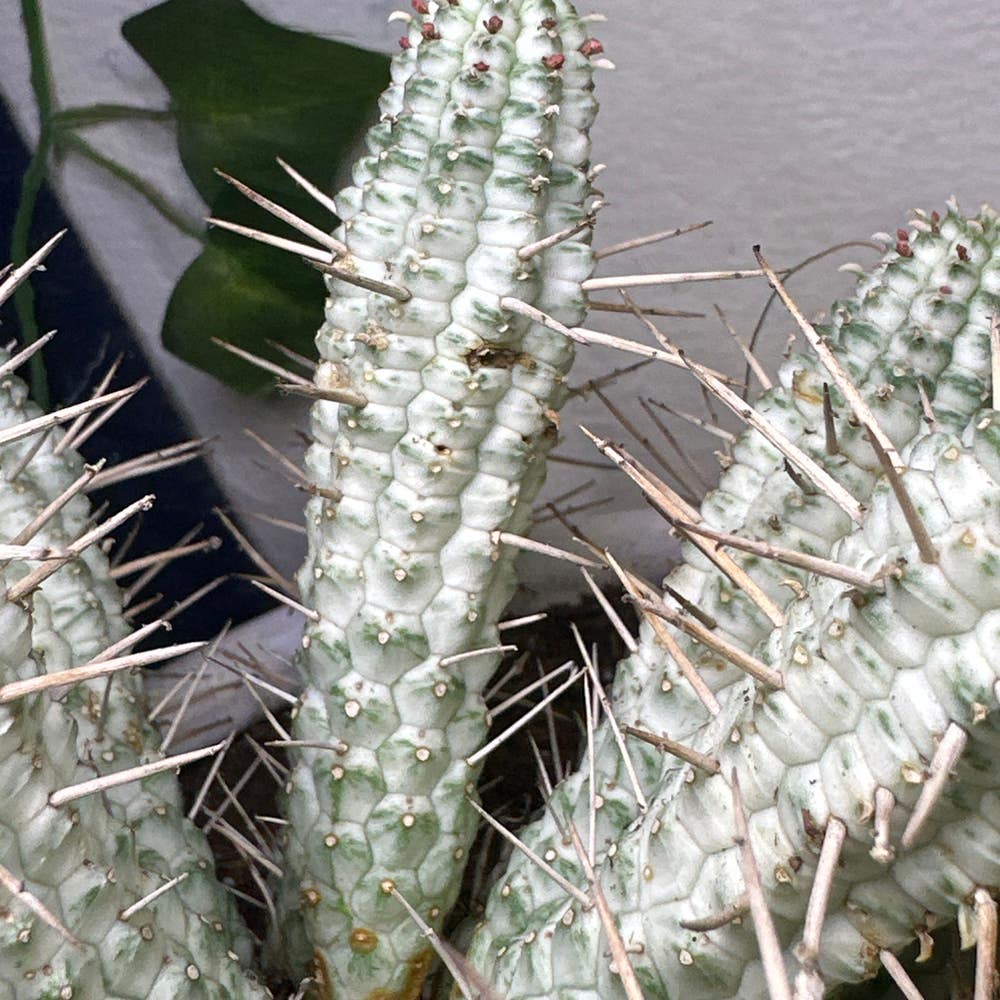
🍂 Why Are My Euphorbia venefica Leaves Turning Yellow?
Euphorbia venefica
By the Greg Editorial Team
Jun 18, 2024•3 min read
This article was created with the help of AI so we can cover more plants for you. May contain errors. See one? Report it here.
- 🌼 Water distress causes yellow leaves, check soil and adjust watering.
- 🌡️ Stable temperatures are crucial, avoid fluctuations to prevent yellowing.
- 🌞 Bright, indirect light is best, find the perfect spot and adjust seasonally.
Pinpointing the Culprits Behind Yellow Leaves
💧 Overwatering and Underwatering
Yellowing leaves on your Euphorbia venefica can signal water distress. Overwatered plants have leaves that feel soggy, while underwatered ones sport dry, crispy foliage. The soil's moisture level is telling; it should not be a wet sponge nor bone-dry.
Fine-tune your watering by checking the top inch of soil. If it's dry, it's time to water. Ensure deep watering and proper drainage to avoid waterlogging and root rot.
🌞 Light Exposure: Too Much or Too Little?
Your plant's leaves are like mood rings for light conditions. Too much light can bleach leaves yellow, while too little light can lead to leggy, stretched-out growth.
Adjust your plant's position to ensure it receives bright, indirect light. This will optimize photosynthesis without the harshness of direct sun.
🌡️ Temperature and Environmental Stress
Temperature fluctuations can wreak havoc on your Euphorbia venefica. Leaves might droop or yellow if the plant is too cold or exposed to drafts.
Create a stable environment with consistent temperatures to maintain healthy, green leaves. Avoid placing your plant near open windows or air conditioners where sudden temperature changes are common.

Turning Over a New Leaf: Remedial Actions
💧 Rescuing Overwatered Euphorbia venefica
Overwatering can turn your Euphorbia venefica's soil into a soggy disaster. To rescue your plant, stop watering and let the soil dry out. This could take several days. Check the roots; if they're brown and mushy, it's time to act. Trim the rotten roots and repot your plant in fresh, well-draining soil.
💦 Reviving from Underwatering
Underwatered plants need a steady sip, not a deluge. Gradually increase watering, ensuring the soil is moist but not waterlogged. Use the finger test: if the soil is dry an inch down, it's time to water. Establish a consistent watering schedule to promote recovery and growth.
🌞 Correcting Light and Temperature Issues
Find the perfect spot for your Euphorbia venefica where it gets adequate light without scorching. Make seasonal adjustments to account for changes in light intensity and duration throughout the year. Keep the plant away from drafts and drastic temperature changes to prevent stress.

Proactive Plant Parenting: Preventive Strategies
🌱 Crafting a Tailored Care Routine
Consistency is paramount in plant care. Like setting an alarm, establish a regular schedule for watering and adjusting light exposure. As seasons shift, so do your Euphorbia venefica's needs—adapt your care routine as if updating your wardrobe for the changing weather.
Monitor your plant's reactions to care adjustments. A plant's feedback isn't instant, but subtle changes can signal the need for a tweak in your approach. Keep a log; it's your plant's biography and your guide to its past and future needs.
🕵️ Staying Vigilant: Early Detection of Stress Signs
Regular check-ups are the cornerstone of plant health. Look for wilting leaves, subtle color shifts, or a slowdown in growth. These signs are your plant's SOS—address them before they escalate.
When in doubt, seek expert advice. Plant communities and specialists can offer insights that might just save your green buddy. Remember, proactive care is about being a plant detective, always on the lookout for the smallest clues.

⚠️ Safety First
This content is for general information and may contain errors, omissions, or outdated details. It is not medical, veterinary advice, or an endorsement of therapeutic claims.
Always consult a qualified healthcare professional before using any plant as food, medicine, or supplement.
Never eat any plant (or feed one to pets) without confirming its identity with at least two trusted sources.
If you suspect poisoning, call Poison Control (800) 222-1222, the Pet Poison Helpline (800) 213-6680, or your local emergency service immediately.
Spotted an error? Please report it here.
Banish yellow leaves and keep your Euphorbia venefica thriving 🌿 with Greg's personalized watering schedule and light monitoring for the perfect care balance!