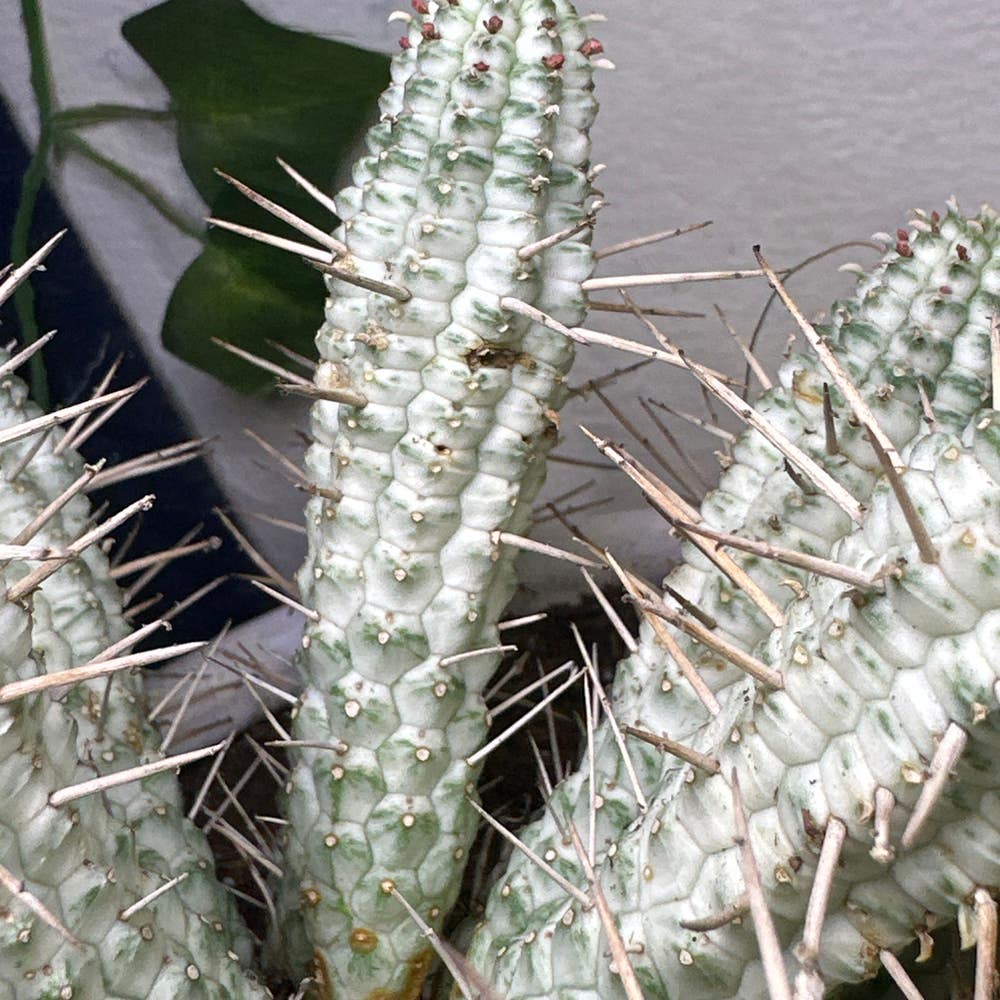
🌽 Propagating Corncob Cactus: Step-by-Step Guide
Euphorbia venefica
By the Greg Editorial Team
Jun 18, 2024•3 min read
This article was created with the help of AI so we can cover more plants for you. May contain errors. See one? Report it here.
- Choose the right piece: Snipping healthy offsets or stems is key.
- Callusing and rooting: Essential steps for stem cuttings to thrive.
- Patience and troubleshooting: Embrace the learning curve in cacti propagation.
Popping Off Those Pups: Offset Propagation
🔍 Spotting and Snipping the Right Offsets
In the quest for offset propagation,

Making the Cut: Stem Cutting Propagation
✂️ The Art of the Snip
Snipping the right piece of your Corncob Cactus is crucial. Sterilize your shears, because cleanliness is not just for the operating room. Aim for a 2-6 inch cutting, with several leaf nodes; that's where the roots will party. Make a clean cut below a node—think precision, not hacking.
🌱 Callusing and Rooting Your Cuttings
Before you dream of roots, let your cutting dry out to form a callus. This is the cut's shield against the dark arts of rot. Rooting hormone is your ally, not a cheat code. Dip the end, then nestle the cutting into a well-draining soil mix. Patience is key; roots don't like to be rushed.
💦 Caring for Your Cuttings
Watering is a delicate dance—too much, and your cutting drowns; too little, and it's a desert dweller's nightmare. Aim for moist, not soggy. Your cuttings crave stability, so keep them in a warm, bright spot without direct sunlight. Think of it as their personal spa retreat.
🛠 Troubleshooting Stem Cutting Propagation
If your cuttings are wilting, they might be throwing a temperature tantrum. Move them to a warmer spot. Yellow leaves? Could be too much water. Ease up on the hydration. Remember, troubleshooting is part of the propagation journey—embrace it as a learning curve.

From Tiny Seeds to Towering Cacti: Seed Propagation
🌱 Seed Collection and Prep
Harvesting seeds from your Corncob Cactus is an exercise in timing. Wait for the fruit to mature and collect the seeds before they're lost to the wind. Cleanliness is crucial; ensure seeds are free from pulp and debris. This sets the stage for a successful germination.
🌵 Sowing Your Seeds for Success
Plant seeds in a well-draining mix, a trifecta of potting soil, coarse sand, and perlite. Moisture is your friend here, but don't let it turn into a pool party. Use a spray bottle to keep the soil damp without disturbing the seeds. Cover the container with plastic to trap humidity and place it in a warm area, around 75–85°F. Patience is your new hobby; germination is a waiting game.
🌱 Seedling Care Essentials
Once your seedlings make their debut, it's time for a gradual introduction to the real world. Begin by reducing humidity slowly, letting them acclimate to less pampered conditions. Water sparingly; think of it as a sipping contest, not a chugging match. Ensure they receive plenty of light, but not the harsh, midday sun. It's a delicate balance, like a tightrope walk in a gentle breeze.
🚨 Troubleshooting Seed Propagation
Yellowing leaves or stunted growth? These are your early warning signs. Act fast, but don't panic—overreaction can be as harmful as neglect. Consistency is key in addressing issues. Adjust watering, lighting, and humidity with a measured hand. Remember, you're not just growing cacti; you're cultivating resilience, both in your plants and in yourself.

⚠️ Safety First
This content is for general information and may contain errors, omissions, or outdated details. It is not medical, veterinary advice, or an endorsement of therapeutic claims.
Always consult a qualified healthcare professional before using any plant as food, medicine, or supplement.
Never eat any plant (or feed one to pets) without confirming its identity with at least two trusted sources.
If you suspect poisoning, call Poison Control (800) 222-1222, the Pet Poison Helpline (800) 213-6680, or your local emergency service immediately.
Spotted an error? Please report it here.
Turn your Corncob Cactus propagation into a success story 🌵 with Greg's tailored reminders and community advice to nurture every cutting and seedling!