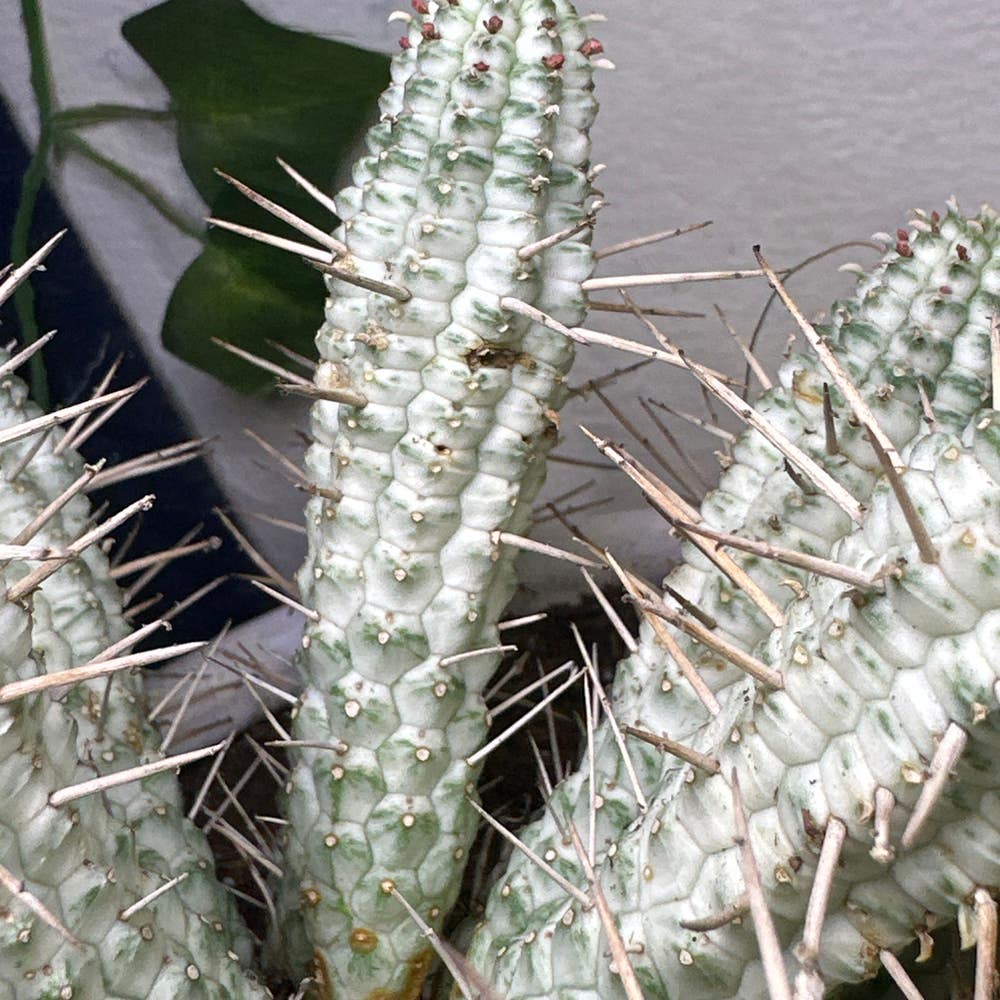
🌵 What Temperature Does My Corncob Cactus Need?
Euphorbia venefica
By the Greg Editorial Team
Jun 18, 2024•3 min read
This article was created with the help of AI so we can cover more plants for you. May contain errors. See one? Report it here.
- Ideal range 70°F-100°F day, 50°F-70°F night to prevent stress.
- 🌡️ Use thermometers and heat mats for stable temperatures.
- Watch for sunburn or chill damage, indicating temperature distress.
Nailing the Perfect Temperature
🌡️ What's Too Hot, What's Too Cold
Corncob Cacti thrive in daytime temperatures between 70°F to 100°F and nighttime temperatures of 50°F to 70°F. Exceeding these limits can lead to leaf discoloration, wilting, or stunted growth. On the flip side, too cold and you risk tissue damage or even plant death.
Seasonal Adjustments
As seasons change, so should your cactus care. Winter may necessitate a move away from drafty areas, while summer could call for shading from intense heat. Regular temperature checks with a thermometer are crucial for timely adjustments.
Quick Tips for Temperature Consistency
To maintain stable temperatures, avoid placing your cactus near heat sources or drafty windows. Insulation tactics like weather stripping can help, and smart thermostats offer precision control. If Mother Nature throws a curveball, be ready with frost blankets or shade cloths for quick protection.

Spotting Trouble: Signs of Temperature Stress
🌡️ Visual Cues
In the realm of Corncob Cactus care, visual symptoms are your first clue to temperature stress. Sunburn manifests as bleached or reddish spots, while chill damage appears as dark, soggy areas. A cactus that's too cold might look shriveled, as if begging for a warm embrace. Overheating, on the other hand, results in wilting or a cactus that resembles an overcooked vegetable.
Immediate Actions
When you spot these distress signals, act fast. Move your cactus away from temperature extremes—be it a scorching window or a chilly draft. Ensure the spot you choose has indirect light and is shielded from harsh temperature fluctuations. Keep a close eye on the plant after relocation; improvement should be noticeable within a few days. If conditions worsen, consider consulting a cactus-savvy friend or a professional for advice.

Keeping Your Cactus Comfy
🌵 Home Placement
Finding the right spot for your Corncob Cactus is like picking the best seat in a movie theater. You want a location that's just right. Bright, indirect sunlight is the sweet spot; think a windowsill that gets the morning sun but is shaded during the peak afternoon heat. Steer clear of areas near air vents or drafty windows, as these can lead to unwanted temperature fluctuations.
🛠 Tools of the Trade
Thermometers are your secret weapon in the quest for temperature stability. They're like personal trainers for your cactus, keeping you informed so you can adjust conditions as needed. For those colder months, consider a plant heat mat. It's like giving your cactus a cozy electric blanket, providing a consistent source of warmth without overheating.
🌦 When Mother Nature Doesn't Cooperate
Sometimes, despite your best efforts, the weather just doesn't play ball. If it's colder than a penguin's pantry, insulate your cactus's pot with bubble wrap or move it to a warmer room. During a heatwave, create some shade or relocate your cactus to a cooler area. Remember, gradual changes are better than sudden shifts—don't give your cactus temperature whiplash.

⚠️ Safety First
This content is for general information and may contain errors, omissions, or outdated details. It is not medical, veterinary advice, or an endorsement of therapeutic claims.
Always consult a qualified healthcare professional before using any plant as food, medicine, or supplement.
Never eat any plant (or feed one to pets) without confirming its identity with at least two trusted sources.
If you suspect poisoning, call Poison Control (800) 222-1222, the Pet Poison Helpline (800) 213-6680, or your local emergency service immediately.
Spotted an error? Please report it here.
Keep your Corncob Cactus flourishing 🌵 with Greg's personalized reminders to adjust care with the seasons, ensuring perfect temperatures year-round.