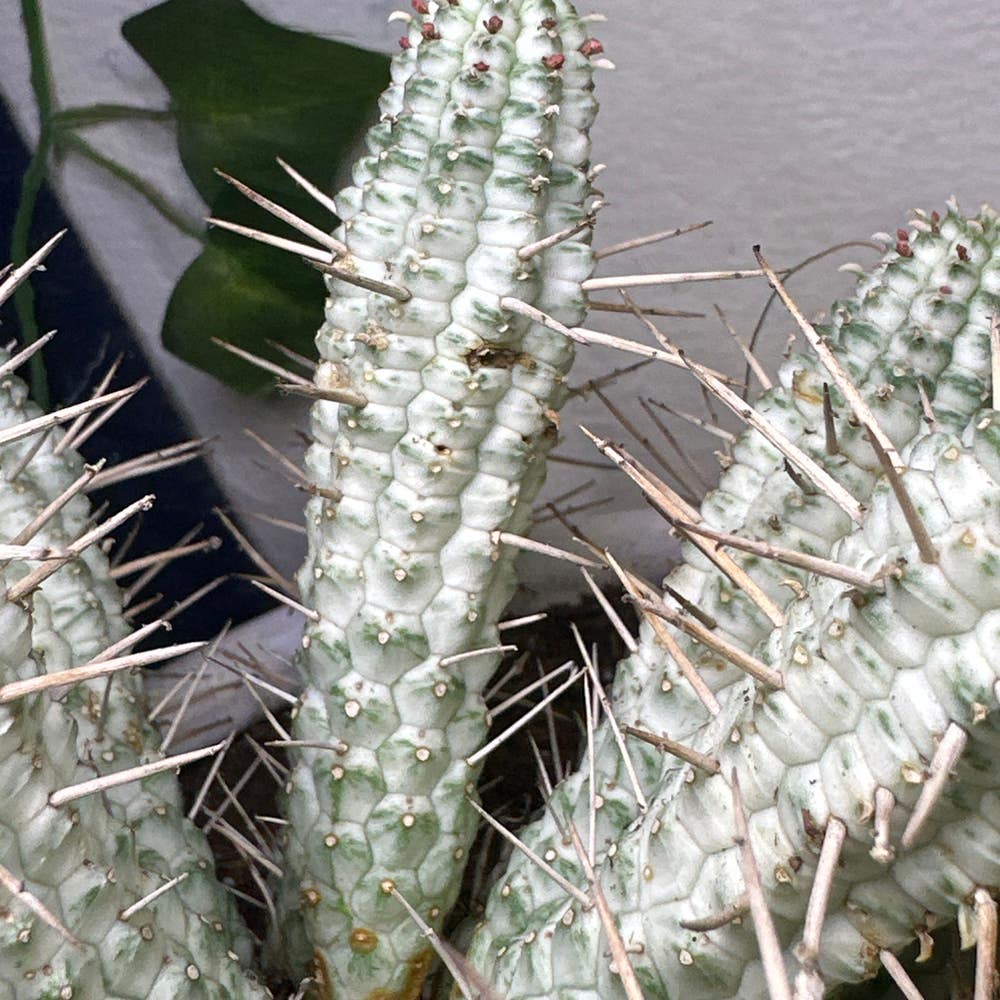
What To Do About Bugs on My Euphorbia venefica? 🐛
Euphorbia venefica
By the Greg Editorial Team
Jun 18, 2024•3 min read
This article was created with the help of AI so we can cover more plants for you. May contain errors. See one? Report it here.
- 🕸️ Spider mites leave webbing; use water, neem oil, or soap.
- 🛡️ Scale insects have bumpy shields; remove with alcohol-dipped swabs.
- 🍄 Fungus gnats love moisture; dry soil and use sticky traps.
Meet the Unwanted Guests: Identifying Common Pests
🕷️ Spider Mites: The Sneaky Sap-Suckers
Tiny but troublesome, spider mites are sap-sucking pests that can wreak havoc on your Euphorbia venefica. You'll spot their presence by the fine webbing on leaves and a speckled, discolored appearance. To combat these invaders, a spray of water can disrupt their webs, or you can escalate to neem oil or insecticidal soap for a more targeted attack. Regular inspections and prompt treatment are key to keeping your plant spider mite-free.
🛡️ Scale: The Sticky Invaders
Scale insects are masters of disguise, appearing as small, bumpy shields on your plant. They leave behind a sticky residue known as honeydew, which is a clear sign of their unwelcome stay. To remove them, use a soft brush or a cotton swab dipped in rubbing alcohol. For prevention, a routine application of insecticidal soap can deter future scale squatters.
🦟 Fungus Gnats and Fruit Flies: The Soil Lurkers
If you notice tiny flies buzzing around your Euphorbia or larvae in the soil, you've got fungus gnats or fruit flies. These pests thrive in moist conditions, so let the soil dry out to cut their lifecycle short. Yellow sticky traps catch the adults, while a layer of sand on the soil can block larvae. Incorporate nematodes for a biological warfare approach.
🐛 Mealybugs: The Fluffy Foes
Mealybugs are the fluff you don't want to find, leaving a cottony residue as they feed on your plant's sap. They cause plant stress, which can be seen through distorted growth and leaf loss. To eradicate these pests, dab them with alcohol or apply horticultural oils. Keep up with routine checks to ensure these fluffy foes don't make a comeback.

Other Pests to Watch Out For
🐜 Aphids: The Plant Lice
Aphids are tiny but troublesome, clustering on new growth and the undersides of leaves. They're sap-suckers, coming in colors like green, black, or pink, and they leave a sticky mess called honeydew.
Blast them with water or introduce natural predators like ladybugs. Insecticidal soaps or neem oil can also be effective, but ensure you cover all plant parts thoroughly.
🦟 Thrips: The Silent Shredders
Thrips are stealthy, causing discolored, speckled leaves and silver-white streaks. They're tough to spot, often hiding within buds or flowers.
Use sticky traps to catch adults and apply insecticides for severe cases. Always spray the undersides of leaves and quarantine new plants to prevent thrips from hitching a ride.


⚠️ Safety First
This content is for general information and may contain errors, omissions, or outdated details. It is not medical, veterinary advice, or an endorsement of therapeutic claims.
Always consult a qualified healthcare professional before using any plant as food, medicine, or supplement.
Never eat any plant (or feed one to pets) without confirming its identity with at least two trusted sources.
If you suspect poisoning, call Poison Control (800) 222-1222, the Pet Poison Helpline (800) 213-6680, or your local emergency service immediately.
Spotted an error? Please report it here.
Eradicate pests and protect your Euphorbia venefica by following Greg's tailored treatment reminders 🛡 to keep your green friends thriving.