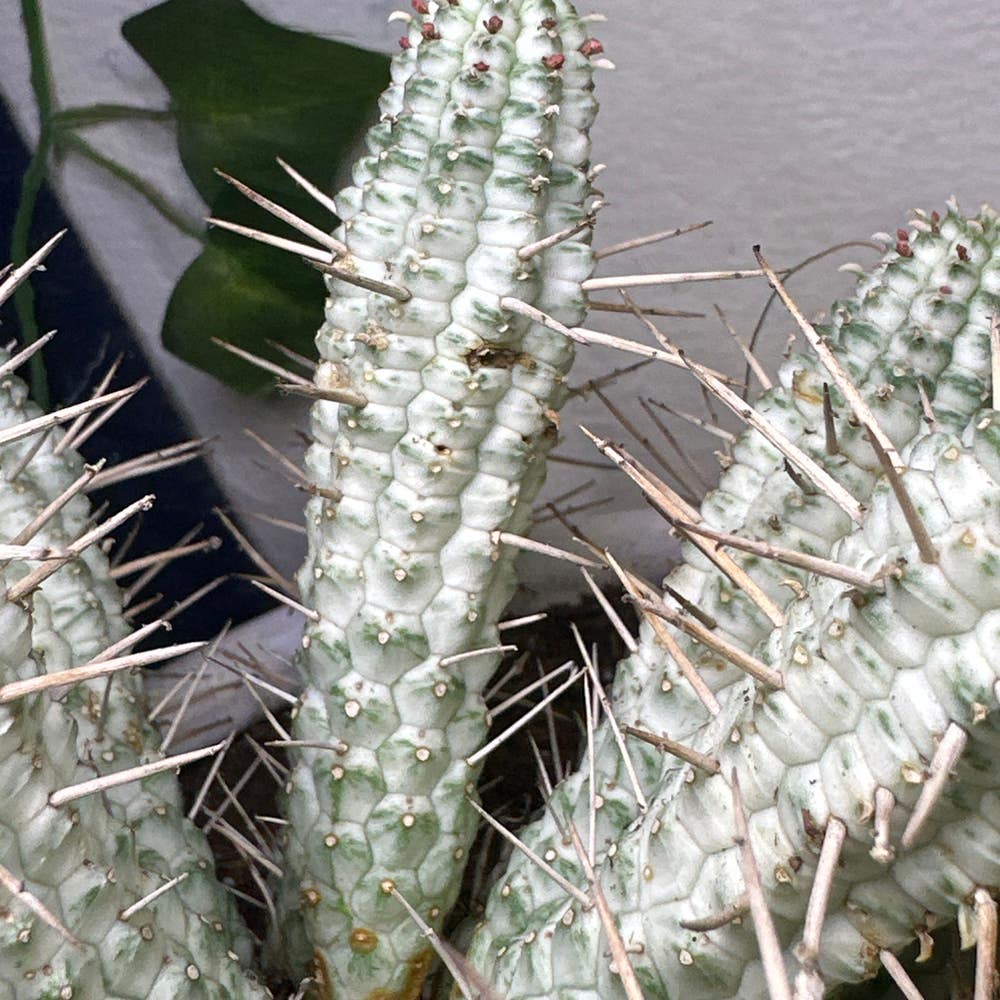
💧 Why Are My Euphorbia venefica Leaves Mushy?
Euphorbia venefica
By the Greg Editorial Team
Jun 18, 2024•5 min read
This article was created with the help of AI so we can cover more plants for you. May contain errors. See one? Report it here.
Spotting the Trouble: Signs of Mushy Leaves
🍂 Visual Cues: What Do Mushy Leaves on Euphorbia venefica Look Like?
Discoloration is your first visual clue. Leaves turning a pale yellow or brown are crying out for help. If they resemble overcooked spinach, you've got a problem. When leaves feel like a soggy paper towel and fall apart with minimal pressure, it's a clear sign of distress.
🌱 Beyond the Surface: Other Symptoms to Watch For
Leaves that drop without resistance are waving the white flag. A foul odor or soil that's still wet days after watering is like a billboard for overwatering. If the roots have turned into a brown sludge, you're likely dealing with root rot. And let's not forget the critters; if you spot a fluffy white residue or fine webs, pests or fungi have joined the party.

Root of the Problem: Common Causes of Mushiness
💦 Overwatering Woes
Overwatering is like giving your Euphorbia venefica an endless bath—it just can't handle that much TLC. Leaves turning into a soggy, limp mess? That's your cue to ease up on the hydration. If the soil feels like a wet sponge and your plant's leaves are more limp than a noodle, you're likely drowning it in love.
🕵️♂️ Root Rot: A Silent Assassin
Root rot is the ninja of plant problems—it strikes quietly but deadly. Blackened roots and a stench of decay are the SOS signals. If your plant's base feels like a horror movie prop, it's time to act fast. This fungal fiesta means your Euphorbia venefica's roots are on the menu, and mushy leaves are the distress flares.
🍄 Fungal Foes
Fungi are the uninvited guests that crash the party in your pot. Powdery mildew and anthracnose are the culprits leaving their calling cards—white coatings and dark lesions. These fungal infections love a moist environment, turning your plant's robust leaves into mushy disappointments. If you spot these signs, it's time to show these party crashers the door.

Turning Over a New Leaf: Fixing Mushy Leaves
🚰 Rescuing Overwatered Euphorbia
Immediate action is key when you've given your Euphorbia venefica more water than it bargained for. Stop watering and remove the plant from its pot to check for damage. If the roots look like they've been through a blender, it's time to trim the mushy parts with sterilized scissors.
Soil and drainage are your plant's lifelines. Replant using a well-draining mix—think cactus soil with added perlite or sand. Ensure the pot has drainage holes that aren't just for show; they should work harder than a barista during the morning rush.
🏜️ Battling Root Rot
When root rot hits, it's less of a battle and more of a rescue mission. After cutting away the rotten roots, consider whether your Euphorbia needs a new home. A fresh pot with ample drainage and new soil can be the fresh start it needs.
Repotting should be like moving into a better neighborhood for your plant's roots. Choose a container that allows roots to breathe but doesn't leave them rattling around like loose change in a jar.
💉 Fungus Among Us: Treatment Tactics
Fungal infections turn leaves into a mushy mess faster than a forgotten fruit in the sun. Fungicides can be your ally here, but they're not miracle workers. Apply them as directed, and remember, they're part of the solution, not the whole fix.
Creating a fungi-unfriendly environment is about as important as the treatment itself. Keep the soil drier than a stand-up comedian's wit to discourage any fungal gate-crashers from ruining the party again.

Prevention: Keeping Leaves Firm and Healthy
💧 Mastering the Art of Watering
Timing is everything when it comes to watering your Euphorbia venefica. Wait for the top inch of soil to dry out before you even think about giving it a drink. This isn't just about quenching thirst; it's about encouraging deep root growth and resilience. Overwatering is the express lane to Soggy Leaf City, and nobody wants to visit there.
🌡️ Tools and Tricks for Soil Moisture
Get yourself a moisture meter or do the old finger test to check soil dryness. Remember, these plants are more camel than fish; they store water and prefer a drought to a flood. Adjust your watering frequency with the seasons—more during the growth phase, less when it's cooler and your plant is resting.
🏡 The Perfect Home: Soil and Pot Essentials
🌱 Choosing the Right Soil Mix
Your Euphorbia venefica needs a soil mix that drains like a dream. Think cactus or succulent mix, or get crafty and mix in some perlite or coarse sand. This isn't just about avoiding wet feet; it's about giving your plant the perfect bed to lay its roots in.
🍯 Pot Size and Material
Size matters when it comes to pots. Too big, and you'll have too much wet soil hanging around. Too small, and your plant's growth gets stunted. Go for a Goldilocks pot—just right. Material-wise, terracotta is your friend. It's porous, allowing soil to dry out more evenly and helping you avoid overwatering mishaps. Remember, a happy Euphorbia venefica is all about balance—water, soil, and home.
⚠️ Safety First
This content is for general information and may contain errors, omissions, or outdated details. It is not medical, veterinary advice, or an endorsement of therapeutic claims.
Always consult a qualified healthcare professional before using any plant as food, medicine, or supplement.
Never eat any plant (or feed one to pets) without confirming its identity with at least two trusted sources.
If you suspect poisoning, call Poison Control (800) 222-1222, the Pet Poison Helpline (800) 213-6680, or your local emergency service immediately.
Spotted an error? Please report it here.
Avoid the mushy leaf mishap with your Euphorbia venefica by relying on Greg's smart watering reminders 💧 to maintain the perfect moisture balance for lush, healthy growth.