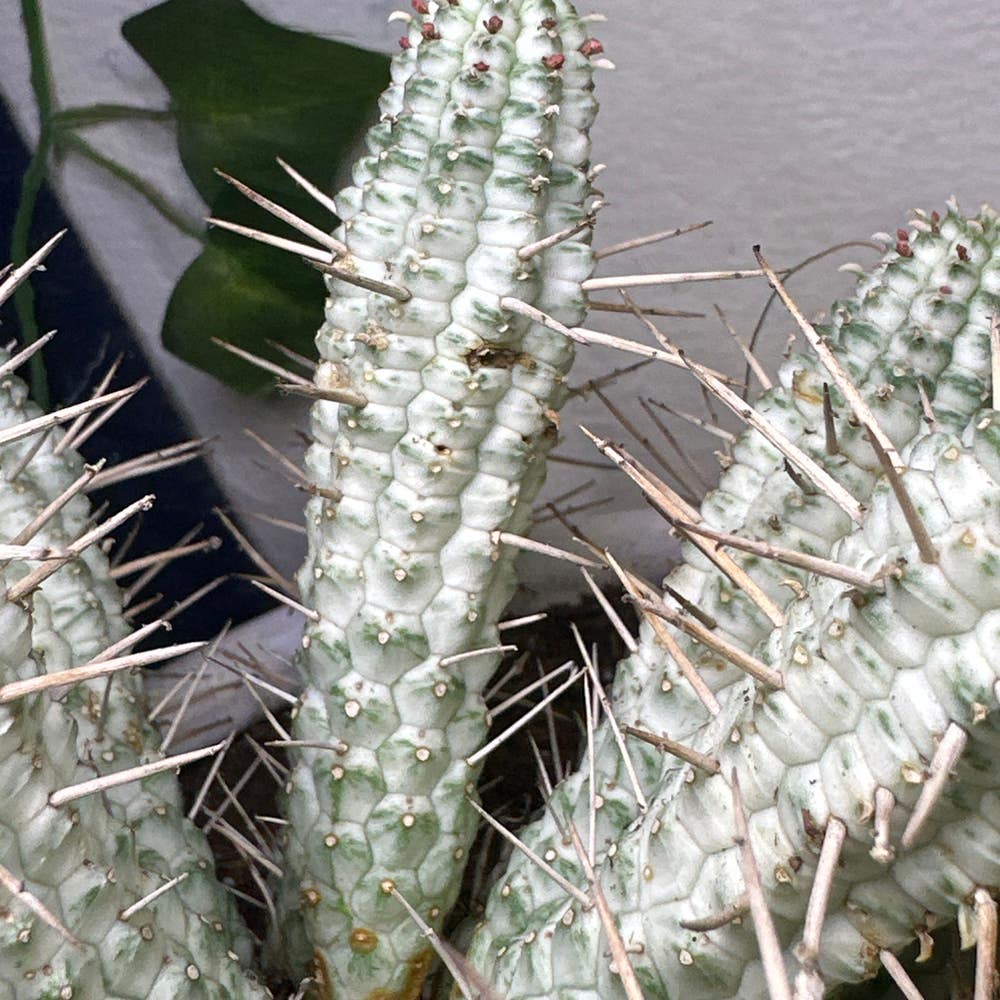
🌽 Should I Repot My Corncob Cactus And If So, How?
Euphorbia venefica
By the Greg Editorial Team
Jun 18, 2024•4 min read
This article was created with the help of AI so we can cover more plants for you. May contain errors. See one? Report it here.
- 🌵 Roots peeking out? Time to repot your Corncob Cactus.
- Spring repotting aligns with the cactus's growth spurt.
- Terracotta pots preferred for breathability and preventing overwatering.
When to Give Your Corncob Cactus a New Pot
🌵 Spotting the Telltale Signs
If your cactus is playing peek-a-boo with its roots through the drainage holes, it's not just for fun—it's cramped. When the soil dries out faster than a tweet goes viral, that's another red flag. And if your cactus's growth has slowed to a snail's pace, it's not just being dramatic—it might need a new stage to perform on.
Timing is Everything
Spring is the season of new beginnings, and it's also the best time to repot your Corncob Cactus. This is when the cactus is entering its growth spurt, so it'll recover from the move quicker than you can say "photosynthesis." Remember, timing isn't just about the season; it's about reading your plant's body language and understanding its growth cycle.

Choosing the Right Pot for Your Cactus
🏺 Material Matters
Terracotta, ceramic, and plastic are the main contenders when selecting a pot for your Corncob Cactus. Terracotta is the go-to for breathability, letting air and moisture flow freely, which is key for preventing overwatering. Ceramic pots, while less porous, still offer a degree of breathability and come in a variety of glazed finishes that can reduce water loss. Plastic pots are the least porous, retaining moisture the longest, which can be a double-edged sword depending on your watering habits.
📏 Size and Shape Considerations
When upsizing, aim for a pot that's about an inch or two larger in diameter than the current one. This gives your cactus room to grow without leaving too much soil to stay wet and cause root rot. The shape of the pot should allow for even soil moisture; a pot that's too deep can hold water at the bottom, away from the roots where it's needed. Drainage holes are non-negotiable – they're the safety net against waterlogged soil.

The Repotting Process: A Step-by-Step Guide
🌵 Preparing for the Move
Gathering the right tools and materials is crucial for a smooth repotting experience. You'll need a new pot, preferably one that's 2 inches larger than the current one, with drainage holes. Don't forget a pair of thick gloves to protect your hands from the cactus spines, a trowel, and a well-draining cactus mix. It's also wise to cover the pot's drainage with mesh to prevent soil loss. Clear your workspace; you don't want any spiny surprises amidst clutter.
🧤 Protecting yourself from the cactus sap
Cactus sap can be irritating, so besides gloves, wear long sleeves. If you get some sap on you, wash it off immediately with soap and water.
🌱 The Art of Transplanting
Removing the cactus safely from its current pot
Approach this task with respect for those spines. Tilt the pot and gently coax the cactus out by supporting the root ball. If it's stubborn, a clean knife or garden trowel can help loosen the soil around the edges.
Planting it in its new home: Techniques for success
Place a little new soil at the bottom of the pot, no more than 1-2 inches. Set the cactus in and fill around it with more cactus mix, taking care not to compact the roots. Firmly press the mix around the base to secure the plant. Water deeply, then let the soil dry out completely before the next watering. Hold off on fertilizing for six weeks to let your cactus settle in its new home.

Aftercare: Helping Your Cactus Settle In
🌵 The First Few Days
Wait a week before you water your Corncob Cactus post-repotting. This pause allows any disturbed roots to heal. When you finally water, do so with a light hand; your cactus is not throwing a frat party, it's more of a quiet evening in. Let the soil dry out completely before even considering another watering session.
Monitor your cactus like it's the season finale of your favorite show. Look out for signs of stress such as discoloration or wilting. If you notice any, it's time to reassess the cactus's living conditions. Maybe it's craving more light, or perhaps it's had too much. Adjust accordingly.
🌵 Long-term Success
After the initial settling period, it's time to ease into a routine. Your cactus care should be more about observation than action. When it comes to water, remember: less is often more. Overwatering is the express lane to root rot, so let the soil go bone-dry between drinks.
Hold off on the fertilizer for the first month
⚠️ Safety First
This content is for general information and may contain errors, omissions, or outdated details. It is not medical, veterinary advice, or an endorsement of therapeutic claims.
Always consult a qualified healthcare professional before using any plant as food, medicine, or supplement.
Never eat any plant (or feed one to pets) without confirming its identity with at least two trusted sources.
If you suspect poisoning, call Poison Control (800) 222-1222, the Pet Poison Helpline (800) 213-6680, or your local emergency service immediately.
Spotted an error? Please report it here.
Navigate your corncob cactus's critical adjustment period 🌵 with ease using Greg's tailored reminders for optimal watering and care post-repotting.