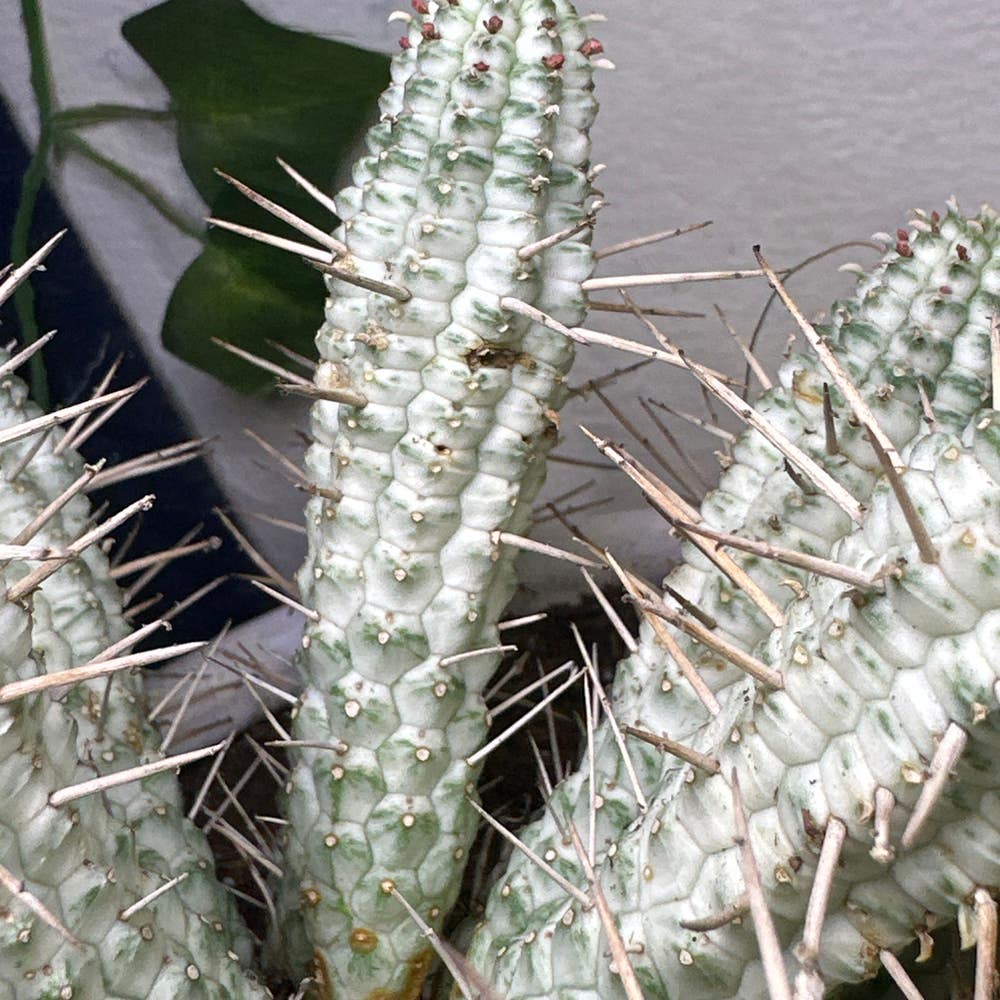
🌵 Why Are My Corncob Cactus Leaves Falling Over?
Euphorbia venefica
By the Greg Editorial Team
Jun 18, 2024•5 min read
This article was created with the help of AI so we can cover more plants for you. May contain errors. See one? Report it here.
- Spot drooping early to maintain cactus health; look for discoloration and softness.
- 🌵 Balance watering and light; avoid over/underwatering and ensure adequate sunlight.
- Repot for recovery, using well-draining soil and a larger pot if root-bound.
Spotting the Telltale Signs
🚨 When to Worry: Recognizing the Droop
Identifying early signs of your Corncob Cactus's leaves falling over is crucial. Look for leaves that once reached for the sky but now droop sadly. A bend in the stem may indicate a deeper issue with the plant's structural integrity.
Understanding the difference between natural growth patterns and problematic drooping is key. Not all droopiness is a death sentence; new growth may naturally sag. However, if the droop is persistent and paired with other worrying symptoms, it's time for action.
🏥 Quick Health Check: Assessing Your Cactus
Performing a quick health check on your Corncob Cactus is simple yet vital. Discoloration—any hue that doesn't scream 'healthy green'—is a visual cry for help. Spots or leaves that feel like an overripe peach are your cactus's way of sending an SOS.
Look for red flags such as leaves resembling a deflated balloon or stems that crunch under gentle pressure. If the soil is pulling away from the pot's edge, consider this a subtle hint that your cactus is not in its happy place.

Rooting Out the Causes
💧 Too Much Love: The Perils of Overwatering
Yellow stems and a squishy base are your cactus crying out for help. Overwatering is a common misstep, turning robust roots into a buffet for fungi and bacteria. Root rot sets in, and your cactus's leaves droop in despair. The soil should be dry an inch down before you even think about watering again.
🏜️ Thirsty Spikes: The Underwatering Balancing Act
On the flip side, underwatering leaves your cactus as parched as a desert wanderer. Look for shriveled stems and a lack of new growth. Your cactus's spikes are thirsty, and the soil should never resemble a dust bowl. Aim for a steady rhythm in your watering routine, keeping the soil moist but not oceanic.
🌞 Light Starved Stems: Craving the Sun
Weak stems could mean your cactus is starved for sunlight. Without adequate light, your cactus might as well be trying to photosynthesize in a closet. Ensure it gets plenty of direct sunlight, and consider a grow light if your windowsill isn't cutting it. Rotate the pot for even growth, but don't let it sunbathe to the point of sunburn.
🌱 Cramped Quarters: When Roots Need Room
If your cactus is root-bound, it's time to give it some real estate. Roots circling the pot or poking out of drainage holes are red flags. Water running straight through? That's a sign the roots have taken over. Repot in a slightly larger home with well-draining soil, and watch your cactus reclaim its posture.

Turning the Tide: Remedial Actions
💧 Fine-Tuning Watering Habits
Watering your Corncob Cactus isn't about sticking to a rigid schedule; it's about being observant. When the top inch of soil feels dry, it's time to water. Do it deeply, but infrequently, to encourage strong root growth.
Tools like moisture meters can take the guesswork out of watering. Or, go old-school: stick your finger in the soil. If it's dry up to your first knuckle, grab the watering can.
☀️ Let There Be Light: Ensuring Adequate Exposure
Your cactus is a bit of a diva when it comes to light—it wants its spotlight, but not too harsh. Bright, indirect light is the sweet spot. If your cactus is stretching or leaning, it's time to rearrange.
Consider grow lights if your home is more cave than greenhouse. They're like a sun substitute, providing consistent light without the risk of sunburn.
🌱 Giving Roots the Space to Grow
If your cactus is toppling, it might be screaming for a new home. Repotting gives roots room to stretch. Choose a pot that's one size larger with a drainage hole to prevent waterlogging.
The right soil mix is crucial—think well-draining with a dash of grit, like perlite or pumice. It should drain faster than your excitement at a botched magic show.

Staying Upright: Prevention Strategies
🌵 Crafting a Cactus-Friendly Environment
Creating a supportive habitat for your Corncob Cactus is like setting the stage for a solo performance—it needs to be just right. Bright light is essential; if natural sunshine is in short supply, grow lights are your backstage crew. Airflow should be on the guest list too; stagnant air is a no-show. Keep your cactus's company exclusive—no crowding. This isn't a plant mosh pit.
👀 Regular Monitoring and Adjustments
Vigilance is the name of the game. Your cactus won't send an SOS when it's in distress, so keep your eyes peeled for subtle signs of trouble. Adjust your care routine like a pro DJ tweaking the tracks—when the cactus leans, it's time to remix your approach.
🚨 Early Detection: Staying Ahead of Trouble
Spotting issues early is like catching a typo before hitting send—it saves face. Keep a log of your cactus's health to track any changes; it's the equivalent of a plant diary. This isn't just busywork; it's your cactus's biography, and you're the ghostwriter.
📝 Keeping a Log: Tracking Changes in Your Cactus's Condition
Documenting your cactus's life story isn't just for the sentimental. It's a practical tool for spotting patterns and preempting problems. Note watering dates, growth spurts, and mood swings. Yes, plants have moods—don't let anyone tell you otherwise.
⚠️ Safety First
This content is for general information and may contain errors, omissions, or outdated details. It is not medical, veterinary advice, or an endorsement of therapeutic claims.
Always consult a qualified healthcare professional before using any plant as food, medicine, or supplement.
Never eat any plant (or feed one to pets) without confirming its identity with at least two trusted sources.
If you suspect poisoning, call Poison Control (800) 222-1222, the Pet Poison Helpline (800) 213-6680, or your local emergency service immediately.
Spotted an error? Please report it here.
Keep your Corncob Cactus standing tall with Greg's custom care plan 🌵, which includes watering reminders and sunlight tracking to ensure your plant's health and stability.