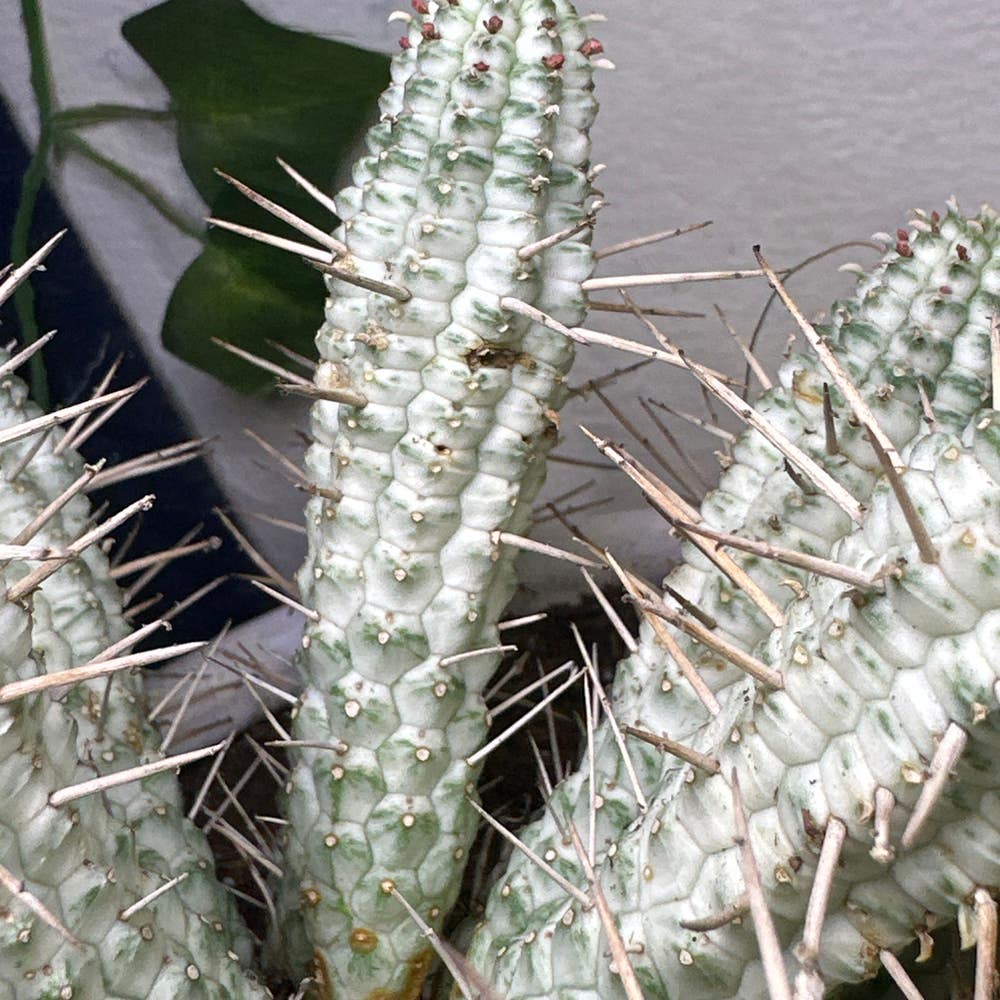
Soil Recommendations for Euphorbia venefica
Euphorbia venefica
By the Greg Editorial Team
Jun 18, 2024•4 min read
This article was created with the help of AI so we can cover more plants for you. May contain errors. See one? Report it here.
- Well-draining soil is crucial for Euphorbia venefica's health.
- Optimal pH: 6.0-7.0 for nutrient uptake; watch for mold and compaction.
- Ideal mix: Perlite, peat moss, worm castings, and coarse sand or pumice.
Spotting the Perfect Soil Mix
💧 Drainage is Key
Well-draining soil is non-negotiable for Euphorbia venefica. It's the difference between a thriving plant and a drowning one. Look for signs of water pooling on the surface or a pot that feels heavier than it should – these are red flags for poor drainage.
pH Levels and Nutrient Balance
Euphorbia venefica prefers a pH range of 6.0 to 7.0. This sweet spot allows optimal nutrient uptake. Ensure your soil is not just a dumping ground for water but a balanced meal with essential nutrients like potassium, nitrogen, and phosphorus.

Turning Around Troubled Soil
🚫 When Mold Takes Over
Mold in soil is like a red flag waving at you, demanding attention. Spotting mold is straightforward: look for white or green fuzzy growths or a musty smell. These are telltale signs that your Euphorbia venefica's soil is too wet and lacks proper air circulation.
To banish mold, cut back on watering immediately. Increase airflow around your plant and let it soak up some sunlight. If the mold is stubborn, repot with a fresh, sterile mix, ensuring the new soil is on the drier side to discourage mold regrowth.
💪 Beating Compaction
Compacted soil is a silent root killer. It's recognizable by water pooling on the surface or a hard, dense texture. Your plant's roots are gasping for air if the soil feels more like concrete than a fluffy cloud.
Aerating is your go-to move here. Use a fork or a stick to gently loosen the soil without damaging the roots. If the situation is dire, consider repotting with a well-draining mix that includes perlite or pumice to prevent future compaction. Remember, roots need room to breathe, just like we do.

Crafting Your Euphorbia's Dream Soil at Home
🌱 Must-Have Ingredients
Crafting the ideal soil mix for Euphorbia venefica is like assembling a gourmet meal for a discerning diner. Perlite is a must for that airy quality, ensuring roots aren't suffocating in moisture. Sphagnum peat moss regulates pH and retains just the right amount of wetness. Nutrient-rich worm castings or compost give your Euphorbia a growth boost, while coarse sand or pumice improves drainage. No bark pieces here; we're not building a forest floor.
🌿 Mixing It Right
Get your proportions right: one part perlite, one part sphagnum peat moss, and a sprinkle of worm castings. If you're feeling adventurous, add a dash of coarse sand. Mix it like you're tossing a salad, ensuring each component is evenly distributed. Your Euphorbia's roots should feel like they've hit the jackpot.
🧼 Keeping It Clean
Before you get down and dirty, sterilize your tools and containers. A run-in with bacteria or fungi is the last thing your Euphorbia needs. Disinfect with hot water or alcohol, and let them dry. Now, you're ready to create a soil mix that's as clean as a whistle, ready to support your plant's quest for world domination—or at least windowsill domination.

Long-Term Soil Care Strategies
🩺 Regular Check-ups
Monitoring your Euphorbia venefica's soil is like being a plant's personal physician. You need to keep tabs on its health. Here's how:
- Get Physical: Poke around. Your fingers are the best tools to feel for moisture and texture.
- Visual Inspection: Look for discoloration or pests. Healthy soil shouldn't look like a horror movie set.
- Moisture Meter: If you're tech-inclined, use a gadget. It's like a Fitbit for your plant's soil.
💪 Tune-ups for Your Soil
Soil doesn't age like fine wine; it gets tired and needs a pick-me-up. Here's when and how to give it a boost:
- Time It Right: Every couple of years, or when the soil starts throwing tantrums, it's time for a change.
- Refresh, Not Replace: Think of it as a spa day for your plant. Top off with fresh soil and mix in some compost.
- Full Overhaul: If the soil is beyond redemption, like last year's fashion, replace it. Your plant will thank you.
⚠️ Safety First
This content is for general information and may contain errors, omissions, or outdated details. It is not medical, veterinary advice, or an endorsement of therapeutic claims.
Always consult a qualified healthcare professional before using any plant as food, medicine, or supplement.
Never eat any plant (or feed one to pets) without confirming its identity with at least two trusted sources.
If you suspect poisoning, call Poison Control (800) 222-1222, the Pet Poison Helpline (800) 213-6680, or your local emergency service immediately.
Spotted an error? Please report it here.
Perfect your Euphorbia venefica's habitat with a well-draining, pH-balanced soil and let Greg's custom reminders 📅 ensure your plant's soil stays in top condition without the guesswork.