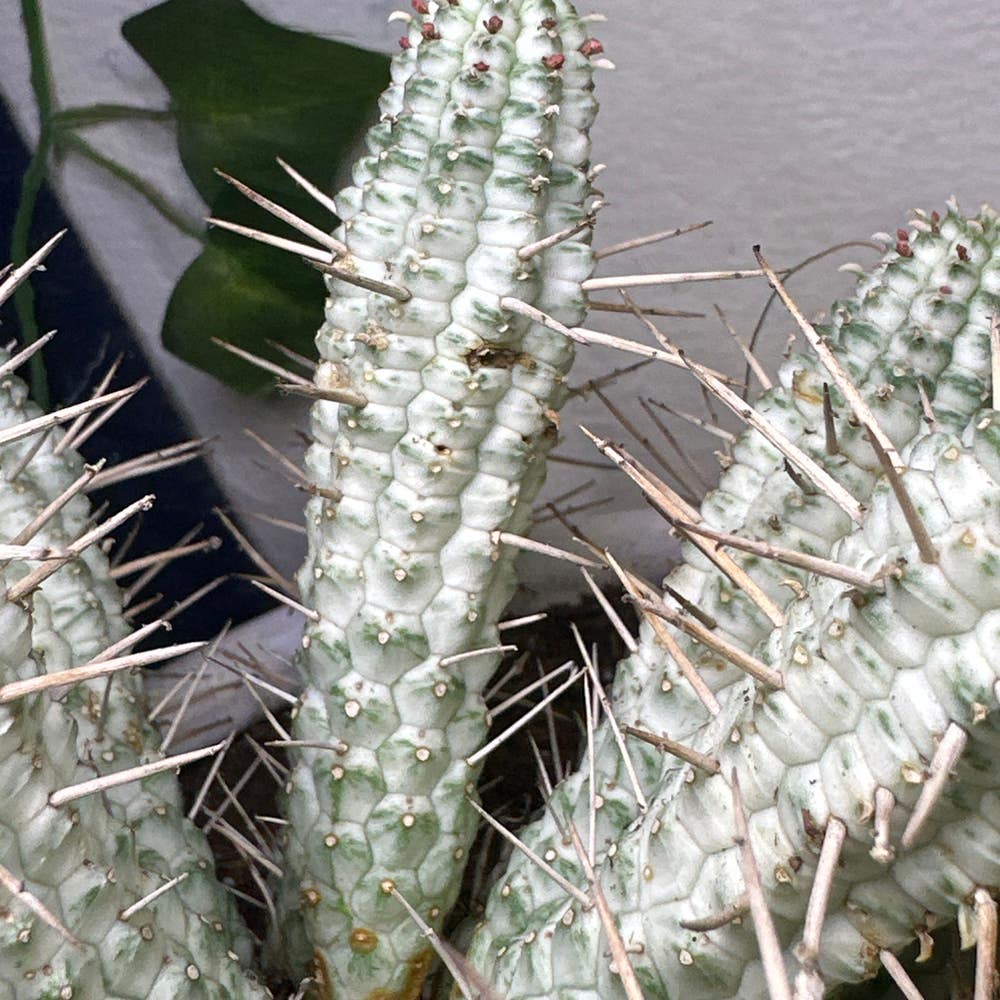
Black Spots on My Euphorbia venefica Leaves
Euphorbia venefica
By the Greg Editorial Team
Jun 18, 2024•4 min read
This article was created with the help of AI so we can cover more plants for you. May contain errors. See one? Report it here.
- Fungal vs. bacterial: Powdery or slimy spots signal different issues.
- Environmental stressors: Over/underwatering and light issues can cause spots.
- Prevention is key: Regular inspections and proper care prevent black spots.
Spotting the Trouble: Recognizing Black Spots
🔍 Visual Inspection
Look sharp: Black spots on Euphorbia venefica leaves are a visual SOS. They might start as tiny specks and can grow into larger, more ominous blotches. These spots are not just aesthetic issues; they're distress signals from your plant.
🎯 Spot Characteristics
Details matter: Black spots often have concentric rings or defined edges. Their appearance can range from jet black to brownish, sometimes accompanied by a yellowish halo. This isn't just a color change; it's a symptom of a possible fungal or bacterial issue.
📍 Location and Texture
Flip and feel: Black spots frequently lurk on the undersides of leaves, a favorite hideout for plant pathogens. When you inspect the leaves, note the texture—spots can be raised, sunken, or even slimy to the touch.
🚨 Early Detection
Act fast: Catching these spots early is crucial. Regular inspections are like health screenings for your Euphorbia venefica. If you notice spots are spreading or the leaf texture changes, it's time for intervention.

Zeroing in on the Culprit: Causes of Black Spots
🍄 Fungal Foes
Circular or irregularly shaped spots on your Euphorbia venefica's leaves likely point to a fungal infection. These spots may have a powdery texture, signaling the presence of unwelcome fungi.
🦠 Bacterial Bullies
Bacterial infections manifest differently. Spots caused by bacteria often look water-soaked or slimy. If your plant's leaves have a greasy sheen, bacteria might be the party crashers.
🌿 Environmental Stressors
Environmental conditions can also lead to black spots. Overwatering or underwatering, excessive sunlight, or temperature extremes act as silent stressors, causing your plant to signal distress through those unsightly marks.

The Battle Plan: Treating Black Spots
🍄 Fungus Among Us: Fighting Back
Choose your antifungal weapons wisely. Not all fungicides are created equal, and overuse can lead to resistance. Rotate your fungicides like you're shuffling a deck of cards—keep the fungus guessing. Tebuconazole and triticonazole are the heavyweights in your arsenal. Apply with precision; think sniper, not shotgun.
Adjusting care is crucial. Water the soil directly, avoiding the leaves like they're made of sugar. Keep the watering can at bay until the topsoil feels like a dry handshake—moist but not wet. This isn't just maintenance; it's a strategic move against the fungal invasion.
🦠 Bacteria Be Gone
Prune with purpose. When black spots appear, it's time to turn surgeon. Sterilize your tools as if prepping for a medical procedure. Remove the infected leaves with the precision of a chess player making a critical move. This isn't just about aesthetics; it's about survival.
Improve airflow to make your Euphorbia feel like it's living in a breezy meadow. Space your plants out—social distancing isn't just for humans. Think of good circulation as an invisible shield, protecting your green companions from bacterial onslaught.
🌿 Tweaking the Environment
Watering wisdom is knowing when to hold back. Let the soil dry out between watering sessions like a well-timed pause in conversation. Overwatering is the root of all evil in the plant world—avoid it like a spoiler to your favorite show.
Let there be light, but not too much. Your Euphorbia venefica craves that sun-kissed glow, not a sunburn. Position it where the light is bright but indirect, like the sweet spot on your couch—not too close to the TV, not too far from the snacks.

Shield Up: Preventing Future Outbreaks
🕵️ Regular Plant Check-Ups
Vigilance is key in preventing black spots. Regularly inspect your Euphorbia venefica as if you're proofreading an important email. Look for early signs of trouble, and act swiftly if you spot anything amiss.
💧 Watering Do's and Don'ts
Overwatering is a no-go. Ensure your plant's soil is moist, but never soggy, and allow it to dry out between waterings. Think of it as giving your plant a well-timed sip, not a flood.
🚫 Quarantine New Plants
New plants should be treated like new roommates: vet them before they join the household. Quarantine them for at least a month to ensure they're not bringing any unwanted guests like pests or diseases.
✂️ Pruning and Cleanliness
Keep your pruning tools as clean as your kitchen cutlery. Sterilize them before use to prevent the spread of pathogens. Remove affected foliage promptly and dispose of it like expired food from your fridge.
🌿 Environmental Tweaks
Your plant's environment should be as comfortable as a well-adjusted office chair. Ensure proper lighting and air circulation to keep your Euphorbia venefica stress-free and less susceptible to black spots.
⚠️ Safety First
This content is for general information and may contain errors, omissions, or outdated details. It is not medical, veterinary advice, or an endorsement of therapeutic claims.
Always consult a qualified healthcare professional before using any plant as food, medicine, or supplement.
Never eat any plant (or feed one to pets) without confirming its identity with at least two trusted sources.
If you suspect poisoning, call Poison Control (800) 222-1222, the Pet Poison Helpline (800) 213-6680, or your local emergency service immediately.
Spotted an error? Please report it here.
Combat black spots 🛑 on your Euphorbia venefica by letting Greg guide you with tailored care tips and timely reminders for a healthier, happier plant.