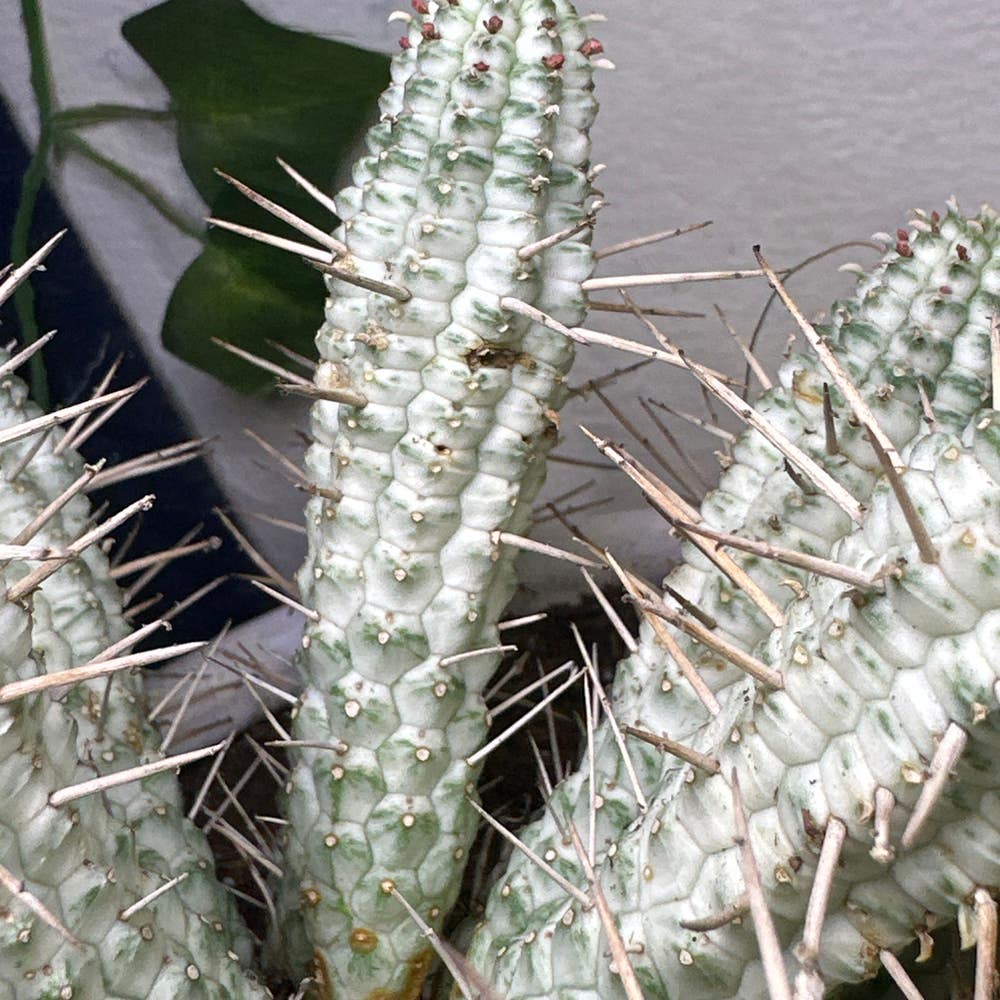
🌽 Why Are My Corncob Cactus Leaves Curling?
Euphorbia venefica
By the Greg Editorial Team
Jun 18, 2024•6 min read
This article was created with the help of AI so we can cover more plants for you. May contain errors. See one? Report it here.
- Curling leaves signal distress, often due to environmental stress or watering issues.
- 🌵 Perfect watering and pest control are crucial for Corncob Cactus health.
- Regular care and the right soil prevent leaf curling and promote root happiness.
Spotting the Signs: Leaf Curling in Action
🌵 Visual Symptoms of Leaf Curling
Curling leaves on a Corncob Cactus scream "I'm not okay!" Edges rolling inward and color fading from vibrant to dull are your visual cues. Necrotic spots? That's the plant's version of an SOS.
🍃 How Leaf Curling Differs from Other Leaf Issues
Leaf curling is not just a quirky trait; it's a distress signal. Unlike uniform discoloration or the occasional dry tip, curling is a systemic cry for help. It's your cue to spring into action, not just raise an eyebrow.

The Usual Suspects: Identifying Causes of Leaf Curling
🌡️ Environmental Stress: Temperature and Light
Leaf curling in Corncob Cacti can be a drama queen when it comes to temperature and light. Too hot or too cold, and your cactus is throwing a fit with curled leaves. Keep the temperature above 50°F to avoid a cold-induced curl-fest.
💡 Light: A Balancing Act
Bright, indirect light is the sweet spot. Too much sun and your cactus's leaves curl up like they're searching for shade. Find that perfect indirect sunlight spot and rotate your plant for even exposure.
🚰 Water Woes: Overwatering and Underwatering
Watering is like walking a tightrope. Overwatering makes the leaves soft and curled, while underwatering leads to dry, crispy curls. It's all about finding that watering rhythm that keeps the soil moist but not soggy.
🍽️ Soil: The Unsung Hero
A well-draining soil mix is your best defense against waterlogged roots. This helps prevent overwatering, which is a common cause of leaf curling. So, don't skimp on the soil; it's more important than you think.
🐜 Uninvited Guests: Pests that Cause Curling
Pests are the party crashers no one wants. Aphids, mealybugs, and spider mites can cause leaves to curl by sucking the life out of them. Look for sticky residue or misshapen leaves as a sign of these uninvited guests.
🛡️ Dealing with the Critters
If you spot pests, it's time for some safe pest control action. Neem oil or insecticidal soap can be your allies in evicting these tiny troublemakers. Remember, it's about being proactive, not just reactive.

Nipping Problems in the Bud: Solutions for Leaf Curling
🌵 Adjusting Your Cactus's Environment
Cacti are like Goldilocks; they want everything just right. Temperature and lighting are the dynamic duo for cactus comfort. Keep your corncob cactus in a spot where it gets bright, indirect light—too much sun and it's a desert drama, too little and it's a sad, shade-loving story. As for temperature, think warm days and cooler nights, but nothing too extreme.
💧 Perfecting Your Watering Technique
Watering is an art, and your cactus is the canvas. Consistency is key—establish a watering schedule that's just right. Use tools like moisture meters or the old-school finger test to avoid turning your cactus into a swamp creature or a desert wanderer. Dry soil? Time for a drink. Soggy soil? Let it dry out. Remember, overwatering is a surefire way to invite root rot to the party.
🐜 Dealing with Pests Effectively
Pests are the party crashers nobody wants. If you spot bugs, it's time for eviction. Neem oil or insecticidal soap are your bouncers, showing aphids, spider mites, and thrips the door. Apply with precision, covering all plant surfaces, and don't forget the soil—pest eggs love to hide there. Keep the environment clean; a happy cactus is less inviting to these freeloaders. If you're facing a full-scale invasion, consider systemic insecticides, but use them as a last resort and follow the label closely.

Keeping the Roots Happy: Soil and Repotting
🌵 The Right Soil Mix for Corncob Cactus
The soil mix for your Corncob Cactus isn't just dirt; it's the lifeblood of your plant. Well-draining is the mantra here. Mix equal parts of potting soil, perlite, and coarse sand for a texture that's more breathable than a cotton tee on a summer day. This trio is like the holy grail for cactus enthusiasts, ensuring that water flows through with the ease of a gossip in a small town.
🌱 When and How to Repot
Repotting is like moving day for your cactus—stressful but ultimately refreshing. Spring or early summer is the ideal time for this transition, avoiding the blooming period. Here's the drill: gently remove your cactus, knock off the old soil, and give it a new home with fresh mix. Choose a pot that's slightly larger than the last; think of it as upgrading from a studio to a one-bedroom apartment. Ensure it has drainage holes to prevent your cactus from drowning in excess water. When you're done, water sparingly. It's a new beginning for your prickly friend, so let it settle in without overwhelming it.
Pro Tips: Preventing Leaf Curling Before It Starts
🌱 Regular Monitoring and Care Routines
Consistency is your Corncob Cactus's best friend. Establish a care routine that's as regular as your morning coffee. Check on your cactus daily for signs of distress, like discoloration or pests. Think of it as a quick plant health check-up.
🌞 Creating an Optimal Growing Environment
Light and humidity are like the bread and butter of your cactus's comfort zone. Rotate the pot periodically to ensure even exposure to sunlight, preventing the one-sided tan that leads to curling. Aim for a humidity level that doesn't leave your plant feeling like it's in the Sahara or the Amazon.
🏜️ Soil and Watering
Use a well-draining soil mix to avoid waterlogged roots, which can be as harmful as soggy socks on a cold day. Watering should be a balancing act—enough to quench its thirst but not so much that it needs a lifeboat.
🌡️ Temperature and Airflow
Keep the temperature steady; your cactus isn't a fan of surprise weather changes. Ensure good airflow around the plant to ward off any fungal loiterers looking for a spot to crash.
🛡️ Pest Patrol
Be the bouncer for pests. Regularly clean the leaves to prevent infestations and treat any uninvited guests with insecticidal soap or neem oil before they settle in for a long stay.
By sticking to these proactive measures, you'll keep your Corncob Cactus's leaves as flat and unworried as a pancake on a lazy Sunday morning.
⚠️ Safety First
This content is for general information and may contain errors, omissions, or outdated details. It is not medical, veterinary advice, or an endorsement of therapeutic claims.
Always consult a qualified healthcare professional before using any plant as food, medicine, or supplement.
Never eat any plant (or feed one to pets) without confirming its identity with at least two trusted sources.
If you suspect poisoning, call Poison Control (800) 222-1222, the Pet Poison Helpline (800) 213-6680, or your local emergency service immediately.
Spotted an error? Please report it here.
Combat those pesky leaf curls 🌀 on your Corncob Cactus with Greg's tailored watering reminders and pest control tips, turning distress signals into signs of success.