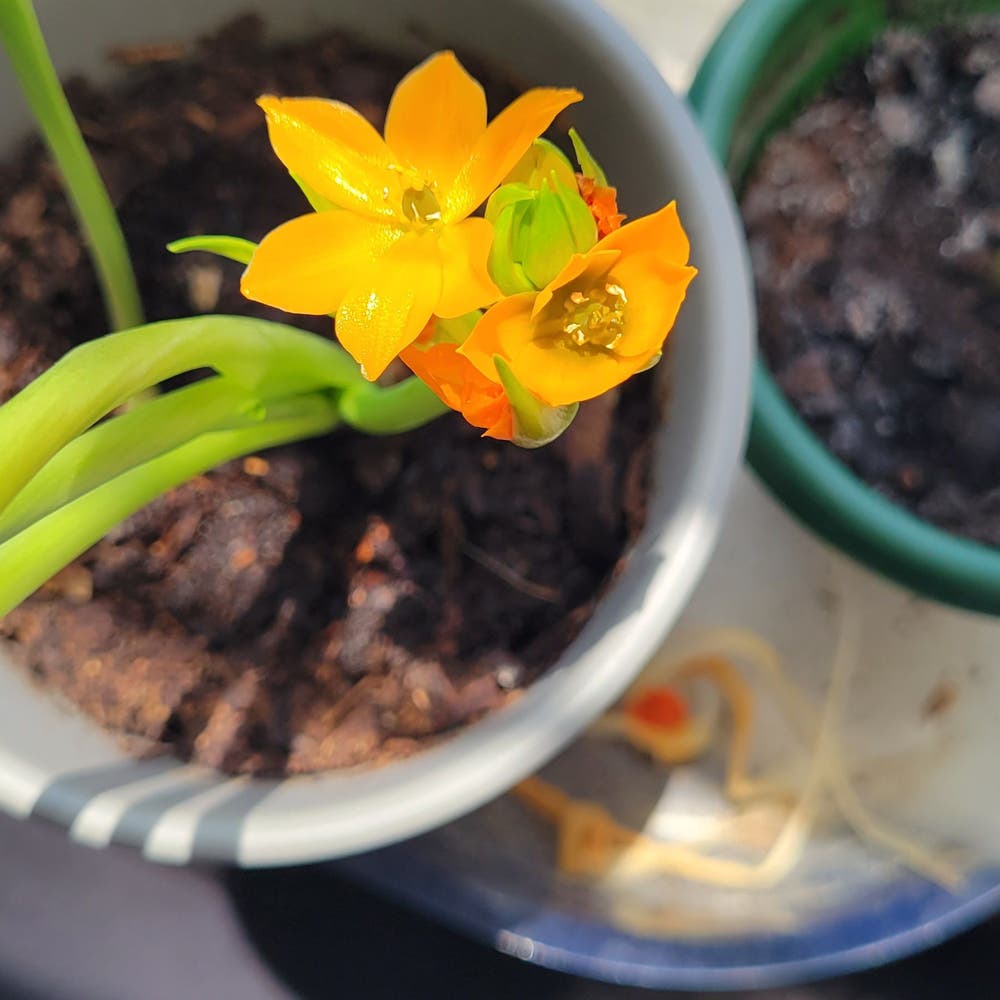
Best Tips for Dealing with Curling Leaves on Sunstar Flower 🌼
Ornithogalum dubium
By the Greg Editorial Team
Oct 16, 2024•6 min read
This article was created with the help of AI so we can cover more plants for you. May contain errors. See one? Report it here.
Transform your Sunstar Flower's curling leaves into vibrant blooms 🌼 with these essential care tips and solutions!
- 🌱 Curling leaves indicate stress from pests, nutrients, or environmental factors.
- 🌡️ Maintain 20°C to 30°C and 50%-70% humidity for optimal Sunstar health.
- 🐛 Early pest detection and regular monitoring prevent significant damage to your plants.
Causes of Curling Leaves
🌪️ Environmental Stress Factors
Curling leaves on your Sunstar Flower can often be traced back to environmental stress. The ideal temperature range for these plants is between 20°C to 30°C (68°F to 86°F).
Humidity plays a crucial role as well; Sunstar Flowers thrive in humidity levels of 50% to 70%. Low humidity can lead to curling leaves, making it essential to monitor your plant's environment closely.
Sudden temperature changes can also stress your plant. Drafts or proximity to heat sources can disrupt its stability, leading to curling leaves.
🥦 Nutrient Deficiencies
Nutrient deficiencies are another common cause of leaf curling. A nitrogen deficiency often manifests as yellowing leaves and stunted growth, signaling that your plant needs more nutrients.
Potassium deficiency is another culprit, causing leaf edges to curl and turn brown. Regular soil testing is vital to assess nutrient levels and ensure proper fertilization.
🐜 Pest Infestations
Pest infestations can wreak havoc on your Sunstar Flower. Aphids, small green insects, suck sap from the leaves, leading to noticeable curling.
Spider mites are another concern; they leave fine webbing and stippled leaves in their wake. Identifying these pests early through visual inspection or sticky traps can save your plant from further damage.
🍄 Fungal Infections
Fungal infections like powdery mildew can also cause curling leaves. This condition appears as white, powdery spots on the leaves, indicating a fungal presence.
High humidity and poor air circulation create ideal conditions for fungal growth. To prevent this, ensure good airflow around your plant and avoid overhead watering.
💧 Watering Issues
Watering practices significantly impact leaf health. Overwatering can lead to yellowing leaves and root rot, both of which contribute to leaf curl.
On the flip side, underwatering shows signs like wilting and crispy leaf edges. Regular soil moisture assessments, such as the finger test or using moisture meters, can help maintain the right balance.
Understanding these causes is crucial for keeping your Sunstar Flower healthy and vibrant. Next, we’ll explore how to diagnose curling leaves effectively.
Diagnosing Curling Leaves
Identifying Symptoms of Leaf Curl 🌿
Curling leaves can manifest in two primary ways: upward and downward. Upward curling often indicates environmental stress, while downward curling may suggest nutrient deficiencies.
Color changes in the leaves are also crucial indicators. Yellowing often points to nitrogen deficiency, whereas browning can signal issues like potassium deficiency or pest damage.
Differentiating Between Pest Damage and Environmental Stress 🐛
To diagnose the problem accurately, look for visual cues. Pest damage typically presents as irregular patterns, while environmental stress symptoms are more uniform across the plant.
Context matters too. Recent changes in care, such as watering frequency or light exposure, can help you determine whether the issue is pests or environmental factors.
Assessing Soil Moisture Levels 💧
Checking soil moisture is essential for maintaining healthy Sunstar Flowers. Use the finger test: insert your finger into the soil up to the second knuckle. If it feels dry, it’s time to water.
Moisture meters are another handy tool. Aim to keep the soil consistently moist but not soggy, as overwatering can lead to root rot and further curling.
Checking for Signs of Disease 🦠
Conduct a visual inspection for signs of fungal infections. Look for white spots, discoloration, or changes in leaf texture, which can indicate powdery mildew or other issues.
Early detection is key for effective treatment. Regular checks can help you catch problems before they escalate, ensuring your Sunstar Flower stays vibrant and healthy.
With these diagnostic tips, you can better understand the health of your Sunstar Flower and take appropriate action. Next, let’s explore treatment options to address these curling leaves effectively.
Treatment Options
Adjusting Watering Practices 🌊
Proper watering is crucial for the health of your Sunstar Flower. Aim to water based on the season—more frequently during the growing season and less in dormancy.
Check for signs of proper watering by assessing soil texture and leaf appearance. The soil should feel moist but not soggy, while leaves should be vibrant and firm.
Fertilization Techniques for Nutrient Deficiencies 🌱
To combat nutrient deficiencies, use fertilizers with balanced NPK ratios tailored for Sunstar Flowers. Look for options that provide adequate nitrogen, phosphorus, and potassium.
Consider your application methods too. Liquid fertilizers can be applied more frequently, while granular options are great for longer-lasting nutrition.
Organic Pest Control Methods 🐞
Neem oil is a fantastic organic solution for pest control. Apply it in the early morning or late evening to avoid leaf burn, and ensure thorough coverage.
Insecticidal soap is another effective method against pests like aphids and spider mites. Spray it directly on the affected areas, ensuring to follow the instructions for best results.
Fungicide Application for Fungal Issues 🍄
When dealing with fungal infections, you have options between organic and chemical fungicides. Organic choices are generally safer for the environment, while chemical options may offer quicker results.
Timing is key for fungicide application. Treat your plant at the first sign of infection and follow up as needed to ensure effective treatment.
Pruning Affected Leaves ✂️
Pruning is essential when leaf curl becomes severe. Remove affected leaves promptly to prevent further stress on the plant.
Use sharp, clean tools for pruning to ensure clean cuts. This minimizes the risk of infection and promotes healthier growth.
These treatment options can significantly improve the health of your Sunstar Flower. Next, let’s explore preventive measures to keep your plant thriving.
Preventive Measures
🌱 Best Practices for Care
Establishing a regular watering schedule is crucial for the health of your Sunstar Flower. Consider using the Greg plant care app to set reminders, ensuring your plant receives consistent moisture.
Fertilization is equally important. Aim to fertilize monthly during the growing season to provide essential nutrients for robust growth.
☀️ Ideal Growing Conditions
Sunstar Flowers thrive in bright environments. They prefer full sun to partial shade, which promotes optimal growth and vibrant blooms.
Maintaining stable temperature and humidity levels is vital. Aim for a consistent environment to help your plant flourish without stress.
🐛 Regular Monitoring for Pests and Diseases
Frequent inspections can save your plant from potential issues. Conduct weekly checks to catch early signs of pests or diseases before they escalate.
A clean growing environment is essential. Regularly remove debris and dead leaves to minimize the risk of infestations.
🌿 Soil Health and Amendments
Choosing the right soil type is foundational. A well-draining potting mix is recommended to prevent waterlogging and promote healthy root development.
Consider adding organic matter and perlite. These amendments enhance nutrient retention and improve soil aeration, benefiting your Sunstar Flower.
🍂 Seasonal Care Tips
Adjust your care routine with the changing seasons. Be mindful of temperature and light variations, as they can significantly impact your plant's health.
As winter approaches, prepare your Sunstar Flower for indoor living. Implement indoor care strategies to ensure it thrives despite the seasonal shift.
By following these preventive measures, you can keep your Sunstar Flower healthy and vibrant. Next, let’s explore how to diagnose curling leaves effectively.
⚠️ Safety First
This content is for general information and may contain errors, omissions, or outdated details. It is not medical, veterinary advice, or an endorsement of therapeutic claims.
Always consult a qualified healthcare professional before using any plant as food, medicine, or supplement.
Never eat any plant (or feed one to pets) without confirming its identity with at least two trusted sources.
If you suspect poisoning, call Poison Control (800) 222-1222, the Pet Poison Helpline (800) 213-6680, or your local emergency service immediately.
Spotted an error? Please report it here.
Keep your Sunstar Flowers thriving 🌱 by using Greg's tailored reminders for watering and fertilization, ensuring you tackle curling leaves with confidence and care!