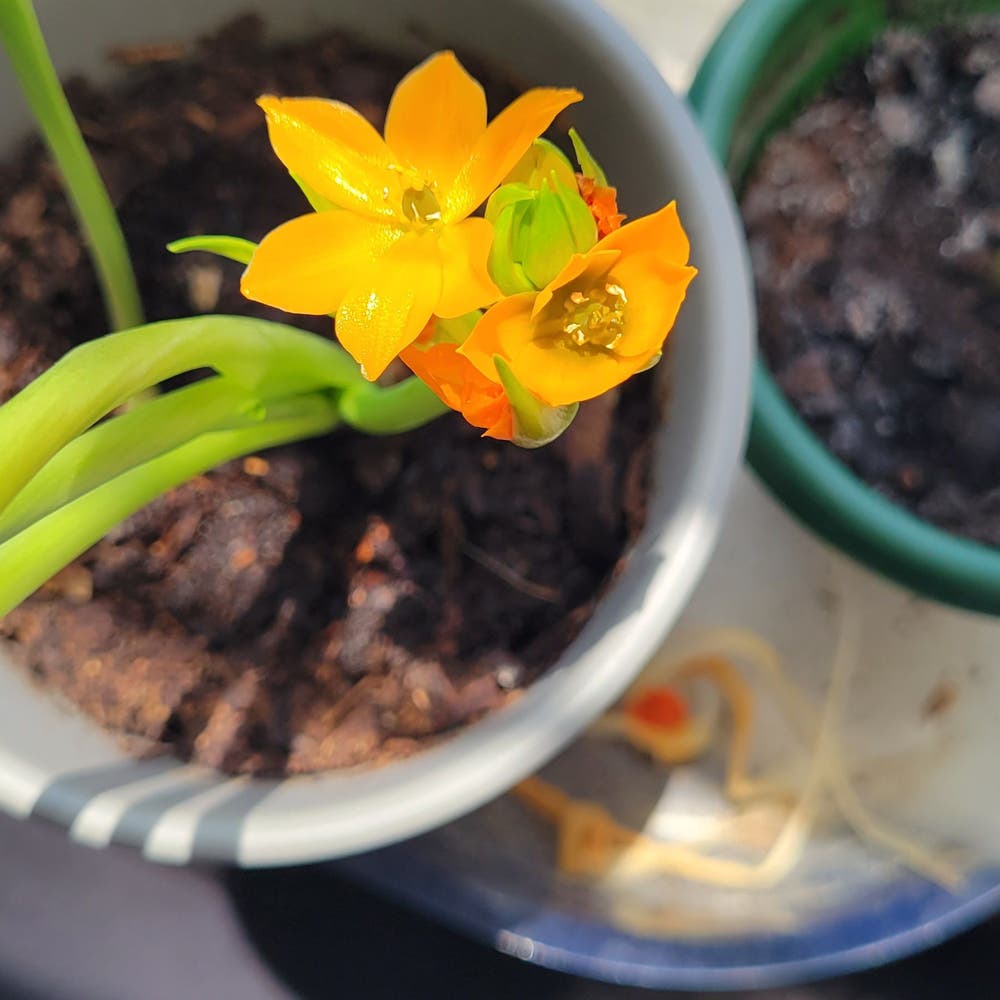
Managing Black Spots on Your Orange Star Plant Leaves 🍊
Ornithogalum dubium
By the Greg Editorial Team
Oct 17, 2024•6 min read
This article was created with the help of AI so we can cover more plants for you. May contain errors. See one? Report it here.
Revitalize your Orange Star plant 🌟 with essential care tips to prevent pesky black spots and ensure vibrant growth!
- 🌞 Bright, indirect light prevents yellowing and black spots on Orange Star leaves.
- 💧 Balance watering and humidity to avoid root rot and crispy edges.
- 🐛 Regular inspections for pests help catch issues before they cause black spots.
Diagnosing the Problem
🌞 Assessing Environmental Conditions
Light Requirements
Your Orange Star plant thrives in bright, indirect light. If the leaves start to yellow or develop black spots, it might be a sign of insufficient light.
Humidity and Temperature: Optimal Ranges
Maintaining the right humidity and temperature is crucial. Low humidity can lead to crispy leaf edges and overall poor health.
Seasonal Variations
As seasons change, so should your care routine. Adjusting light exposure and watering frequency can help your plant adapt and flourish.
🐛 Checking for Pests and Their Impact
Common Pests
Keep an eye out for pests like aphids and spider mites. These tiny invaders can wreak havoc, causing visible damage and stress to your plant.
Symptoms of Pest Damage
Look for discolored leaves, webbing, or sticky residue. These signs indicate a pest problem that needs immediate attention.
Relationship Between Pests and Black Spots
Pests can exacerbate existing leaf issues, leading to black spots. Addressing pest infestations promptly can prevent further damage.
💧 Evaluating Watering Practices and Soil Conditions
Watering Frequency: Best Practices
Finding the right watering balance is key. Overwatering can lead to root rot, while underwatering causes wilting and stress.
Signs of Overwatering vs. Underwatering
Watch for yellowing leaves as a sign of overwatering, and drooping leaves for underwatering. Adjust your watering schedule accordingly.
Soil Drainage: Importance for Root Health
Good drainage is essential for healthy roots. Use well-draining soil types to prevent waterlogging and promote root growth.
Recommended Soil Types and Drainage Solutions
Consider using a mix of potting soil and perlite for optimal drainage. This combination helps maintain moisture without suffocating the roots.
Testing Soil Moisture: Techniques for Accurate Assessment
Use your finger to check the top inch of soil for moisture. Alternatively, a moisture meter can provide a more precise reading.
By carefully diagnosing these factors, you can take proactive steps to ensure your Orange Star plant remains healthy and vibrant. Next, let’s explore treatment options to address any existing issues.
Treatment Options
🌱 Organic Treatments
Natural fungicides can be a game-changer for your Orange Star plant. Neem oil is a popular choice; simply mix it with water and spray it on affected leaves to combat fungal issues effectively.
Another effective solution is a baking soda mixture. Combine one tablespoon of baking soda with a teaspoon of liquid soap in a gallon of water. Spray this on your plant to help prevent and treat leaf spots.
Organic treatments not only target the problem but also promote overall plant health. They are gentle on the environment and safe for beneficial insects, making them a smart choice for any plant lover.
⚗️ Chemical Fungicides: When and How to Use
Sometimes, organic methods may not suffice, and chemical fungicides become necessary. Look for signs like persistent black spots or rapid leaf decline to determine if chemical intervention is needed.
When choosing a chemical fungicide, select one that is specifically designed for leaf spot issues. Always follow the application instructions carefully and wear protective gear to ensure safety.
Timing is crucial for effectiveness. Apply fungicides during the early morning or late afternoon to minimize plant stress and maximize absorption.
🏠 Home Remedies for Leaf Spot Issues
Household items can also provide quick fixes for leaf spot problems. A simple vinegar solution—mixing one part vinegar with three parts water—can help deter fungal growth when sprayed on leaves.
Another popular remedy is garlic spray. Blend a few cloves of garlic with water, strain, and spray the mixture on your plant. This not only helps with leaf spots but also acts as a natural pest repellent.
While home remedies are accessible and easy to use, they may not always be as effective as commercial treatments. Weigh the pros and cons to find what works best for your plant care routine.
With these treatment options in hand, you can tackle black spots on your Orange Star plant effectively. Next, let’s explore preventive measures to keep your plant healthy and thriving.
Preventive Measures
Best Practices for Watering and Drainage 🌊
Watering your Orange Star Plant correctly is crucial for its health. Aim to water when the top inch of soil feels dry, ensuring you provide enough moisture without saturating the roots.
Drainage holes in pots are essential. They prevent water from pooling, which can lead to root rot. If your pot lacks drainage, consider repotting or using a pot with built-in drainage solutions like gravel at the bottom.
Importance of Proper Sunlight Exposure ☀️
Your plant thrives in bright, indirect sunlight. Too much direct sunlight can scorch the leaves, while too little can stunt growth.
Adjust your plant's placement with the seasons. As the sun's angle changes, so should your plant's location to ensure it receives optimal light throughout the year.
Regular Inspection and Maintenance Routines 🔍
Inspect your Orange Star Plant regularly, ideally every week. Look for signs of distress, such as yellowing leaves or unusual spots.
Maintaining a clean growing environment is vital. Remove dead leaves and debris to prevent pests and diseases. Seasonal maintenance, like adjusting watering frequency or relocating the plant, can also help prevent black spots from forming.
By following these preventive measures, you can keep your Orange Star Plant healthy and vibrant. Next, let's explore effective treatment options for any issues that may arise.
Long-term Care Strategies
Nutritional Needs 🌱
To keep your Orange Star plant thriving, focus on essential nutrients. Fertilizers rich in nitrogen, phosphorus, and potassium are ideal, with a balanced fertilizer applied every 4-6 weeks during the growing season.
Watch for signs of nutrient deficiencies, such as yellowing leaves or stunted growth. If you notice these symptoms, consider adjusting your fertilizer regimen or switching to a more suitable blend.
Seasonal Care Adjustments 🌦️
As seasons change, so should your care practices. In warmer months, increase watering frequency and monitor humidity levels, while in cooler months, reduce watering to prevent root rot.
Prepare for seasonal stressors by adjusting your plant's location. Move it to a brighter spot during winter or provide shade in the peak summer heat to protect it from extreme conditions.
Importance of Healthy Soil and Potting Mix 🏵️
Healthy soil is the foundation of a thriving plant. Use a well-draining potting mix that retains moisture without becoming soggy, typically a blend of peat, perlite, and compost.
Repotting every couple of years refreshes the soil and provides room for growth. This simple step can significantly enhance your plant's health and resilience against black spots.
By implementing these long-term care strategies, you can ensure your Orange Star plant not only survives but flourishes. Next, let's explore preventive measures to keep those pesky black spots at bay.
⚠️ Safety First
This content is for general information and may contain errors, omissions, or outdated details. It is not medical, veterinary advice, or an endorsement of therapeutic claims.
Always consult a qualified healthcare professional before using any plant as food, medicine, or supplement.
Never eat any plant (or feed one to pets) without confirming its identity with at least two trusted sources.
If you suspect poisoning, call Poison Control (800) 222-1222, the Pet Poison Helpline (800) 213-6680, or your local emergency service immediately.
Spotted an error? Please report it here.
Keep your Orange Star plant thriving 🌟 by using Greg's tailored care reminders and pest alerts to combat black spots and ensure optimal health!