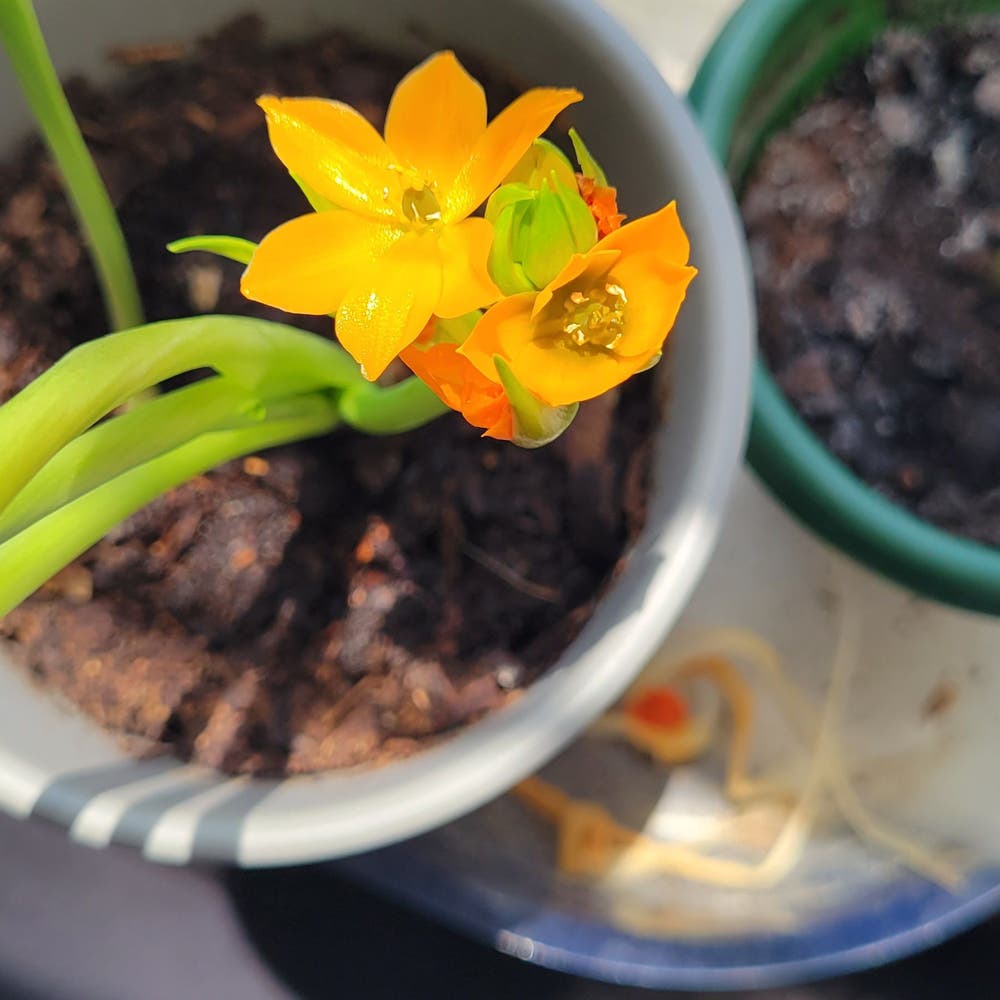
⭐ Why Your Orange Star Plant Has Yellow Leaves
Ornithogalum dubium
By the Greg Editorial Team
Oct 17, 2024•3 min read
This article was created with the help of AI so we can cover more plants for you. May contain errors. See one? Report it here.
Transform yellow leaves into lush greenery 🌱 with these essential tips for nurturing your Orange Star Plant!
- 🌱 Yellow leaves indicate watering, fertilization, or pest issues—check conditions regularly.
- 💧 Water thoroughly and check soil moisture before watering to prevent root rot.
- 🌞 Position near east/west windows for optimal sunlight and plant health.
Solutions for Yellow Leaves
🌊 Adjusting Watering Practices
How to Properly Water
Check soil moisture: Always check the top inch of soil. Water your Orange Star Plant when it feels dry to the touch.
Water thoroughly: When you do water, ensure that it drains out of the bottom. This helps prevent root rot and keeps your plant healthy.
Frequency: Generally, you should water every 1-2 weeks. Adjust this based on your plant's environment and the season.
🌱 Fertilization Techniques
Recommended Fertilizers for Nutrient Deficiencies
Balanced NPK fertilizers: Use a fertilizer with a ratio like 10-10-10. This provides essential nutrients for your plant's growth.
Slow-release fertilizers: Apply these every 6-8 weeks during the growing season. They gradually release nutrients, ensuring your plant gets what it needs over time.
🐞 Pest Control Methods
Organic Options
Neem oil: This natural pesticide is effective against a variety of pests. It's safe for your plant and the environment.
Insecticidal soap: Another great option for indoor use. It targets soft-bodied insects without harming your plant.
Chemical Options
Systemic insecticides: Use these for severe infestations. They work from within the plant to eliminate pests.
Importance: Always follow label instructions for safe application. Misuse can harm your plant and the surrounding environment.
🌞 Environmental Adjustments
Optimizing Light and Humidity
Light: Position your Orange Star Plant near east or west-facing windows. This ensures it receives adequate sunlight for healthy growth.
Humidity: Increase humidity by placing trays of water nearby or misting the leaves. This is especially beneficial in dry environments.
By adjusting your watering practices, fertilization techniques, pest control methods, and environmental conditions, you can effectively combat yellow leaves on your Orange Star Plant. Next, let’s explore how to prevent yellow leaves from occurring in the first place.
Preventing Yellow Leaves
🌱 Best Practices for Care
To keep your orange star plant thriving, establish a regular watering schedule. Consistently monitor moisture levels to prevent both overwatering and underwatering.
Fertilization is also key. During the growing season, feed your plant with balanced nutrients to support healthy growth.
🌼 Seasonal Care Tips
As spring rolls in, ramp up your watering and fertilization efforts. This is when your plant starts to awaken and needs extra care.
In winter, dial back on watering. Ensure your plant still gets adequate light exposure to help it survive the colder months.
🔧 Regular Maintenance Routines
Make it a habit to inspect your plants weekly for pests and health issues. Early detection can save your plant from serious problems.
Don’t forget to prune yellowing leaves. This encourages new growth and enhances your plant's overall appearance, keeping it vibrant and healthy.
By following these practices, you can significantly reduce the chances of yellow leaves and enjoy a flourishing orange star plant. Next, let’s explore effective solutions for addressing yellow leaves when they do appear.
⚠️ Safety First
This content is for general information and may contain errors, omissions, or outdated details. It is not medical, veterinary advice, or an endorsement of therapeutic claims.
Always consult a qualified healthcare professional before using any plant as food, medicine, or supplement.
Never eat any plant (or feed one to pets) without confirming its identity with at least two trusted sources.
If you suspect poisoning, call Poison Control (800) 222-1222, the Pet Poison Helpline (800) 213-6680, or your local emergency service immediately.
Spotted an error? Please report it here.
Keep your Orange Star Plant thriving 🌟 by using Greg's tailored reminders for watering and pest control, ensuring those yellow leaves are a thing of the past!