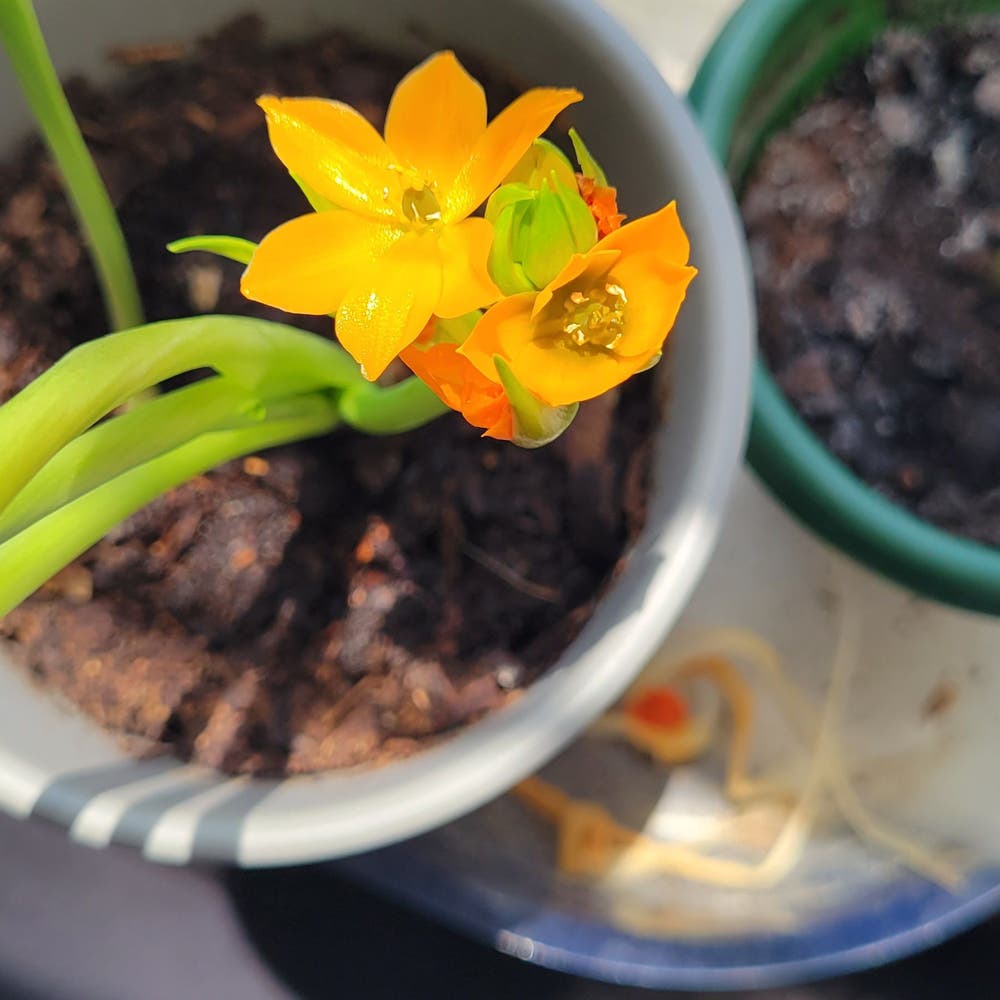
⭐ What to Do About Dropping Leaves on Your Orange Star Plant
Ornithogalum dubium
By the Greg Editorial Team
Oct 17, 2024•5 min read
This article was created with the help of AI so we can cover more plants for you. May contain errors. See one? Report it here.
Transform your Orange Star Plant's health 🌿 by mastering essential care tips to prevent leaf drop and promote vibrant growth!
- 🌱 Leaf drop in Orange Star Plants can stem from overwatering, underwatering, or pests.
- 💧 Monitor soil moisture: Allow top inch to dry out to prevent overwatering.
- 🌞 Provide bright, indirect light and maintain humidity for optimal plant health.
Diagnosing Leaf Drop
🌊 Identifying Symptoms of Overwatering vs. Underwatering
Understanding the signs of overwatering and underwatering is crucial for your Orange Star Plant's health.
Overwatering
- Soil moisture: If the soil feels consistently soggy, you might be overwatering.
- Leaf texture: Leaves will appear soft and mushy, indicating excess moisture.
Underwatering
- Soil moisture: Dry and crumbly soil suggests your plant is thirsty.
- Leaf texture: Leaves may become dry and crispy, a clear sign of underwatering.
🐛 Recognizing Signs of Pest Damage
Pests can wreak havoc on your plant, so regular inspections are essential.
Visual Inspection
- Look for pests: Check the undersides of leaves for any unwanted visitors.
- Check for webbing or sticky residue: These can indicate spider mites or aphids, which can lead to further damage.
🌱 Assessing Environmental Conditions
The right environment is key to keeping your Orange Star Plant thriving.
Light Requirements
- Ideal: Your plant loves bright, indirect light.
- Symptoms of inadequate light: If you notice stretching stems or leaf drop, it’s time to reassess its light exposure.
Temperature and Humidity
- Monitoring conditions: Use a thermometer and hygrometer to keep tabs on temperature and humidity levels. Both factors significantly impact your plant's health.
🧪 Soil Testing for Nutrient Levels
Nutrient deficiencies can lead to leaf drop, so testing your soil is a smart move.
Testing Methods
- Home soil test kits: These can help you check nitrogen and potassium levels.
- Signs of nutrient deficiency: Look for leaf discoloration and stunted growth as indicators that your plant needs more nutrients.
By diagnosing these issues early, you can take proactive steps to ensure your Orange Star Plant remains healthy and vibrant. Next, let’s explore how to prevent leaf drop effectively.
Preventing Leaf Drop
Proper Watering Techniques 🌊
Watering your Orange Star Plant correctly is crucial for its health. Allow the top inch of soil to dry out between waterings to prevent overwatering.
When you do water, ensure you do so thoroughly until it drains from the bottom. This method encourages deep root growth and helps maintain soil moisture balance.
Fertilization Schedule and Nutrient Balance 🌱
A balanced NPK fertilizer, like a 10-10-10 mix, is ideal for your plant. Apply it every 4-6 weeks during the growing season to keep nutrient levels optimal.
Regular fertilization supports healthy growth and vibrant leaves, reducing the risk of leaf drop.
Pest Prevention Strategies 🐞
Regular inspections are key to catching pest issues early. Check for signs of pests weekly, especially on the undersides of leaves.
Consider introducing beneficial insects, such as ladybugs, to your garden. They can help keep harmful pests at bay naturally.
Ideal Environmental Conditions for Growth 🌤️
Maintaining humidity is essential for your Orange Star Plant's well-being. Use a humidifier or pebble trays filled with water to create a more humid environment.
Light management is also vital. Rotate your plant regularly to ensure it receives even light exposure, promoting balanced growth and reducing stress.
By implementing these preventive measures, you can create a thriving environment for your Orange Star Plant. This proactive approach will help you enjoy a lush, vibrant plant while minimizing the risk of leaf drop.
Treating Leaf Drop
Step-by-Step Guide to Adjusting Watering Practices 🌊
Assess Current Watering Schedule: Start by evaluating how often you water your orange star plant. This will help you identify if you're over or under-watering.
Adjust Frequency Based on Soil Moisture: If the soil feels soggy, cut back on watering. Conversely, if it’s dry and crumbly, increase your watering frequency.
Monitor Plant Response Over the Next Few Weeks: Keep an eye on your plant’s condition. Look for signs of recovery, such as new growth or improved leaf texture.
How to Amend Soil for Nutrient Deficiencies 🌱
Identify Deficiency Through Symptoms or Soil Testing: Check for signs like leaf discoloration or stunted growth. A soil test can provide precise information about nutrient levels.
Choose Appropriate Fertilizer: If nitrogen is lacking, opt for a nitrogen-rich fertilizer. This will help restore balance and promote healthy growth.
Apply According to Package Instructions: Follow the recommended dosage on the fertilizer package. Over-fertilizing can do more harm than good.
Pest Control Methods 🐛
Organic Options: Consider using neem oil spray to tackle spider mites and aphids. It’s effective and environmentally friendly.
Chemical Options: For severe infestations, insecticidal soap can be a quick fix. Just be sure to follow the instructions carefully.
Treatment for Fungal Infections 🍄
Root Rot: If you suspect root rot, carefully remove affected roots. Repot the plant in fresh, well-draining soil to prevent further issues.
Leaf Spot: For leaf spot problems, remove any infected leaves. Improving air circulation around the plant can help prevent future outbreaks.
By addressing these issues promptly, you can help your orange star plant bounce back and thrive. Next, let’s explore how to care for a recovering plant to ensure lasting health.
Post-Drop Care
🌱 How to Care for a Recovering Plant
Once your orange star plant has experienced leaf drop, it's crucial to adjust its care. Focus on modifying watering and light conditions based on the plant's recovery signs.
Avoid fertilizing until you see new growth. This allows the plant to stabilize and regain its strength without the added stress of nutrients.
👀 Signs of New Growth to Look For
Keep an eye out for new leaves emerging from the center of the plant. This is a positive indicator that your plant is bouncing back.
Additionally, watch for increased leaf size and vibrant color. These signs suggest that your plant is regaining its health and vitality.
🌍 When to Repot or Change Soil
Repotting may be necessary if you notice root-bound conditions, such as roots growing out of drainage holes. This indicates that your plant needs more space to thrive.
Soil degradation is another sign to consider. If the soil appears compacted or lacks nutrients, it’s time for a change. Fresh soil can provide the necessary environment for your plant's recovery.
As you nurture your orange star plant back to health, remember to be patient. Each sign of recovery is a step toward a flourishing plant.
⚠️ Safety First
This content is for general information and may contain errors, omissions, or outdated details. It is not medical, veterinary advice, or an endorsement of therapeutic claims.
Always consult a qualified healthcare professional before using any plant as food, medicine, or supplement.
Never eat any plant (or feed one to pets) without confirming its identity with at least two trusted sources.
If you suspect poisoning, call Poison Control (800) 222-1222, the Pet Poison Helpline (800) 213-6680, or your local emergency service immediately.
Spotted an error? Please report it here.
Diagnosing leaf drop in your Orange Star Plant is key to its recovery, and with Greg's custom watering alerts and care tips, you'll keep your plant thriving 🌿 while preventing future issues!