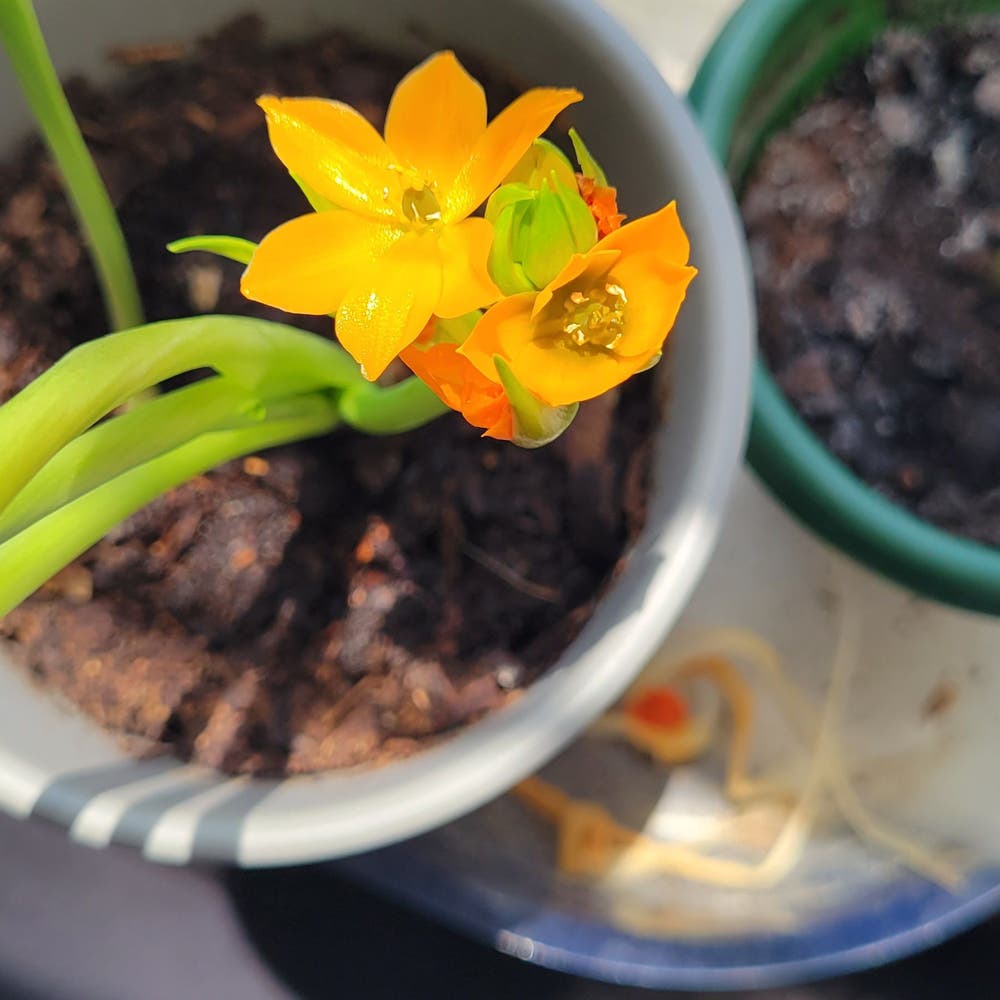
😢 Dealing with Droopy Leaves on Your Star of Bethlehem
Ornithogalum dubium
By the Greg Editorial Team
Oct 18, 2024•5 min read
This article was created with the help of AI so we can cover more plants for you. May contain errors. See one? Report it here.
Transform your droopy Star of Bethlehem 🌱 into a thriving beauty with these essential care tips for vibrant growth!
- 🌱 Droopy leaves indicate overwatering, underwatering, or light issues; assess your plant's environment.
- 💧 Well-draining soil and consistent watering prevent root rot and droopy leaves.
- 🌞 Bright, indirect light is ideal; adjust exposure to avoid scorching or pale growth.
Common Causes of Droopy Leaves
💧 Overwatering: Signs and Solutions
Overwatering is a common issue for Star of Bethlehem plants. Signs include yellowing leaves, mushy or blackened roots, and soil that remains wet for extended periods.
To remedy overwatering, allow the soil to dry out before watering again. If the problem persists, consider repotting in well-draining soil to promote healthier root growth.
🚰 Underwatering: Signs and Solutions
Underwatering can also lead to droopy leaves. Look for crispy, brown leaf tips, soil pulling away from the pot edges, and leaves that curl or droop.
To fix underwatering, water thoroughly until excess drains from the bottom. Establishing a consistent watering schedule will help prevent future issues.
🪴 Soil Issues: Drainage and Composition
Soil drainage is crucial for the health of your Star of Bethlehem. Well-draining soil prevents root rot, which can be detrimental to your plant.
A recommended soil composition includes a mix of potting soil, sand, and perlite. Signs of poor drainage include water pooling on the surface and persistent sogginess.
🌞 Light Conditions: Too Much or Too Little
Light conditions play a significant role in the well-being of your plant. Star of Bethlehem prefers bright, indirect light for optimal growth.
Signs of too much light include leaf scorch or browning, while too little light can cause stretched growth and pale leaves. Adjust light exposure by moving the plant to a location with filtered light or using sheer curtains to diffuse direct sunlight.
🌡️ Temperature Stress: Ideal Conditions
Temperature stress can also cause droopy leaves. The ideal temperature range for Star of Bethlehem is between 60°F to 75°F (15°C to 24°C).
Signs of temperature stress include droopy leaves and stunted growth. To manage temperature, avoid placing your plant near drafts or heat sources, ensuring a stable environment for growth.
Understanding these common causes will help you address droopy leaves effectively. Next, we’ll explore practical steps to alleviate these issues and restore your plant’s vitality.
Alleviating Droopy Leaves
Step-by-Step Guide to Correcting Overwatering 🌊
- Assess Soil Moisture: Use a moisture meter or your finger to check how wet the soil is.
- Stop Watering: If the soil feels overly wet, halt watering and let it dry out.
- Check Root Health: Inspect the roots for any signs of rot and trim away any unhealthy parts.
- Repot if Necessary: If the problem persists, consider repotting your plant in fresh, well-draining soil.
Step-by-Step Guide to Correcting Underwatering 💧
- Check Soil Moisture Level: Feel the soil to determine if it’s dry.
- Water Thoroughly: Give your plant a good drink until excess water drains from the bottom.
- Monitor Recovery: Keep an eye on your plant over the next few days for signs of improvement.
Adjusting Light Exposure for Optimal Growth ☀️
- Relocate Your Plant: Move it to a spot that receives the right amount of light.
- Use Sheer Curtains: If direct sunlight is too harsh, consider using sheer curtains to soften the light.
Improving Soil Drainage and Composition 🪴
- Repot with the Right Mix: Use a combination of potting soil, sand, and perlite for better drainage.
- Check for Drainage Holes: Ensure your pot has adequate drainage holes to prevent water buildup.
Managing Temperature and Humidity Levels 🌡️
- Maintain Ideal Temperatures: Keep indoor temperatures between 60°F to 75°F (15°C to 24°C).
- Increase Humidity: If your home is dry, consider using a humidifier to boost humidity levels.
By following these steps, you can effectively address droopy leaves and help your Star of Bethlehem thrive. Next, let’s explore how to prevent future issues to keep your plant healthy and vibrant.
Preventing Future Issues
🌊 Best Practices for Watering Star of Bethlehem
To keep your Star of Bethlehem thriving, water it when the top inch of soil feels dry. Always use a pot with drainage holes to prevent water from pooling at the bottom.
🌱 Ideal Soil Conditions and Amendments
Regularly check the soil drainage to ensure it remains optimal for your plant. Refreshing the soil every couple of years will help maintain its health and vitality.
☀️ Proper Light and Temperature Settings
Monitor the light exposure your plant receives and adjust it as the seasons change. Keeping your Star of Bethlehem in a stable temperature environment will also promote its growth.
🔍 Regular Maintenance and Monitoring
Inspect the leaves and soil weekly for any signs of issues. Adjust your care routine based on seasonal changes to keep your plant in top shape.
❄️ Seasonal Care Tips for Star of Bethlehem
During dormancy, be sure to adjust your watering frequency to prevent overwatering. Additionally, providing extra light during the shorter days of winter will help your plant thrive.
By following these preventive measures, you can ensure your Star of Bethlehem remains healthy and vibrant. Next, let’s explore some common myths and misconceptions surrounding droopy leaves.
Myths and Misconceptions
🌱 Common Myths About Droopy Leaves
One prevalent misconception is that droopy leaves always indicate overwatering. While this is a common issue, it’s essential to recognize that droopy leaves can also signal underwatering or other underlying problems.
Understanding the full range of causes is crucial for effective plant care. Droopy leaves might be your plant's way of communicating that it needs attention, whether that’s more water, less light, or even a change in temperature.
By debunking this myth, you can better assess your Star of Bethlehem's needs and provide the right care. Remember, a little observation goes a long way in keeping your plant healthy and thriving.
As we move forward, let’s explore practical steps to prevent droopy leaves and ensure your Star of Bethlehem remains vibrant and lush.
⚠️ Safety First
This content is for general information and may contain errors, omissions, or outdated details. It is not medical, veterinary advice, or an endorsement of therapeutic claims.
Always consult a qualified healthcare professional before using any plant as food, medicine, or supplement.
Never eat any plant (or feed one to pets) without confirming its identity with at least two trusted sources.
If you suspect poisoning, call Poison Control (800) 222-1222, the Pet Poison Helpline (800) 213-6680, or your local emergency service immediately.
Spotted an error? Please report it here.
Keep your Star of Bethlehem perky and vibrant 🌱 by using Greg's tailored watering reminders and light monitoring to give your plant the care it craves!