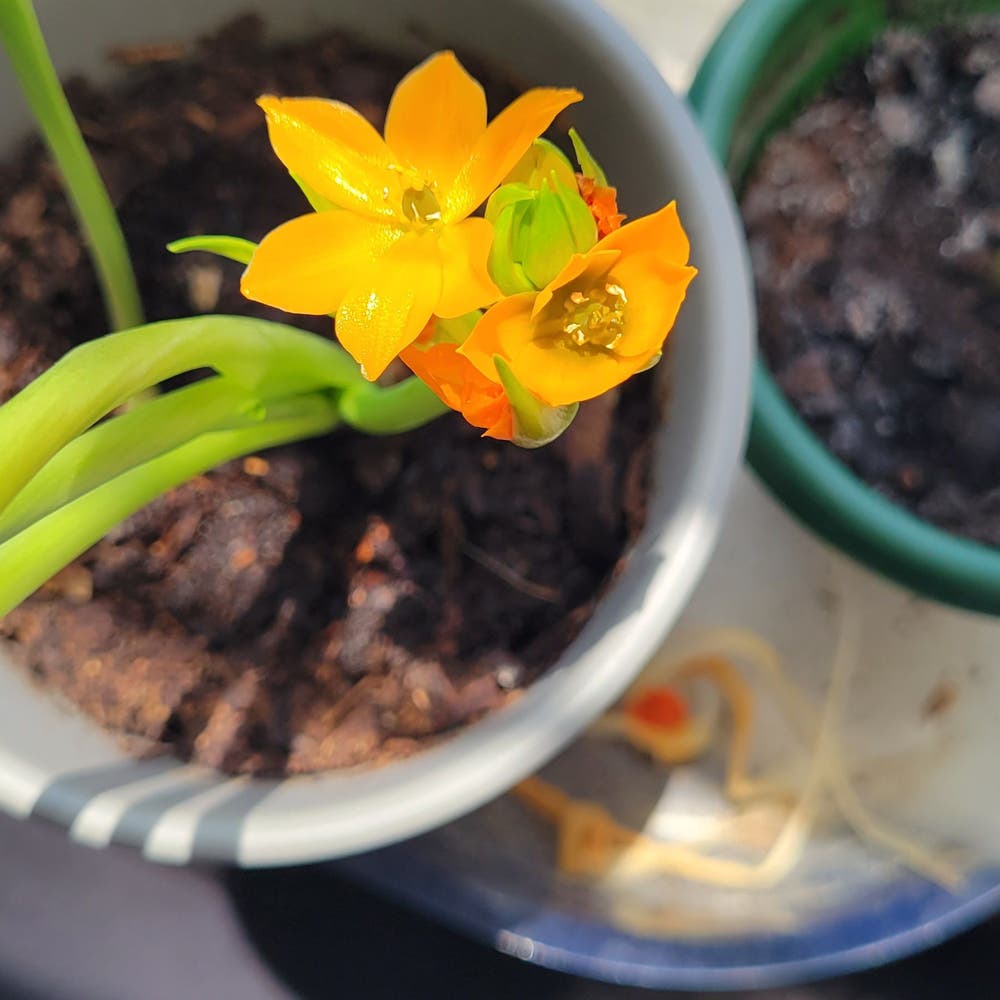
How to Fix Leaves Falling Over on Your Orange Star Plant 🍊
Ornithogalum dubium
By the Greg Editorial Team
Oct 17, 2024•4 min read
This article was created with the help of AI so we can cover more plants for you. May contain errors. See one? Report it here.
Unlock the secret to a thriving Orange Star Plant 🌱 with essential care tips for vibrant growth and health!
- 💧 Overwatering causes drooping leaves; let soil dry out between waterings.
- 🌞 Bright, indirect light for 6-8 hours daily is crucial for healthy growth.
- 🐛 Watch for pests like mealybugs; early detection ensures your plant thrives.
Diagnosing the Problem
🌊 Overwatering Signs and Solutions
Overwatering is a common issue for Orange Star Plants. Look for symptoms like yellowing leaves, a mushy texture, and root rot.
To remedy this, adjust your watering frequency. Allow the soil to dry out between waterings to prevent excess moisture.
Improving soil drainage is also crucial. Use a well-draining potting mix to keep roots healthy.
💧 Underwatering Signs and Solutions
Underwatering can be just as damaging. Symptoms include wilting leaves, dry soil, and crispy leaf edges.
Establish a consistent watering schedule. Water your plant when the top inch of soil feels dry to the touch.
Additionally, monitor humidity levels. If the air is too dry, consider increasing humidity around your plant.
🥦 Nutrient Deficiency Identification
Nutrient deficiencies can lead to leaf discoloration. Common culprits include nitrogen, potassium, and magnesium deficiencies.
Regular soil testing is essential. Assess nutrient levels to determine what your plant needs.
Applying balanced fertilizers can also help. Follow a fertilization schedule to keep your plant thriving.
💡 Light Condition Assessment
Light is vital for the health of your Orange Star Plant. Ideally, it needs bright, indirect light to flourish.
If your plant isn’t getting enough light, adjust its placement. Move it to a brighter location if necessary.
Using grow lights can be a great solution during low-light seasons. This ensures your plant receives adequate light year-round.
By diagnosing these issues early, you can keep your Orange Star Plant healthy and vibrant. Next, let’s explore preventive measures to maintain its well-being.
Preventive Measures
Proper Watering Techniques 🌊
Effective watering is crucial for your Orange Star Plant's health. Water deeply but infrequently to encourage robust root growth.
Check the soil moisture regularly. A moisture meter or simply sticking your finger into the soil can help you determine when it's time to water.
Ideal Soil Composition and Drainage 🪴
Choosing the right soil is essential. A well-draining potting mix that includes perlite or sand will keep your plant thriving.
Don't overlook drainage holes in your pots. They prevent water accumulation, which can lead to root rot.
Optimal Light Conditions ☀️
Understanding your plant's light needs is vital. Aim for bright, indirect light for 6-8 hours daily to keep your Orange Star Plant happy.
As seasons change, adjust your plant's location. Moving it closer to windows during winter ensures it gets enough light.
Fertilization Schedule 🌱
A consistent fertilization schedule supports healthy growth. Fertilize monthly during the growing season, which spans spring and summer.
Choose the right type of fertilizer. Balanced liquid fertilizers or slow-release granules work best for your Orange Star Plant.
By implementing these preventive measures, you can create an environment where your Orange Star Plant thrives. Next, let’s explore pest management strategies to keep your plant safe from common threats.
Pest Management
Common Pests Affecting Orange Star Plant 🐛
Pests can be a real headache for your Orange Star Plant. The most common culprits include mealybugs, aphids, and spider mites.
Mealybugs appear as small, white, cottony masses on leaves. Aphids are tiny and can be green, black, or brown, while spider mites are often too small to see without a magnifying glass but leave fine webbing behind.
Signs of Pest Infestation 🚩
Detecting a pest problem early can save your plant from serious damage. Look out for sticky residue on leaves, which indicates honeydew from aphids or mealybugs.
Webbing is another red flag, especially with spider mites. If you see visible insects on your leaves, it’s time to take action.
Treatment Options for Pests 🧴
When it comes to pest control, organic methods are often the safest and most effective. Neem oil and insecticidal soap can help eliminate pests without harming your plant.
Introducing beneficial insects, like ladybugs, can also keep pest populations in check. Regular inspection and monitoring are crucial; catching infestations early makes management much easier.
With these strategies, you can keep your Orange Star Plant healthy and thriving. Now, let’s explore how to adjust care during different seasons to ensure your plant continues to flourish.
Seasonal Considerations
Adjusting Care During Different Seasons 🌦️
Caring for your Orange Star Plant requires a seasonal approach. In summer, increase watering to keep the soil consistently moist, while in winter, reduce watering to prevent root rot.
Monitoring temperature and humidity is crucial. Aim for indoor conditions between 65°F to 80°F (18°C to 27°C) with high humidity to keep your plant thriving.
Temperature and Humidity Effects 🌡️
Temperature fluctuations can stress your Orange Star Plant, leading to drooping leaves. Extreme heat or cold can disrupt its growth and overall health.
To maintain optimal humidity levels, consider using humidifiers or pebble trays filled with water. These methods help create a more suitable environment, ensuring your plant remains vibrant and healthy.
By adjusting your care routine according to the seasons, you can foster a thriving Orange Star Plant that flourishes year-round. Next, let’s explore effective pest management strategies to keep your plant safe from common threats.
⚠️ Safety First
This content is for general information and may contain errors, omissions, or outdated details. It is not medical, veterinary advice, or an endorsement of therapeutic claims.
Always consult a qualified healthcare professional before using any plant as food, medicine, or supplement.
Never eat any plant (or feed one to pets) without confirming its identity with at least two trusted sources.
If you suspect poisoning, call Poison Control (800) 222-1222, the Pet Poison Helpline (800) 213-6680, or your local emergency service immediately.
Spotted an error? Please report it here.
Keep your Orange Star Plant thriving 🌱 by using Greg's tailored watering reminders and nutrient tips to ensure those leaves stay vibrant and healthy!