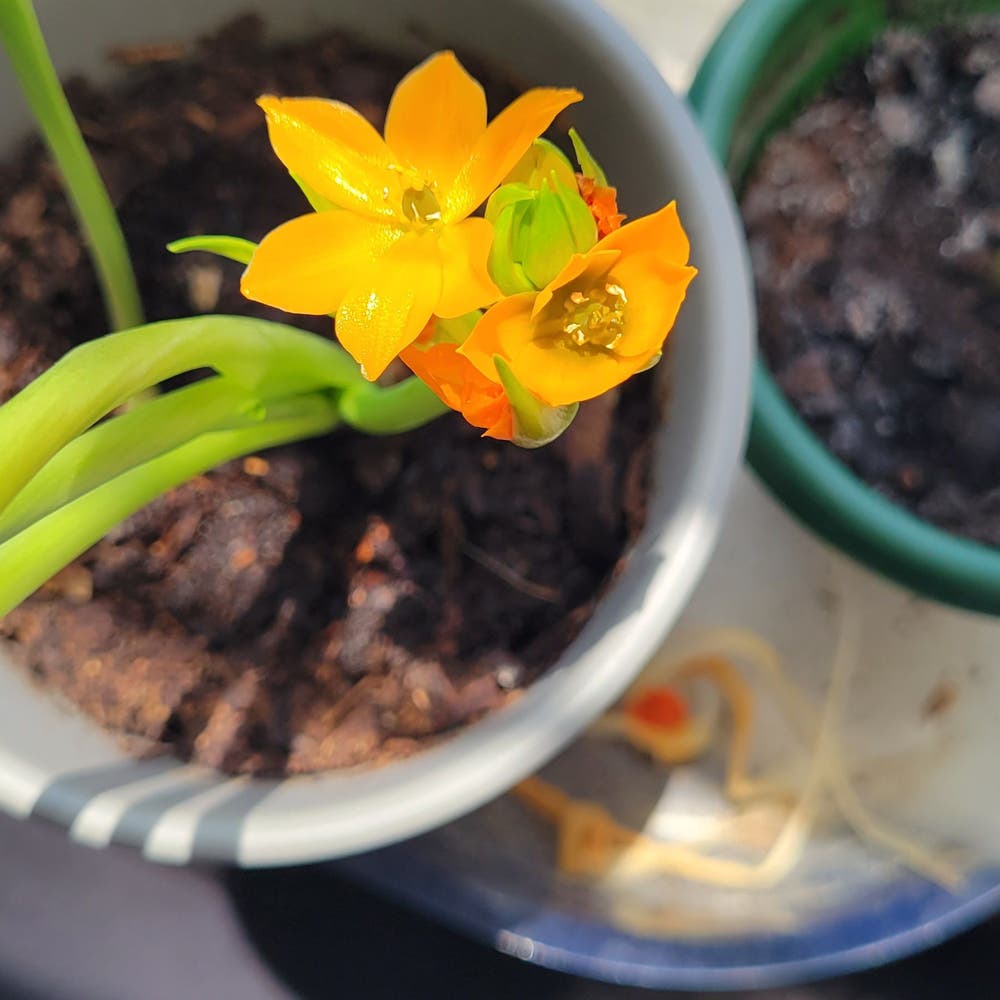
3 Tips for Healing Brown Spots on Your Orange Star Plant 🍊
Ornithogalum dubium
By the Greg Editorial Team
Oct 17, 2024•5 min read
This article was created with the help of AI so we can cover more plants for you. May contain errors. See one? Report it here.
Revive your Orange Star Plant by mastering the causes of those pesky brown spots! 🌱
- 🌱 Brown spots arise from overwatering, underwatering, pests, or nutrient deficiencies.
- ☀️ Sunburn causes crispy edges; ensure adequate indirect sunlight for your plant.
- 🐛 Regular inspections help catch pests early, preventing further damage to your Orange Star Plant.
Causes of Brown Spots on Leaves
💧 Overwatering and Underwatering
Overwatering can lead to yellowing leaves, a mushy texture, and even root rot. Conversely, underwatering manifests as crispy, dry edges and wilting, signaling that your Orange Star Plant is thirsty.
🍄 Fungal Infections
Fungal diseases, particularly leaf spot diseases, are common culprits behind brown spots. These thrive in conditions of high humidity and poor air circulation, making it crucial to monitor your plant's environment.
🥦 Nutrient Deficiencies
Key nutrients like nitrogen, potassium, and magnesium are vital for leaf health. Deficiencies in these can cause general yellowing, stunted growth, and those pesky brown spots.
☀️ Sunburn and Environmental Stress
Sunburn shows up as bleached patches and crispy edges on leaves. Environmental stressors, such as sudden temperature changes and low humidity, can also contribute to these unsightly marks.
🐜 Pest Infestations
Common pests like spider mites and aphids can wreak havoc on your Orange Star Plant. Look out for symptoms like discoloration, webbing, and sticky residue, which indicate pest damage.
Understanding these causes is the first step in addressing brown spots on your plant. Next, let's dive into how to diagnose the specific problem affecting your Orange Star Plant.
Diagnosing the Problem
Identifying Symptoms of Brown Spots 🌱
Brown spots on your Orange Star Plant can vary in size and shape. Pay attention to their location on the leaves, as this can provide clues about the underlying issue.
As symptoms progress, you may notice changes in color or texture. Tracking these developments helps in pinpointing the cause.
Differentiating Between Causes 🔍
To effectively diagnose the problem, look for key indicators. For instance, overwatering often leads to a mushy texture, while underwatering results in crispy edges.
When it comes to fungal versus pest issues, check for webs or spores. These signs can help you determine the right course of action.
Assessing Plant Environment and Care Routine 🏡
Start by evaluating your watering practices. Consider how often you water and the method you use, as both can significantly impact your plant's health.
Next, check the light conditions. Is your plant getting enough indirect sunlight, or is it exposed to harsh rays?
Finally, monitor humidity and temperature levels. The ideal conditions for an Orange Star Plant are crucial for preventing brown spots and ensuring overall vitality.
With a clear understanding of symptoms and environmental factors, you’ll be better equipped to tackle the issues affecting your plant. This sets the stage for effective treatment and long-term care.
Treating Brown Spots on Leaves
🌊 Step-by-Step Treatment for Overwatering Issues
Overwatering can wreak havoc on your Orange Star Plant. Start by assessing soil moisture levels using a moisture meter to determine if the soil is too wet.
Next, adjust your watering schedule based on these findings. If root rot is present, repot the plant in fresh, well-draining soil to give it a fighting chance.
🍄 Remedies for Fungal Infections
Fungal infections can lead to unsightly brown spots. Begin by removing any affected leaves to prevent the spread of the disease.
After that, apply a fungicide according to the package instructions. Improving air circulation around the plant can also help combat fungal growth.
🥦 Correcting Nutrient Deficiencies
Nutrient deficiencies can cause your plant to struggle. Conduct a soil test to identify any deficiencies in key nutrients.
Once you know what’s lacking, apply a balanced fertilizer or specific nutrient amendments. Keep an eye on your plant's response over the following weeks to ensure it’s bouncing back.
☀️ Managing Sun Exposure and Environmental Stress
Sun exposure plays a crucial role in your plant's health. Adjust the plant's location to ensure it receives indirect sunlight, which is less harsh.
Gradually acclimate the plant to new light conditions to avoid shock. Maintaining stable temperature and humidity levels will also help reduce stress on your Orange Star Plant.
🐞 Pest Control Methods
Pest infestations can be a real nuisance. Start by inspecting the leaves for signs of pests, such as discoloration or webbing.
If you spot any, use insecticidal soap or neem oil for treatment. Introducing beneficial insects like ladybugs can also help keep pest populations in check.
By following these treatment steps, you can effectively address brown spots and promote a healthier Orange Star Plant. Next, let’s explore how to prevent future issues to keep your plant thriving.
Preventing Future Issues
Best Watering Practices 🌊
To keep your Orange Star Plant thriving, it's crucial to establish a solid watering routine. Allow the top inch of soil to dry out between waterings to prevent both overwatering and underwatering.
When you do water, ensure you do so thoroughly. Water until it drains from the bottom of the pot, allowing the roots to absorb moisture effectively.
Soil and Potting Recommendations 🪴
Choosing the right soil is vital for your plant's health. A well-draining potting mix that includes perlite or sand will help prevent water accumulation.
Additionally, select pots with drainage holes. This simple step can save your plant from the dangers of standing water.
Regular Inspection for Pests and Diseases 🔍
Make it a habit to inspect your plant weekly. Early detection of issues can make all the difference in maintaining its health.
Look for signs like discoloration, webbing, or unusual growth patterns. Catching these symptoms early can help you take action before they escalate.
Seasonal Care Adjustments 🍂
As seasons change, so should your care routine. For instance, increasing humidity during the winter months can benefit your Orange Star Plant.
Also, be prepared to modify your watering and fertilization schedules. Adjusting to seasonal needs helps keep your plant in top shape.
Importance of Proper Light Conditions ☀️
Understanding your plant's light requirements is essential for its growth. Optimal light exposure can significantly impact its overall health and appearance.
Be ready to adjust your plant's placement based on seasonal light changes. This small tweak can ensure your Orange Star Plant gets the light it needs year-round.
By implementing these preventive measures, you can help your Orange Star Plant flourish and avoid the common pitfalls that lead to brown spots. Next, let’s explore how to effectively treat those pesky brown spots when they do appear.
⚠️ Safety First
This content is for general information and may contain errors, omissions, or outdated details. It is not medical, veterinary advice, or an endorsement of therapeutic claims.
Always consult a qualified healthcare professional before using any plant as food, medicine, or supplement.
Never eat any plant (or feed one to pets) without confirming its identity with at least two trusted sources.
If you suspect poisoning, call Poison Control (800) 222-1222, the Pet Poison Helpline (800) 213-6680, or your local emergency service immediately.
Spotted an error? Please report it here.
Heal those brown spots and revitalize your Orange Star Plant 🌟 with Greg's tailored watering reminders and pest alerts, ensuring it thrives in the best conditions!