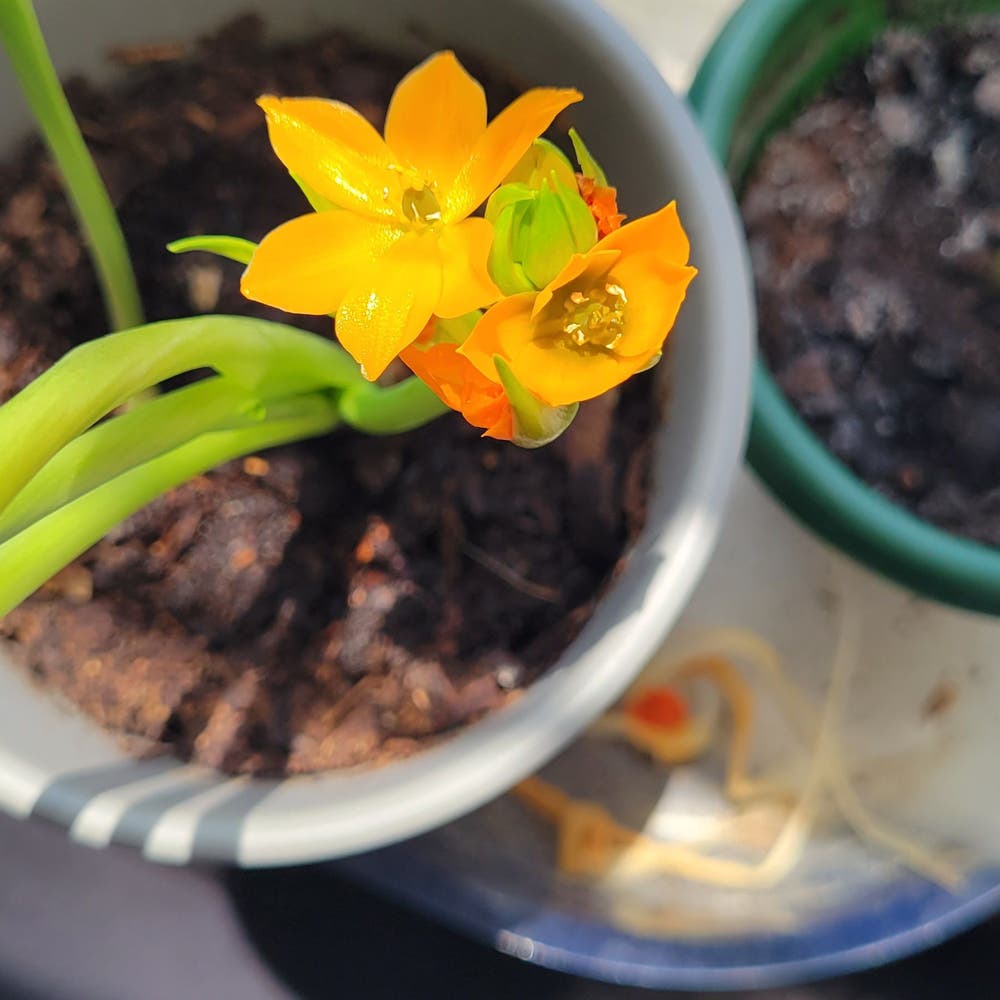
⭐ How to Cure Yellow Leaves on Your Star of Bethlehem
Ornithogalum dubium
By the Greg Editorial Team
Oct 18, 2024•6 min read
This article was created with the help of AI so we can cover more plants for you. May contain errors. See one? Report it here.
Transform your Star of Bethlehem's yellow leaves 🌱 into lush green foliage with these essential care tips!
- 💧 Overwatering causes yellow leaves; check soil moisture before watering to prevent root rot.
- 🌞 Insufficient sunlight leads to yellowing; provide bright, indirect light for optimal growth.
- 🐛 Regular pest inspections are vital; catch infestations early to maintain plant health.
Causes of Yellow Leaves
💧 Overwatering and Its Effects
Overwatering is a common culprit behind yellow leaves on your Star of Bethlehem. Symptoms include yellowing of older leaves, wilting even when the soil is wet, and the development of root rot.
Proper watering techniques are crucial to prevent root suffocation. Always check the soil moisture before watering to ensure your plant thrives.
🥦 Nutrient Deficiencies
Nitrogen Deficiency
A nitrogen deficiency manifests as general yellowing of older leaves and stunted growth. Nitrogen is vital for leaf health and overall growth, making it essential to monitor nutrient levels.
Iron Deficiency
Iron deficiency presents as yellowing between leaf veins, known as interveinal chlorosis, with new leaves affected first. Iron plays a key role in chlorophyll production and photosynthesis, so addressing this deficiency is critical for plant vitality.
🌧️ Poor Soil Drainage
Signs of poor soil drainage include water pooling on the surface and soggy soil that lingers for extended periods. Well-draining soil is essential for bulbous plants to prevent root issues and promote healthy growth.
☀️ Insufficient Sunlight Exposure
Inadequate light can lead to stretching towards light sources and yellowing leaves, especially in the lower foliage. Your Star of Bethlehem needs bright, indirect sunlight, with some tolerance for direct sun, to flourish.
🐛 Pest Infestations
Common Pests
Aphids are a common pest, leaving a sticky residue and causing curled leaves, which weakens plant health. Spider mites, identifiable by fine webbing and stippled leaves, also reduce vigor and contribute to yellowing.
Regular pest checks are vital to prevent infestations. Keeping an eye on your plant can save it from significant damage and ensure it remains healthy.
Diagnosing Yellow Leaves
🌊 Identifying Symptoms of Overwatering
To diagnose overwatering, start by checking the soil. If it feels waterlogged and the roots appear unhealthy, your plant may be drowning.
Next, assess the leaves. Soft and mushy leaves are a clear indicator of overwatering, signaling that your Star of Bethlehem needs a break from the moisture.
🥦 Recognizing Signs of Nutrient Deficiency
Nutrient deficiencies can manifest through noticeable changes in leaf color and growth patterns. Keep an eye out for yellowing leaves, which often indicate a lack of essential nutrients.
Conducting soil tests can provide clarity on nutrient levels. This proactive step helps you understand what your plant might be missing.
💡 Assessing Light Conditions
Evaluate your plant's location to ensure it receives adequate light exposure. If you notice stretching or yellowing leaves, it might be time to adjust its placement.
Moving your Star of Bethlehem to a brighter spot can make a significant difference. Proper light conditions are crucial for vibrant, healthy foliage.
🐛 Checking for Pests and Diseases
Regular inspections of leaves and stems are essential for catching pests early. Look for visible signs like sticky residue or webbing, which can indicate an infestation.
Additionally, be vigilant for signs of fungal infections, such as discoloration or mold. Early detection is key to keeping your plant healthy and thriving.
In summary, diagnosing yellow leaves involves a careful assessment of watering practices, nutrient levels, light exposure, and potential pest issues. By addressing these factors, you can set your Star of Bethlehem on the path to recovery. Next, let's explore effective treatments to restore its health.
Treatment for Yellow Leaves
🌊 Adjusting Watering Practices
To start, assess your current watering schedule. If you notice yellow leaves, it might be time to let the soil dry out between waterings.
Using well-draining pots is crucial to prevent water accumulation. This simple change can make a significant difference in your plant's health.
🌱 Fertilizing for Nutrient Deficiencies
Next, consider fertilizing for nutrient deficiencies. Choose a balanced fertilizer or one specifically high in nitrogen or iron.
Apply it according to package instructions, typically every 4-6 weeks during the growing season. This will help restore your plant's vigor.
🕳️ Improving Soil Drainage
Improving soil drainage is another key step. Repot your Star of Bethlehem using a well-draining soil mix, such as peat or perlite.
Ensure your pots have drainage holes to facilitate excess water removal. This will help prevent root rot and promote healthier growth.
☀️ Increasing Light Exposure
Light exposure plays a vital role in plant health. Move your plant to a brighter location if it shows signs of stretching or yellowing.
If natural light is insufficient, consider using grow lights. This can provide the extra boost your plant needs to thrive.
🐛 Treating Pests and Diseases
Finally, identify any pests or diseases affecting your plant. Look closely at the leaves and stems for visible signs of trouble.
Use appropriate treatments, such as insecticidal soap for pests or fungicides for fungal infections. Addressing these issues promptly can help your plant recover quickly.
By following these treatment steps, you can effectively tackle yellow leaves on your Star of Bethlehem. Next, let's explore how to prevent yellow leaves from becoming a recurring issue.
Preventing Yellow Leaves
🌊 Best Practices for Watering
To keep your Star of Bethlehem healthy, water only when the top inch of soil feels dry. This simple practice helps prevent overwatering, which is a common cause of yellow leaves.
Using room temperature water is also crucial. Cold water can shock the plant, leading to stress and potential yellowing.
🌱 Choosing the Right Soil Mix
Selecting a soil mix designed for bulbous plants is essential. Look for one that offers excellent drainage properties to keep roots healthy.
Consider enhancing your mix with sand or perlite. These additions improve aeration, allowing roots to breathe and thrive.
🐛 Regularly Checking for Pests
Make it a habit to inspect your plants weekly for any signs of pests. Early detection can save your plant from significant damage.
Implement preventive measures like neem oil or insecticidal soap. These treatments can help keep infestations at bay before they start.
🌦️ Seasonal Care Tips
Adjust your watering and fertilization routines based on seasonal growth patterns. Plants often need different care as the seasons change.
Don’t forget to monitor light exposure, especially during winter months. Ensuring your plant gets enough light can prevent yellowing and promote healthy growth.
By following these preventive measures, you can maintain the vibrant health of your Star of Bethlehem. Next, let’s explore how to monitor plant health effectively.
Monitoring Plant Health
Signs of Recovery from Yellowing 🌱
When your Star of Bethlehem starts to bounce back, you'll notice new growth that’s vibrant and green. Leaves will gradually regain their normal color and texture, signaling that your care is paying off.
Regular Maintenance Routines 🗓️
Establishing a consistent schedule for watering, fertilizing, and pest checks is crucial. Consider keeping a journal to track your plant's health and any changes over time, making it easier to spot trends or issues.
Importance of Environmental Conditions 🌡️
Monitoring temperature and humidity levels is key to ensuring optimal growth. Adjust your care practices as environmental conditions change to prevent stress on your plant, keeping it healthy and thriving.
By staying attentive to these aspects, you can foster a robust environment for your Star of Bethlehem, setting the stage for continued growth and beauty. Next, let’s explore how to prevent yellow leaves from becoming a recurring issue.
⚠️ Safety First
This content is for general information and may contain errors, omissions, or outdated details. It is not medical, veterinary advice, or an endorsement of therapeutic claims.
Always consult a qualified healthcare professional before using any plant as food, medicine, or supplement.
Never eat any plant (or feed one to pets) without confirming its identity with at least two trusted sources.
If you suspect poisoning, call Poison Control (800) 222-1222, the Pet Poison Helpline (800) 213-6680, or your local emergency service immediately.
Spotted an error? Please report it here.
Revive your Star of Bethlehem's vibrant leaves 🌱 by using Greg's tailored watering and nutrient reminders to keep your plant healthy and thriving!