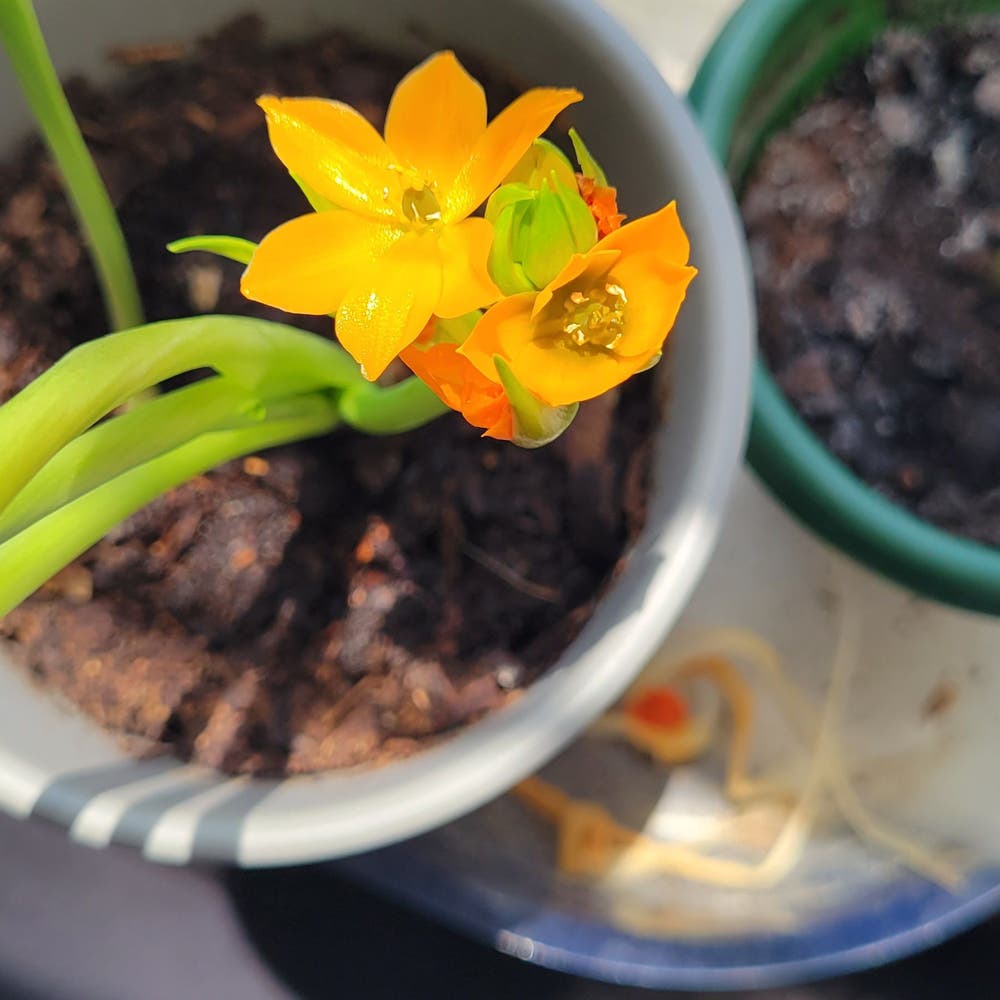
⭐ Star of Bethlehem - Fertilizing 101
Ornithogalum dubium
By the Greg Editorial Team
Jun 18, 2024•4 min read
This article was created with the help of AI so we can cover more plants for you. May contain errors. See one? Report it here.
Nurture a galaxy of blooms 🌟 with precise fertilizing tips for your Star of Bethlehem.
- Pre-bloom fertilization sets the stage for robust Star of Bethlehem blooms.
- Use lower N, higher P & K fertilizer ratios for vibrant flowering.
- Recover from over-fertilization by flushing soil and pruning affected leaves.
Timing is Everything: When to Boost Nutrients for Blooms
🌼 Before the Bloom: Pre-flowering Fertilization
Pre-bloom fertilization sets the stage for the Star of Bethlehem's floral performance. The ideal time to fertilize is just before the growing season revs up. This nutrient head start primes the plant for a robust bloom cycle. Avoid high nitrogen levels; this isn't a leafy green marathon. We're here for the flowers.
🌸 In Full Swing: Fertilizing During the Blooming Period
Once the Star of Bethlehem unfurls its petals, it's time to adjust your fertilizing strategy. Continue with a monthly feeding routine, but now with a focus on phosphorus to encourage those blooms. Watch your plant like a hawk; its response will dictate if you need to tweak the nutrient mix. Remember, over-fertilization is the botanical equivalent of a sugar rush followed by a crash—less is often more.

Choosing Your Star's Diet: Fertilizers That Promote Blooming
💐 The Blooming Formula: Understanding NPK Ratios
To get those vibrant blooms from your Star of Bethlehem, you'll want to snag a fertilizer with the right NPK ratio. That's nitrogen (N), phosphorus (P), and potassium (K), for the uninitiated. Phosphorus is your bloom's best bud—it's the element that encourages flowers to pop. Look for a lower N and higher P and K ratio, like a 5-10-5, to get your Star strutting its stuff in the floral spotlight.
🌱 Organic vs. Synthetic: Pros and Cons for Blooming
When it comes to organic versus synthetic fertilizers, it's not just about being green. Organic options, like compost, play the long game, releasing nutrients at a leisurely pace and improving soil health. They're the tortoises to the synthetic hares. Synthetics give a quick fix, a rapid nutrient shot that can be perfect if your Star needs an immediate boost. But remember, more isn't always better. Overdoing it with synthetic fertilizer can lead to nutrient burn, turning your blooming dreams into a crispy nightmare. Organic or synthetic, it's all about balance and moderation, so follow those label instructions like they're a treasure map to blooming success.

Feeding Your Star: Fertilizer Application Techniques
💧 The Right Amount: Dosage Tips for Flowering
When it comes to fertilizing your Star of Bethlehem, precision is key. Overdoing it can be just as detrimental as neglect. Half-strength liquid fertilizer, applied monthly, is the sweet spot for encouraging those stellar blooms without overwhelming your plant. Always observe your plant's reaction and tweak your regimen if needed.
🌱 The Method: Best Practices for Fertilizer Application
Root feeding is your go-to method, providing a steady diet for long-term health. Think of it as the main course, with foliar feeding as the occasional snack. When spraying leaves, ensure the solution is properly diluted to avoid leaf burn. And remember, direct contact with blooms is a no-go—protect those delicate flowers like a VIP at a concert.

Rescuing an Overfed Star: Dealing with Over-Fertilization
🚨 Spotting Trouble: Symptoms of Over-Fertilization in Blooming Plants
Yellowing leaves and wilting blooms are distress signals from your Star of Bethlehem, hinting at possible over-fertilization. A white crust on the soil's surface is another telltale sign, indicating an excess of mineral salts. If the roots have taken on a ghoulish appearance—brown, black, or limp—it's time for intervention. And if your plant is shedding leaves like it's autumn inside, you've likely been too generous with the feed.
🛠️ The Recovery Plan: Correcting Fertilization Faux Pas
First, stop fertilizing immediately—your plant needs a break. Flush the soil with water to help leach out excess nutrients; repeat this every few days until improvement is evident. Prune any leaves with brown spots or unusual shapes to help the plant focus on recovery. For potted plants, consider a change of scenery—new pots with fresh soil can make a world of difference. Hold off on further fertilization until the plant has bounced back, which could take three to four weeks. Remember, patience is key, and your Star of Bethlehem is worth the wait.
⚠️ Safety First
This content is for general information and may contain errors, omissions, or outdated details. It is not medical, veterinary advice, or an endorsement of therapeutic claims.
Always consult a qualified healthcare professional before using any plant as food, medicine, or supplement.
Never eat any plant (or feed one to pets) without confirming its identity with at least two trusted sources.
If you suspect poisoning, call Poison Control (800) 222-1222, the Pet Poison Helpline (800) 213-6680, or your local emergency service immediately.
Spotted an error? Please report it here.
Nurture your Star of Bethlehem to shine 🌟 with Greg's tailored fertilizing reminders, ensuring your blooms are as vibrant as your patience is rewarded!