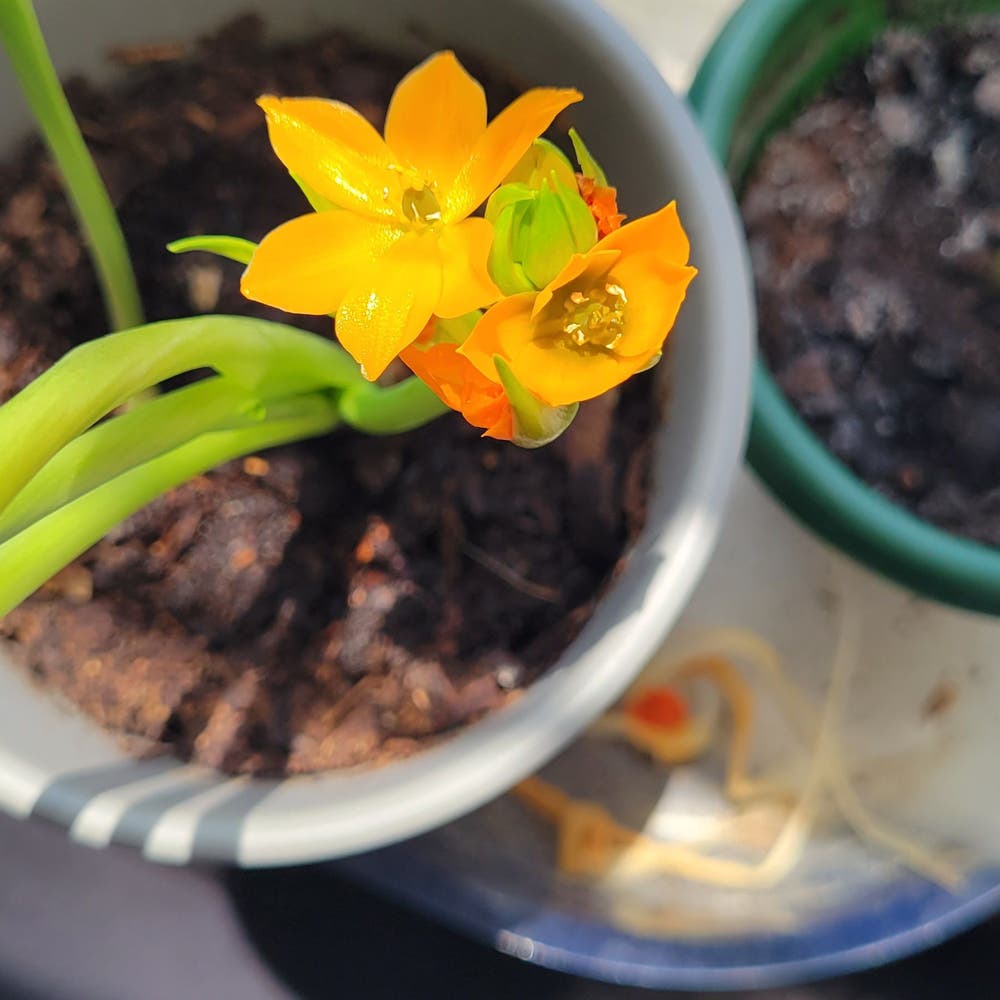
🌟 Determining If Your Orange Star Plant Is Dying
Ornithogalum dubium
By the Greg Editorial Team
Oct 17, 2024•4 min read
This article was created with the help of AI so we can cover more plants for you. May contain errors. See one? Report it here.
Revive your Orange Star Plant 🌱 by mastering care tips and spotting distress signs before it's too late!
- 🌱 Yellowing leaves indicate nutrient deficiencies or stress; address them promptly.
- 💧 Wilting signals underwatering or root issues; check soil moisture immediately.
- 🐛 Fuzzy growth suggests fungal infections; act quickly to prevent further damage.
Recognizing Unhealthy Orange Star Plant
Signs of Distress 🌱
Your Orange Star Plant can show several signs when it's not thriving.
Yellowing leaves are often the first red flag, indicating a nutrient deficiency or stress.
Wilting is another concern; it can signal underwatering or root issues that need immediate attention.
If you notice fuzzy growth, this often points to a fungal infection, which can spread quickly if not addressed.
Lastly, leaning or leggy growth suggests your plant isn't getting enough light or is generally in poor health.
Recognizing these signs early can make a significant difference in your plant's recovery.
Stay tuned as we dive deeper into common problems specific to the Orange Star Plant and how to tackle them effectively.
Common Problems Specific to Orange Star Plant
💧 Incorrect Watering
Identifying Overwatering vs. Underwatering
Overwatering your Orange Star Plant can lead to yellowing leaves, wilting, and squishy roots. Conversely, underwatering manifests as dry, crispy leaves, wilting, and yellow stems.
Causes and Effects
Overwatering often results in root rot, while underwatering causes stress and stunted growth. Both conditions can severely impact your plant's health.
Steps to Resolve and Revive
- Check soil moisture: Use a moisture meter or your finger to gauge dampness.
- Adjust watering schedule: Water only when the top inch of soil feels dry.
- Improve drainage: Ensure pots have drainage holes and consider repotting in fresh soil.
💡 Incorrect Light Conditions
Symptoms of Inadequate or Excessive Light
Inadequate light can cause leggy growth and yellowing leaves. On the other hand, excessive light leads to scorched leaves and faded colors.
Causes and Effects
Poor light conditions weaken your plant, making it more susceptible to pests. It's crucial to find the right balance for optimal growth.
Solutions for Optimal Light Exposure
- Assess light levels: Move the plant to a brighter or shadier spot as needed.
- Use grow lights: If natural light is insufficient, consider adding grow lights.
🐛 Pests
Common Pests Affecting Orange Star Plant
Aphids and spider mites are common pests that can wreak havoc on your Orange Star Plant. Look for small, green insects on new growth or fine webbing on leaves.
Identification and Symptoms
Sticky residue or distorted leaves are telltale signs of pest infestations. Early detection is key to effective treatment.
Treatment and Prevention Methods
- Use insecticidal soap or neem oil: These are effective treatments for pest control.
- Introduce beneficial insects: Ladybugs can help manage pest populations naturally.
🦠 Diseases
Fungal Issues
Powdery Mildew
Symptoms include white, powdery spots on leaves, often caused by high humidity and poor air circulation. Treatment involves applying fungicide and improving airflow.
Rust
Look for orange or brown spots on leaves, which arise from high humidity and poor drainage. Remove infected leaves and apply fungicide for treatment.
Black Rot
Dark, sunken spots on leaves and stems indicate black rot, often due to overwatering and poor drainage. Improving drainage and applying fungicide can help.
Blight
Rapid leaf wilting and browning signal blight, caused by fungal pathogens in damp conditions. Remove affected parts and apply fungicide for effective management.
🌱 Growth Problems
Identifying Issues Like Not Growing, Not Fruiting, Leaning, Leggy, and Etiolated Growth
If your plant isn't growing, it may be due to poor light or nutrient deficiency. Not fruiting could indicate inadequate light or stress, while leaning suggests insufficient light or poor root health.
Causes and Effects
Growth issues often stem from environmental stressors or care mistakes. Identifying the root cause is essential for recovery.
Steps to Encourage Healthy Growth
- Ensure adequate light and nutrients: This is crucial for healthy growth.
- Regularly rotate the plant: This promotes even growth and prevents leaning.
Understanding these common problems can help you maintain a thriving Orange Star Plant. Next, let’s explore preventive measures to keep your plant healthy and vibrant.
Preventive Measures
Best Practices for Care to Avoid Common Issues 🌱
To keep your Orange Star Plant thriving, regularly check the soil moisture. Adjust your watering routine based on the moisture level to avoid both overwatering and underwatering.
Additionally, monitor light exposure closely. If you notice your plant leaning or showing signs of distress, consider moving it to a brighter or shadier spot as needed.
Importance of Regular Monitoring and Maintenance 🔍
Frequent inspections of your plant can catch problems early. This proactive approach prevents severe damage and ensures your plant remains healthy and vibrant.
Utilizing the Greg Plant Care App for Reminders 📱
Consider using the Greg Plant Care App to set reminders for watering, fertilizing, and monitoring conditions. This handy tool can help you maintain optimal plant health with minimal effort.
By implementing these preventive measures, you can enjoy a flourishing Orange Star Plant and avoid common pitfalls. Now, let’s explore how to identify and address specific problems that may arise.
⚠️ Safety First
This content is for general information and may contain errors, omissions, or outdated details. It is not medical, veterinary advice, or an endorsement of therapeutic claims.
Always consult a qualified healthcare professional before using any plant as food, medicine, or supplement.
Never eat any plant (or feed one to pets) without confirming its identity with at least two trusted sources.
If you suspect poisoning, call Poison Control (800) 222-1222, the Pet Poison Helpline (800) 213-6680, or your local emergency service immediately.
Spotted an error? Please report it here.
Revive your Orange Star Plant and keep it thriving 🌟 with Greg's tailored reminders and expert care tips that help you tackle issues before they escalate!