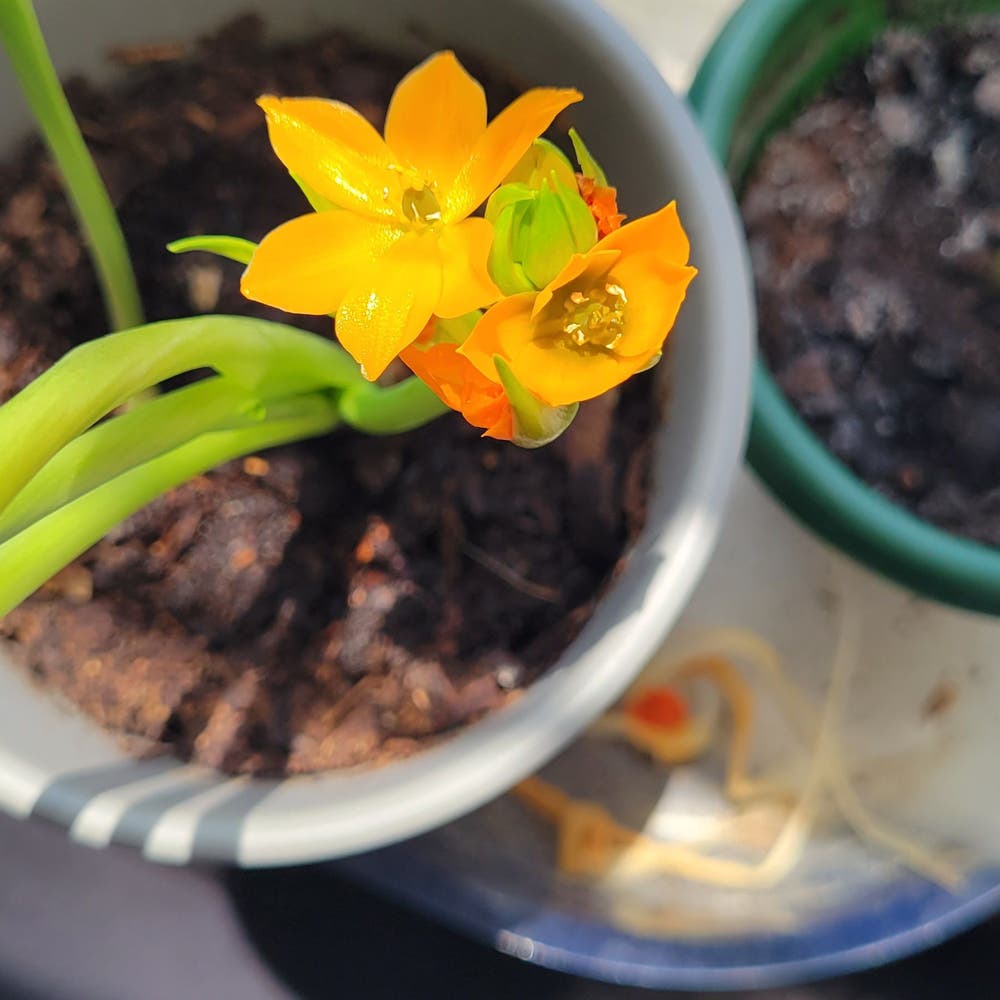
☀️ Propagating Your Sun Star: Step-by-Step Guide
Ornithogalum dubium
By the Greg Editorial Team
Jun 18, 2024•5 min read
This article was created with the help of AI so we can cover more plants for you. May contain errors. See one? Report it here.
Propagate your Sun Star plants 🌟 effortlessly with this thorough, step-by-step guide to multiplying your blooms.
- Divide when crowded or multiple crowns appear for Sun Star propagation.
- Offsets thrive better when large with their own roots.
- 🌡️🌱 Ideal conditions: 60-85°F, high humidity, and vigilant care.
Let's Get Dividing: How to Propagate Sun Star by Division
🌱 When to Divide Your Sun Star
Your Sun Star is crying out for division when it's a bit too snug in its pot or when you spot multiple crowns. These signs are your green light to get dividing.
🛠️ The Division Process
Preparing for Division
Gather your supplies: a sharp knife, fresh potting mix, and new pots. Make sure your hands are clean to avoid any unwanted transfer of pests or diseases.
Step 1: Unpotting
Carefully remove your Sun Star from its pot. A gentle tap on the bottom should loosen things up. If it's playing hard to get, you might have to show the pot who's boss and cut it away.
Step 2: Identifying Divisions
Examine the root ball. Look for natural separations where the plant has formed distinct clumps. Each section should have its own roots and leaves – think of it as a plant version of a studio apartment.
Step 3: Making the Cut
Using your sharp knife, slice between the divisions. It's like performing surgery, so steady hands and a confident cut are key.
Step 4: Potting Up
Pot each division in its own container, just big enough to give it a sense of security without feeling lost. Use that fresh potting mix to make it feel at home.
Step 5: Watering In
Give them a good drink to settle into their new digs. But don't drown them – they're not looking for a swimming lesson.
🌱 Aftercare for Divided Plants
In the first few weeks, be as attentive as a hawk. Monitor your plant babies daily, ensuring the soil stays moist but not soggy. Gradually transition to a more laid-back weekly check-in, always ready to adjust care as needed. Avoid fertilizing until they've had a chance to establish roots – patience is a virtue, after all. Keep them in a spot with bright, indirect light, but not in direct sunlight – think of it as their own personal spa retreat.

Budding Off: Propagating Sun Star from Offsets
🌱 Recognizing Viable Offsets
To spot ready-to-go offsets, look for mini versions of the Sun Star with their own roots. They should be large enough to stand on their own but not so old that they've lost their youthful vigor.
🌿 Planting and Nurturing Offsets
Prep your pots with a well-draining mix—think three parts peat moss to one part sand. Ensure there's a drainage hole. Plant the offsets at a depth where they sit snug, not swimming.
Location is key: start them off in indirect sunlight. Too much sun can fry their delicate leaves, while too little can stunt their growth.
Water them just enough to dampen the soil, avoiding a soggy situation. Patience pays off; give them time to root and acclimate to their new home.
Watch for pests like mealybugs and aphids. They love fresh growth. Spot them? Act fast with an appropriate insecticide.
Remember, size matters. Bigger offsets have better odds of thriving. Too small, and they might not make it.
Lastly, keep them warm, but not hot. Young plants are sensitive to extreme temperatures, so shade them during heatwaves.

Creating the Perfect Propagation Space
💡 Ideal Conditions for Propagation
Creating the ideal environment for Sun Star propagation is like tuning an instrument; it's all about precision. Sun Stars demand consistent temperatures between 60-85°F, emulating the mildness of spring. High humidity is non-negotiable; aim for that tropical rainforest vibe, with moisture levels that make a cactus jealous.
🕰 Monitoring and Adjusting
Keep a watchful eye on your Sun Star babies as if they were pots on the stove. Rotate pots occasionally to promote uniform growth and prevent favoritism towards the sun. If your plants start to look more parched than a comedian's humor, it's time to crank up the humidity—consider a humidifier or a regular misting routine. Stay alert for signs of distress, like wilting or yellowing leaves; these are your plants' SOS signals. Remember, propagation is a marathon, not a sprint; patience and vigilance are your trusty sidekicks on this green-thumbed journey.

Overcoming Propagation Pitfalls
🌱 Common Propagation Problems
Propagation is more than just sticking a plant in soil and hoping for the best. It's a science. Here's how to tackle the most common snags:
- Yellowing leaves or stunted growth? You've got an early warning system. Act fast to prevent a full-scale plant meltdown.
- Stretchy plants reaching for the light? They're not doing yoga; they need more sunshine.
- Overwatering is the silent killer. If your Sun Star's feet are constantly wet, it's time to rethink your watering schedule and ensure drainage is up to snuff.
- Pests are party crashers. Keep an eye out and show them the door with appropriate pest control measures.
- If your offsets are sluggish, double-check their health and the soil's drainage. Patience is key; some plants are just late bloomers.
🌿 Ensuring Healthy Root Development
Roots are the lifeline of your Sun Star. Here's how to get them thriving:
- Use a sterile medium. It's like a clean slate for your plant babies.
- Ventilation is crucial. Think of it as the plant's breathing space.
- Water from the bottom to encourage roots to reach down and get strong.
- Keep your tools sharper than a tack. Clean, precise cuts lead to less stress and better rooting.
- Monitor your plants. Like a good detective, look for clues of distress and adjust care accordingly.
- The right temperature and humidity are the Goldilocks conditions for roots. Not too hot, not too cold, just right.
- Finally, remember that propagation is a marathon, not a sprint. Your patience will be the ultimate test of your green thumb.
⚠️ Safety First
This content is for general information and may contain errors, omissions, or outdated details. It is not medical, veterinary advice, or an endorsement of therapeutic claims.
Always consult a qualified healthcare professional before using any plant as food, medicine, or supplement.
Never eat any plant (or feed one to pets) without confirming its identity with at least two trusted sources.
If you suspect poisoning, call Poison Control (800) 222-1222, the Pet Poison Helpline (800) 213-6680, or your local emergency service immediately.
Spotted an error? Please report it here.
Turn your Sun Star propagation into a success story 🌟 by letting Greg remind you when to water and adjust conditions, ensuring your new plants thrive from this step-by-step guide!