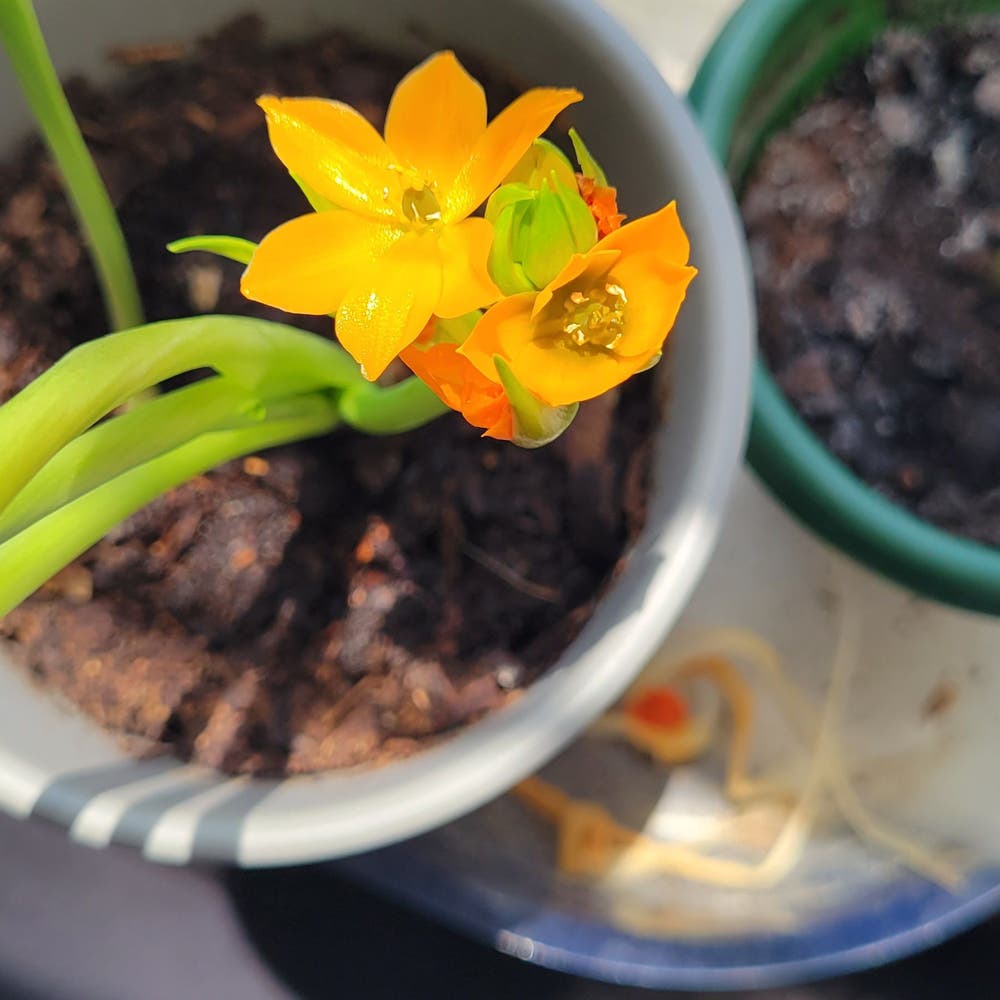
🌞 How Frequently Should I Water My Sun Star?
Ornithogalum dubium
By the Greg Editorial Team
Jun 18, 2024•4 min read
This article was created with the help of AI so we can cover more plants for you. May contain errors. See one? Report it here.
Discover the secret to a thriving Sun Star with our tailored watering guide 🌟💦.
- Drooping means thirsty, yellowing means too much water for Sun Stars.
- Adjust water with light, temp, and humidity; season and growth stage matter.
- Use moisture tools and observe to perfect your Sun Star's watering routine.
When Thirst Strikes: Decoding Your Sun Star's Water Needs
💧 Spotting the Tell-Tale Signs
Drooping leaves on your Sun Star plant are the plant's SOS—a clear signal it's time to water. Conversely, yellowing leaves might indicate overwatering, so before you reach for the watering can, check the soil. If it's damp, hold off; if it's dry, go ahead and quench its thirst.
🌿 The Role of Environment
Light, temperature, and humidity aren't just small talk topics—they're critical factors in your Sun Star's watering schedule. Bright light and high temperatures can make your plant drink like a fish, while cooler, shadier conditions mean less frequent watering. Keep a rain gauge handy to measure natural precipitation and adjust your watering accordingly. Remember, your plant's environment is as dynamic as your social calendar—always changing, always needing attention.

Crafting the Perfect Watering Schedule
💧 Growth Stage and Seasonal Shifts
Adjusting your Sun Star's watering schedule to its growth stage and the season is like updating your wardrobe for the weather—necessary and sensible. During active growth in spring and summer, your plant's thirst increases. Water more frequently during these times. As growth slows in fall and winter, so should your watering, preventing the soil from becoming a soggy, root-rotting mess.
🌱 Pot Size and Drainage Dynamics
The size of your Sun Star's pot is a big deal—it dictates how much water the soil holds. Choose a pot that's a snug fit for the root ball, allowing for growth without excess soil that retains too much moisture. And let's not forget drainage—without it, you're setting up a pool party for root rot. Terracotta or clay pots are your allies here, helping to manage moisture levels like a pro. Remember, small pots dry out faster, demanding more frequent watering, while larger pots hold moisture longer, requiring a less frequent watering schedule.

The Art of Watering Your Sun Star
💧 Technique Matters
Watering your Sun Star is not just a chore—it's a ritual. Fully saturate the soil to mimic a good rain, ensuring the water reaches deep into the roots. Avoid shallow sprinkles; they only tease the surface and leave the deeper thirst unquenched. Water slowly, letting the soil absorb the moisture without becoming waterlogged. Pause if you see water starting to pool. Remember, you're aiming for moist, not marshy.
📏 Moisture Monitoring Tools
Trust, but verify—your Sun Star's moisture levels, that is. A rain gauge can be your ally, helping you track natural rainfall and decide when to water. If you're more of a gadget person, a moisture meter will give you a precise reading of the soil's wetness, taking the guesswork out of the equation. No tech on hand? The classic finger test still works—stick it in the soil up to the second knuckle; if it feels dry, it's time to water. Or, for a low-tech indicator, a bamboo stick can serve as a moisture guide; dry upon removal means your plant is thirsty.

Adjusting to Your Sun Star's Feedback
🌻 Observing and Adapting
Your Sun Star is a living barometer of its own happiness. If it's thriving, you're acing plant parenthood; if it's sulking, it's time for a strategy shift.
Yellow leaves? Too much sun. Droopy demeanor? Check your watering rhythm. Your plant's condition is a direct reflection of its care—adjust accordingly.
Rotate your plant regularly to ensure even growth. This isn't just about aesthetics; it's about uniform health and happiness.
Track your adjustments in a log. This isn't overkill—it's smart. Over time, you'll see patterns that lead to a thriving Sun Star.
React promptly to what your plant tells you. If it's leaning more than Pisa's tower, it's time to reassess its spot in your home.
Remember, patience is key. Changes in care might take weeks to show. Don't rush to conclusions; let your plant acclimate.
Celebrate new growth—it's your Sun Star's way of giving you a high-five for your efforts. Keep up the good work, and watch your plant thrive.
⚠️ Safety First
This content is for general information and may contain errors, omissions, or outdated details. It is not medical, veterinary advice, or an endorsement of therapeutic claims.
Always consult a qualified healthcare professional before using any plant as food, medicine, or supplement.
Never eat any plant (or feed one to pets) without confirming its identity with at least two trusted sources.
If you suspect poisoning, call Poison Control (800) 222-1222, the Pet Poison Helpline (800) 213-6680, or your local emergency service immediately.
Spotted an error? Please report it here.
With Greg, you can perfectly water 🌟 your Sun Star by tracking moisture levels and adjusting reminders to your home's unique environment, ensuring it never droops or yellows.