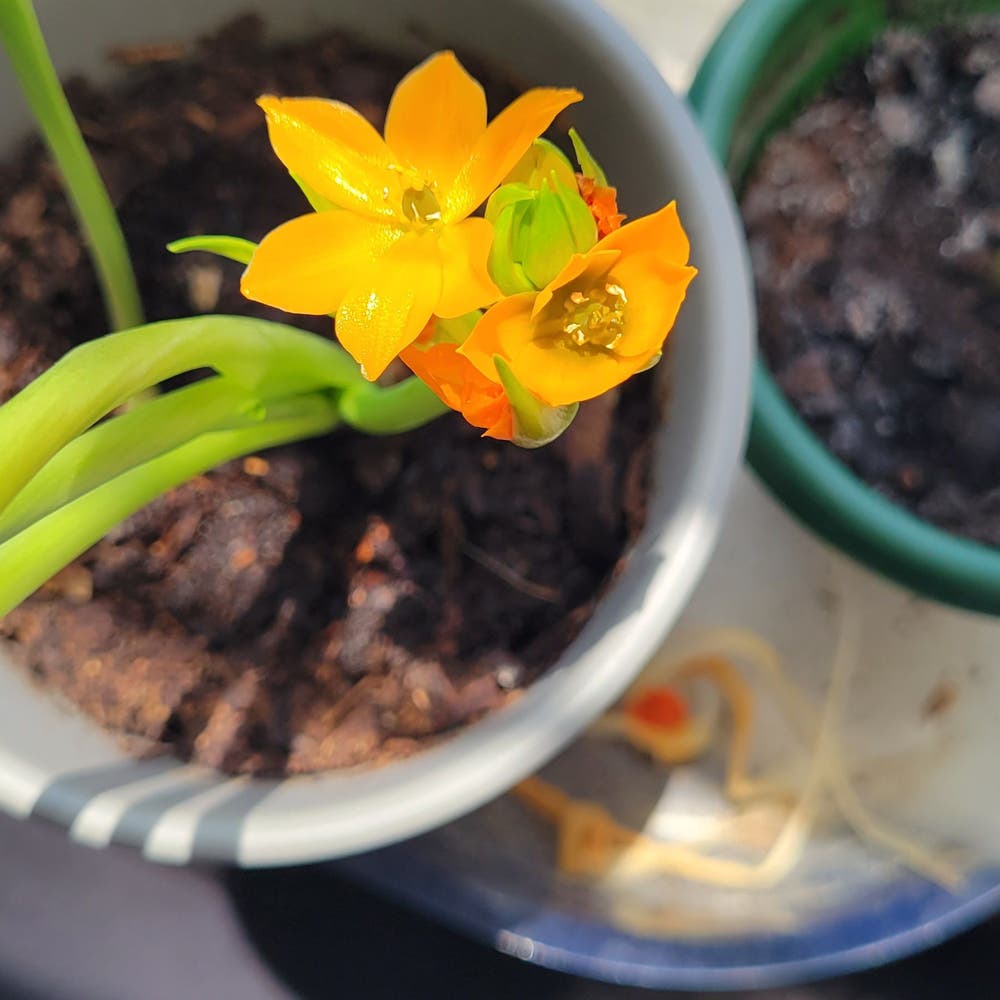
🌞 What Should I Do When Sun Star Leaves Turn Yellow?
Ornithogalum dubium
By the Greg Editorial Team
Jun 18, 2024•5 min read
This article was created with the help of AI so we can cover more plants for you. May contain errors. See one? Report it here.
Restore your Sun Star's lush greenery 🌟 by tackling the yellow-leaf mystery with our expert guide.
- 🌟 Yellow leaves signal overwatering, nutrient lack, or stress in Sun Stars.
- 💦 Test soil moisture; adjust watering to prevent root rot.
- 🐛 Inspect for pests and diseases regularly, treat with safe insecticides.
Spotting the Signs: Yellow Leaves on Your Sun Star
🚦 Identifying Yellowing Patterns
Yellowing leaves on your Sun Star can be a red flag for various issues. Uniform yellowing might suggest overwatering or nutrient deficiencies, while patterns like stripes or edges could point to environmental stress. Watch out for other distress signals such as browning tips or leaves that are curling or have a crunchy texture.
🌱 Checking Soil Moisture and Root Health
Test soil moisture by feeling the top inch—if it's dry, it's time to water. Ensure the soil isn't waterlogged to prevent root rot. If the soil feels like a wet sponge, consider repotting with a better-draining mix. Inspect the roots for mushiness or discoloration, which are tell-tale signs of root stress or rot.

The Usual Suspects: Common Causes of Yellow Leaves
💧 Watering Woes: Overwatering vs. Underwatering
Yellowing leaves on your Sun Star can be a red flag for watering issues. Overwatering is like giving your plant a bath with its socks on – uncomfortable and unnecessary. Roots need to breathe, and too much water drowns them, leading to root rot and yellow leaves.
To fix this, let the soil dry out before watering again. Stick your finger in the soil; if it's wet beyond the first inch, hold off on the H2O. For underwatering, the leaves may look more like a crumpled paper bag – dry and sad. Water more frequently, ensuring the soil gets evenly moist, like a well-squeezed sponge.
🌿 Nutrient Deficiencies: What Your Sun Star is Missing
Nutrient deficiencies turn Sun Star leaves into a pale imitation of their former selves. Yellow leaves with green veins might be crying out for magnesium or iron. A balanced fertilizer can be like a multivitamin, giving your plant the boost it needs without going overboard.
Remember, more is not always better. Use fertilizers according to the instructions, and consider the specific needs of your Sun Star. Sometimes, less is more, and the right amount is just enough.
🐜 Uninvited Guests: Pest Infestations and Disease
Pests and diseases are the uninvited guests that never bring good news. Mealybugs, spider mites, and fungal infections can turn leaves yellow faster than a lemonade stand sells out on a hot day.
Keep an eye out for tiny bugs or unusual spots on the leaves. If you spot trouble, isolate your plant and treat it with insecticidal soap or neem oil. Prevention is key, so regular check-ups and clean leaves can keep these party crashers at bay.

Turning Over a New Leaf: Remedial Steps
💧 Adjusting Your Watering Routine
Watering your Sun Star plant is less about sticking to a schedule and more about responding to its needs. Check the soil's moisture with your finger—if it's dry a couple of inches down, it's time to water. If it's damp, give it a break. Overwatering can lead to root rot, a fast track to yellow-leaf city.
🍽️ Feeding Your Sun Star Right
Fertilizer is like vitamins for your plant—necessary but possible to overdo. Use a balanced fertilizer and apply it sparingly, as per the product's instructions. Too much can cause nutrient burn, while too little can leave your plant malnourished. Observe how your Sun Star responds and adjust accordingly.
🐜 Pest Control: Keeping Critters at Bay
Pests are like uninvited party crashers, and they love a stressed plant. Regularly inspect your Sun Star for signs of infestation. If you spot trouble, isolate the plant and treat it with an appropriate insecticide or natural remedy. Prevention is key, so keep new plants quarantined before introducing them to your garden or home.

Keeping the Green: Preventing Future Yellowing
💧 Consistency is Key: Watering and Feeding Schedules
Establishing routines is not just about keeping your Sun Star plant alive, it's about letting it thrive. Think of it as setting up a calendar for plant care that's as non-negotiable as your morning coffee.
- Watering: Your Sun Star doesn't have a snooze button, so don't sleep on its watering schedule. Aim for soil that's moist, not a swamp. Less is more in winter; dial it back when the plant's growth slows down.
- Feeding: Use a slow-release fertilizer to avoid the feast-or-famine scenario. Your plant's diet should be as balanced as your own, assuming you're not living off pizza and energy drinks.
👀 Regular Check-Ups: Monitoring for Early Signs
Your Sun Star plant won't send you a text when it's in trouble, so keep your eyes peeled for any distress signals.
- Visual Inspection: Make it a habit, like scrolling through your social feeds. Look for changes in leaf color or a slowdown in growth. These are your plant's cryptic messages for help.
- Water Quality: If you're using tap water, let it sit out to let the chlorine evaporate or just go for filtered water. Your plant's tips will thank you.
- Pruning: Get snippy with dead or fading flowers to prevent energy waste. And remember, cleanliness is next to godliness, so sanitize those shears to keep diseases at bay.
Remember, the goal is to prevent your Sun Star's autobiography from being titled "Fifty Shades of Yellow." Keep it green, keep it keen.
⚠️ Safety First
This content is for general information and may contain errors, omissions, or outdated details. It is not medical, veterinary advice, or an endorsement of therapeutic claims.
Always consult a qualified healthcare professional before using any plant as food, medicine, or supplement.
Never eat any plant (or feed one to pets) without confirming its identity with at least two trusted sources.
If you suspect poisoning, call Poison Control (800) 222-1222, the Pet Poison Helpline (800) 213-6680, or your local emergency service immediately.
Spotted an error? Please report it here.
Keep your Sun Star plant's leaves radiantly green 🌟 by using Greg to fine-tune your watering and care routine, warding off those yellow-leaf blues.