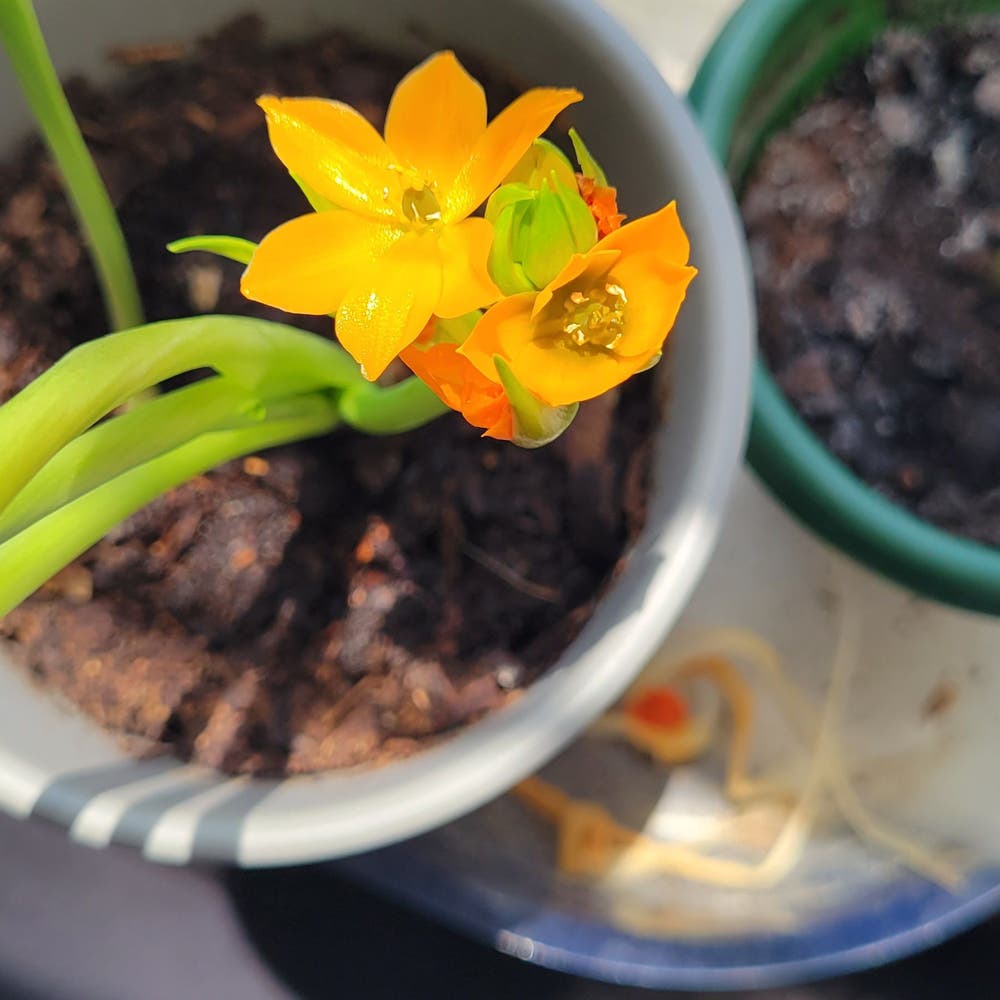
Sun Star - Fertilizing 101
Ornithogalum dubium
By the Greg Editorial Team
Jun 18, 2024•4 min read
This article was created with the help of AI so we can cover more plants for you. May contain errors. See one? Report it here.
Boost your Sun Star's bloom with our tailored fertilizing guide! 🌟🌸
- N-P-K ratio is key for Sun Star's different growth needs.
- Liquid for quick boost, granular for longevity; choose based on Sun Star's phase.
- Over-fertilization signs: yellow/brown leaves, limp roots. Fix with soil flush or change.
Picking the Right Fertilizer for Your Sun Star
💡 Understanding the N-P-K Ratio
Nitrogen (N), phosphorus (P), and potassium (K) make up the holy trinity of plant nutrients. Your Sun Star craves these for different reasons: nitrogen for the verdant leaves, phosphorus for robust roots and vibrant blooms, and potassium for overall health. A balanced N-P-K ratio, say 10-10-10, is a safe starting point, but don't overlook micronutrients—they're the unsung backup singers to your plant's performance.
🍽️ Liquid vs. Granular: Pros and Cons
When it comes to application, it's a showdown between liquid and granular fertilizers. Liquids are like a caffeine hit, quick to absorb and perfect for a mid-season pick-me-up. Granular types, on the other hand, are the slow-release energy bars, feeding your Sun Star over time. The choice hinges on whether you want to give your plant a quick boost or a long-term sustenance.
🌱 Organic Options
Organic fertilizers are like a farm-to-table meal for your Sun Star—nourishing and free from synthetic additives. They not only feed your plant but also enrich the soil with natural goodness. Remember, organic options may act slower than synthetic ones, but they're about playing the long game for your plant's health. Plus, they're a nod to sustainable gardening practices.

Timing is Everything: When to Fertilize
🌱 Growth Phase Fertilizing
In the growth phase, your Sun Star is like a teenager in a growth spurt—it's hungry for nutrients. Increase fertilization as new leaves emerge, typically in the spring. This is when your plant is expanding its greenery and needs a solid nutrient base to support that growth.
💐 Pre-Bloom Boost
When your Sun Star gears up to bloom, it's time for a pre-bloom boost. Fertilize just before the blooming cycle kicks in to encourage those vibrant flowers. Think of it as a backstage pass for nutrients, giving your plant the VIP treatment it needs to put on a show-stopping floral display.
❄️ Winter Care
Come winter, your Sun Star is on vacation, and it's time to adjust fertilization accordingly. Dial back on the feeding; the plant is resting, not dead. Over-fertilizing now is like forcing a hibernating bear to run a marathon—not a good idea.

Fertilizing Your Sun Star: Step by Step
💧 Mixing and Applying Liquid Fertilizers
Half-strength is key when mixing liquid fertilizers for your Sun Star. A typical ratio involves diluting 1 teaspoon of granules in 1 gallon of water, but for Sun Stars, you'll want to halve that. Pour the solution around the plant's base, avoiding the foliage to prevent burn.
Apply this mixture every other month when the plant is actively growing, tapering off as the plant prepares to enter dormancy. Remember, overzealous fertilization can lead to brown leaf tips—a clear sign of overindulgence.
🌿 Using Granular and Slow-Release Fertilizers
Granular fertilizers should be worked into the soil's top 6 to 8 inches, then watered in to kickstart nutrient release. For a Sun Star, a pre-planting sprinkle of 0-46-0 superphosphate can encourage robust root development.
Once a year should suffice for slow-release fertilizers, ideally in spring to support the growth cycle. Spread the granules evenly, avoiding direct contact with the plant to prevent damage. Over-application can lead to nutrient overload, so stick to the script—less is often more.

Recognizing and Fixing Over-Fertilization
🚩 Spotting the Signs
Yellow or brown leaves can be a distress signal from your Sun Star, hinting at over-fertilization. If you spot a white, dusty layer on the soil or pot's edges, that's salt buildup. Other red flags include limp roots, wilting leaves despite wet soil, and an overall stunted growth. Remember, these symptoms can pop up almost immediately after fertilizer application.
🛠 Quick Fixes for Fertilizer Fiascos
Caught in the act of over-fertilizing? Stop the madness. Remove any visible fertilizer from the soil's surface. Flood the garden with water to flush out excess nutrients; repeat every few days until your plant's demeanor improves. If your Sun Star is potted, consider a change of scenery with fresh soil. Prune any damaged foliage to help it focus on recovery. And, hold off on the fertilizer cocktails for at least three to four weeks. In the meantime, keep an eye on your plant's progress—it's the best way to gauge when it's ready for another round of nutrients.
⚠️ Safety First
This content is for general information and may contain errors, omissions, or outdated details. It is not medical, veterinary advice, or an endorsement of therapeutic claims.
Always consult a qualified healthcare professional before using any plant as food, medicine, or supplement.
Never eat any plant (or feed one to pets) without confirming its identity with at least two trusted sources.
If you suspect poisoning, call Poison Control (800) 222-1222, the Pet Poison Helpline (800) 213-6680, or your local emergency service immediately.
Spotted an error? Please report it here.
Ensure your Sun Star plant gets the perfect balance of nutrients 🌱 with Greg's personalized reminders for fertilization, tailored to its growth and bloom cycles.