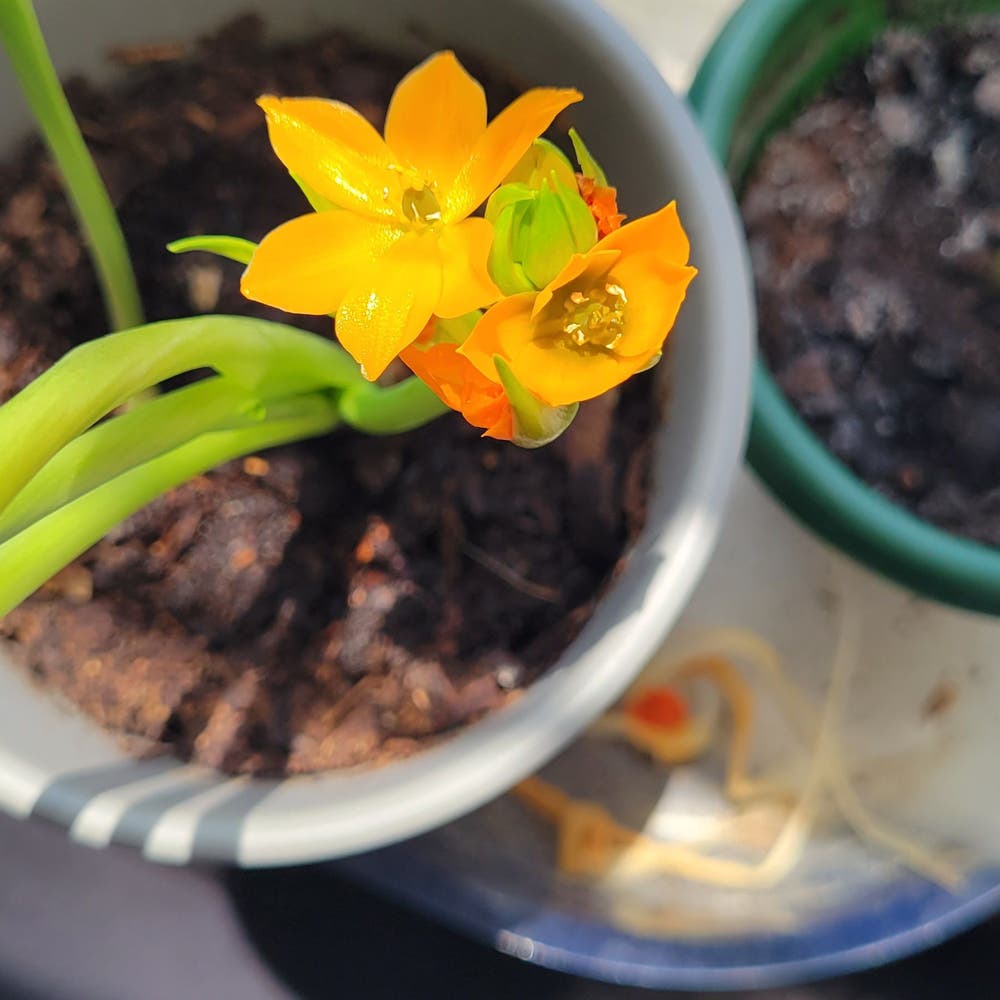
Sun Star Root Rot Solutions
Ornithogalum dubium
By the Greg Editorial Team
Jun 18, 2024•6 min read
This article was created with the help of AI so we can cover more plants for you. May contain errors. See one? Report it here.
Rescue your Sun Star from root rot's grip 🌟 with these fail-safe recovery and prevention tactics.
- Yellow leaves and wilting signal root rot; trust your nose for foul odors.
- Prune and sterilize to remove rot; repot with well-draining soil for recovery.
- Prevent with care: establish watering routine, ensure pot drainage, and promote airflow.
Spotting the Red Flags: Recognizing Root Rot Symptoms
🚨 Yellowing Leaves and Wilting: The Plant's SOS
Yellowing leaves and wilting are like the plant's way of texting you an SOS. These symptoms are the plant's cry for help, indicating that something's off below the surface. When you see this, it's time to play detective with your Sun Star plant.
🕵️♂️ Mushy Roots and Foul Odors: The Underground Culprits
Get down and dirty with the roots. If they're mushy or have the aroma of a forgotten gym locker, that's your cue that root rot has gatecrashed the party. Healthy roots should be firm and white, not squishy and brown like overcooked pasta.
👀 Visual Cues and Touch Tests: Don't Wait, Investigate
Don't wait for your plant to look like it's auditioning for a zombie movie. Dark spots on leaves or a growth slowdown are your hints to get closer. Touch the roots; if they feel like they've seen better days, it's time for action.
👃 Trust Your Nose: The Stench of Decay
If a whiff of your plant's soil reminds you of last week's compost, that's not just bad luck—it's a sign of decay. Foul odors are like the plant's version of a smoke alarm for root health. Don't ignore it.

First Response: Immediate Actions to Combat Root Rot
🚱 Stop the Soak
Let's get straight to the point: your Sun Star plant's soil needs to dry out, stat. Overwatering is the enemy here, and it's time to withdraw the waterworks.
Root Resuscitation
🌱 Pruning for Health
Grab those sanitized shears, and let's play surgeon. Cut away the mushy, brown roots with the precision of a bonsai master. Only the strong, healthy roots get to stay.
🧼 Sterilization is Key
Cleanliness is next to godliness, especially in root rot first aid. Sterilize your tools before and after the operation to prevent spreading any infections.

Rebuilding the Foundation: Soil and Environment Fixes
🌱 Fresh Start with New Soil
Out with the old: Replacing soil is a non-negotiable step in the root rot recovery process. It's like hitting the reset button on your plant's living environment. Pathogens lurking in the old soil need to be evicted to prevent re-infection.
Choosing the right mix is crucial. Opt for a well-draining soil that's the botanical equivalent of a breathable cotton tee—comfortable and airy. This ensures that water flows through, not pooling around the roots like an unwanted house guest.
🏡 Home Improvement
Repotting with care: When giving your plant a new home, ensure the pot has adequate drainage holes. It's like ensuring your house has enough exits in case of a fire—you need an escape route for excess water.
Airflow is your friend: Promoting circulation isn't just about feeling the breeze; it's about giving your plant's roots the oxygen they crave. Think of it as the difference between a stuffy room and one with fresh air circulating—a no-brainer for root happiness.

Fungicide to the Rescue: When and How to Use It
🕵️ Identifying the Need for Fungicides
Timing is your sidekick in the battle against root rot. Whip out the fungicides at the first suspicious sign or as a preemptive strike if you've been burned before. Remember, more isn't merrier—stick to the script on the label.
🧪 Safe Application: The Nitty-Gritty
Mix that potion as directed, usually a soil drench, and rotate your fungicides to dodge resistance. Your cast might include stars like thiophanate methyl or azoxystrobin.
🌱 Homemade Brews and Biological Bouncers
Biological fungicides are the Gandalfs of your garden, using natural microbes to fortify your plant's defenses. For a DIY concoction, baking soda can be your mild-mannered sidekick—½ teaspoon per gallon of water. But don't expect miracles; it's just one piece of the Integrated Pest Management (IPM) puzzle.
🛡️ Cultivating a No-Fungus Zone
Pair these treatments with stellar cultural practices. Ensure your plants are basking in proper air circulation, steer clear of overwatering, and keep your tools as clean as a whistle. It's about crafting a fortress where root rot dares not enter.
Keeping Root Rot at Bay: Prevention Strategies
💧 Watering Wisdom
Establishing a routine is crucial to prevent overwatering. Check the soil's top inch; if it's dry, give it a drink. If not, your plant isn't thirsty yet. Remember, your watering can is not a gavel—don't pass judgment too quickly on whether your plant needs water.
🌿 Potting Practices
Drainage holes are the unsung heroes in the fight against root rot. They're like secret escape tunnels for excess water. If you're using a decorative pot without holes, create a cachepot setup. It's like a double-agent operation—looks good on the outside, but the real work happens undercover.
🌱 The Right Soil Mix
Choose a well-draining soil mix to keep those roots breathing easy. Think of it as creating a comfy bed that doesn't cling to moisture like a needy ex.
💨 Airflow and Circulation
Ensure there's good airflow around your plant. It's like giving your roots room to dance—nobody likes a crowded dance floor, especially not roots trying to avoid rot.
🌬️ Seasonal Adjustments
Adjust your care with the seasons. Your plant's water needs in the sultry summer won't be the same when winter rolls in. It's about being adaptable, not sticking to a rigid script.
👀 Regular Inspections
Keep an eye out for early signs of trouble. Regular checks are like scrolling through a feed—catch up on your plant's status updates to prevent any drama.
🌱 Cultural Practices
Incorporate organic matter into the soil to keep it aerated. It's like fluffing a pillow—makes everything more comfortable and less likely to become a soggy mess.
🔄 The Long-Term Strategy
Rotate your pots occasionally for even growth and to prevent disease. It's like ensuring all sides of your plant get to bask in the limelight.
✨ Quality Over Quantity
When watering, think quality, not just quantity. It's not about how much you pour, but how well the plant can breathe afterwards.
💦 Humidity Control
Keep humidity levels in check. Your plant's not looking for a sauna experience or a desert trek—aim for that sweet spot in between.
🌿 Smart Irrigation
Consider alternative irrigation methods like trickle irrigation for precise water management. It's like having a smart home system for your plants—only the necessary amount of water, exactly when and where it's needed.
⚠️ Safety First
This content is for general information and may contain errors, omissions, or outdated details. It is not medical, veterinary advice, or an endorsement of therapeutic claims.
Always consult a qualified healthcare professional before using any plant as food, medicine, or supplement.
Never eat any plant (or feed one to pets) without confirming its identity with at least two trusted sources.
If you suspect poisoning, call Poison Control (800) 222-1222, the Pet Poison Helpline (800) 213-6680, or your local emergency service immediately.
Spotted an error? Please report it here.
Ensure your Sun Star shines bright without the blight of root rot by letting Greg tailor a watering schedule 🌱 that keeps your roots robust and healthy.