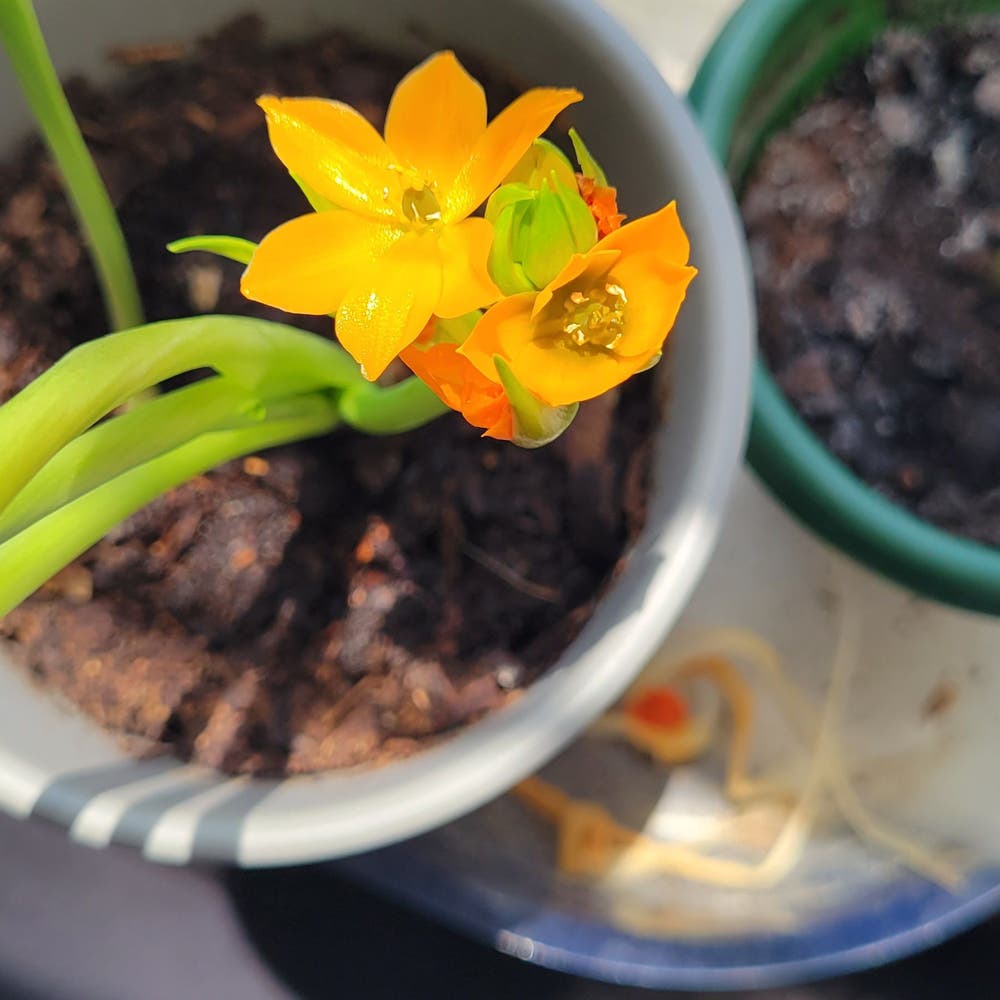
🌞 Why Are There Black Spots on My Sun Star Leaves?
Ornithogalum dubium
By the Greg Editorial Team
Jun 18, 2024•3 min read
This article was created with the help of AI so we can cover more plants for you. May contain errors. See one? Report it here.
Banish black spots on your Sun Star leaves 🌟 with our expert diagnosis and treatment guide.
- Visual inspection reveals black spot causes: size, shape, pattern.
- Isolate and prune to stop spread and remove affected areas.
- Adjust environment and care to prevent and treat black spots.
Spotting the Culprit: Identifying Black Spots
👀 Visual Inspection
Size, shape, and pattern of black spots are your first clues. Small, isolated dots might just be the beginning of a bigger issue. Look for dark margins or concentric rings—these are the tell-tale signs of an unwanted guest.
🤒 Accompanying Symptoms
Black spots rarely crash the party alone. Yellowing leaves or a general wilting demeanor can suggest the plant's in distress. If you spot fine webs, brace yourself—pests might be lurking.
⏰ Timing and Progression
Timing's everything. Black spots often show up uninvited after a period of overwatering or when the humidity's been cranked up too high. They spread like gossip—quickly and quietly—so catching them early is key to keeping the peace.

First Aid for Your Sun Star: Immediate Actions
🚨 Isolation
Isolate your Sun Star immediately. Like the flu, plant problems can spread—fast. Think of isolation as the quarantine zone; it's for the greater good of your plant collection.
✂️ Pruning
Grab your sterilized shears—it's surgery time. Snip off the black-spotted leaves with precision and dispose of them like they're biohazard material. Remember, cleanliness is not just for show; it's a shield against an all-out plant pandemic.

Crafting the Cure: Treatment Strategies
🍄 Fungal Foes
Fungicides are your plant's knights in shining armor against fungal invaders. Timing is crucial; apply as soon as you spot trouble. Copper-based products and biocontrol agents like neem oil are your go-to options. Consistency is your new best friend—follow the label to a T and keep up the treatment as if your plant's life depends on it (because it does).
🦠 Bacterial Battles
When bacteria barge in, it's time for bactericides. Copper compounds are your heavy artillery here. But remember, they're not a one-size-fits-all solution. Use them wisely to avoid nurturing antibiotic-resistant superbugs. Hygiene is paramount—sterilize your tools as if preparing for surgery. It's all about early detection and rapid response.
🌿 Environmental Adjustments
Adjusting your plant's living conditions can thwart black spots. Light and moisture are your dials to tweak; aim for bright but not scorching sun, and water at the base to keep leaves dry. Airflow is your secret weapon—space out your plants like guests at a gala to prevent overcrowding. These tweaks are like setting the thermostat for a comfortable home—it's all about finding that sweet spot.

Fortifying the Foliage: Prevention Tactics
💧 Water Wisdom
Watering your Sun Star plant is like threading a needle—it requires precision and patience. Morning watering is key; it gives leaves time to dry under the sun's watchful eye, warding off fungal party crashers. Keep the soil's thirst quenched but not drowned; think moist, not waterlogged, to sidestep the root rot bog.
🌡️ Climate Control
In the realm of humidity and temperature, your Sun Star seeks balance, not extremes. Use a dehumidifier or relocate your plant to less steamy rooms to keep moisture levels in check. Stable temperatures prevent stress-induced black spots, so avoid turning your plant's world into a rollercoaster of hot and cold spells.
🧼 Cleanliness and Care
Cleanliness is your plant's shield against the dark arts of black spots. Keep the foliage's neighborhood tidy—fallen leaves and debris are a big no-no. Regularly clean your tools with a bleach solution; it's like giving your plant's environment a good scrub. And remember, a vigilant eye keeps the black spots shy; make regular inspections part of your green thumb routine.
⚠️ Safety First
This content is for general information and may contain errors, omissions, or outdated details. It is not medical, veterinary advice, or an endorsement of therapeutic claims.
Always consult a qualified healthcare professional before using any plant as food, medicine, or supplement.
Never eat any plant (or feed one to pets) without confirming its identity with at least two trusted sources.
If you suspect poisoning, call Poison Control (800) 222-1222, the Pet Poison Helpline (800) 213-6680, or your local emergency service immediately.
Spotted an error? Please report it here.
Eradicate black spots 🍂 on your Sun Star leaves with Greg's custom care alerts that keep your plant's environment optimal for health and happiness.