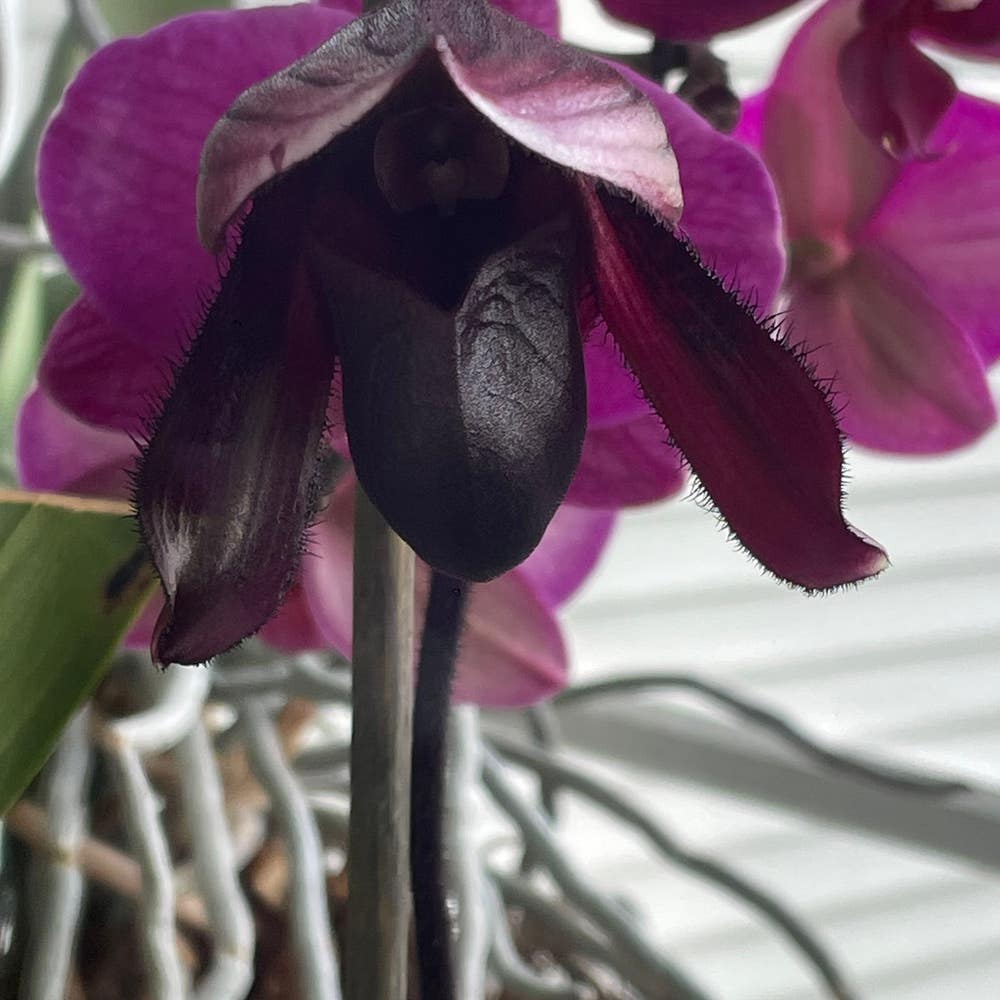
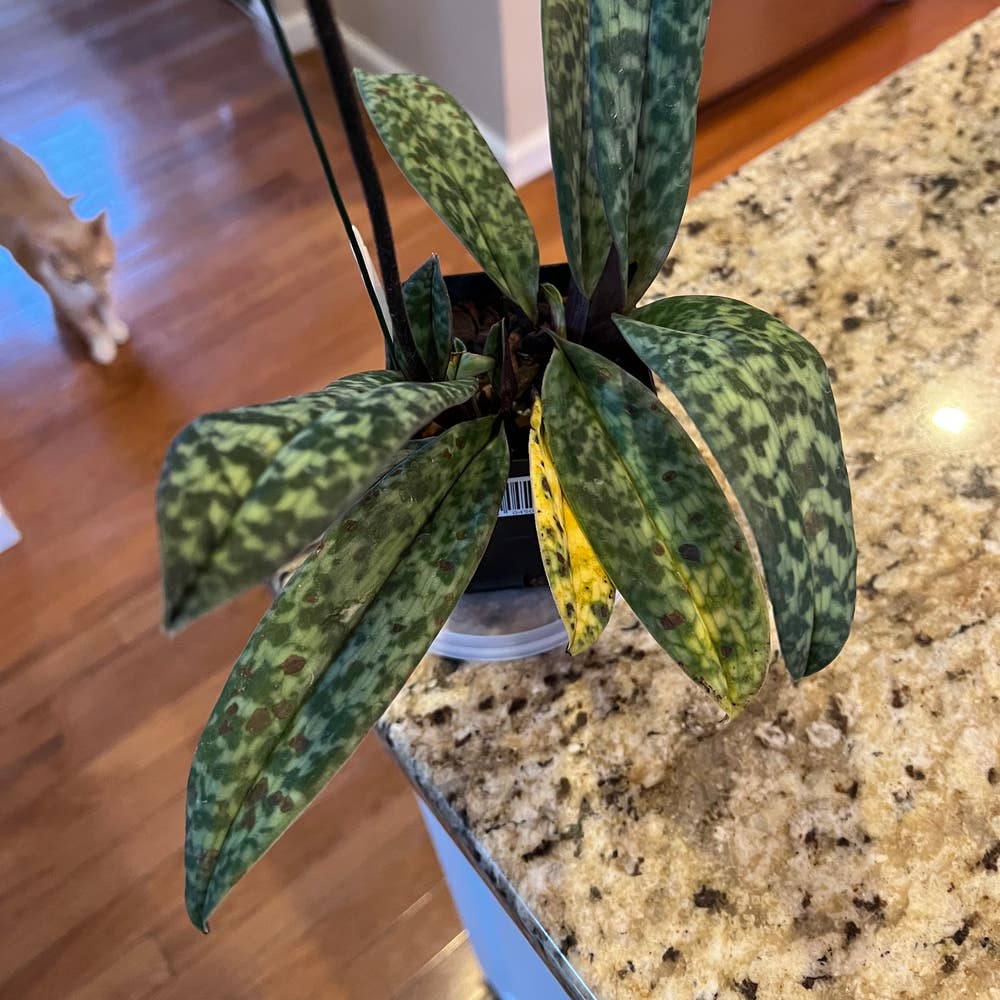
🌼 How to Cure Yellow Leaves on Your Paphiopedilum
Paphiopedilum hirsutissimum
By the Greg Editorial Team
Oct 25, 2024•5 min read
This article was created with the help of AI so we can cover more plants for you. May contain errors. See one? Report it here.
Revive your Paphiopedilum's beauty 🌼 by quickly diagnosing and treating those pesky yellow leaves!
- 🌱 Yellow leaves indicate issues like overwatering, nutrient deficiencies, or pests.
- 💧 Establish a consistent watering schedule to prevent underwatering and root rot.
- 🌞 Adjust light exposure to avoid scorching or pale leaves for optimal growth.
Causes of Yellow Leaves
💧 Overwatering and Root Rot
Yellow leaves can often signal overwatering, leading to root rot. Symptoms include soft, mushy roots, wilting, and of course, those dreaded yellowing leaves.
Causes: Poor drainage and excessive watering frequency are the main culprits.
Prevention: To keep your Paphiopedilum healthy, use a well-draining potting mix and allow the top inch of soil to dry out before watering.
🚰 Underwatering and Drought Stress
On the flip side, underwatering can also cause yellow leaves. Look for crispy, dry leaf edges alongside yellowing leaves.
Causes: This usually stems from infrequent watering and dry air conditions.
Prevention: Establish a consistent watering schedule and keep an eye on humidity levels to avoid drought stress.
🌱 Nutrient Deficiencies
Nitrogen Deficiency
If you notice general yellowing of older leaves and stunted growth, nitrogen deficiency might be the issue.
Treatment: Use a balanced fertilizer with nitrogen during the growing season to give your plant the boost it needs.
Magnesium Deficiency
Magnesium deficiency presents as yellowing between leaf veins, typically affecting older leaves first.
Treatment: Applying Epsom salt (magnesium sulfate) diluted in water can help restore balance.
☀️ Light Exposure Issues
Too Much Light
Scorched leaf tips and yellowing leaves can indicate that your plant is getting too much light.
Treatment: Move it to a location with indirect light or use sheer curtains to filter the sunlight.
Too Little Light
Conversely, pale, elongated leaves suggest your plant may not be getting enough light.
Treatment: Gradually increase light exposure, and consider using grow lights if necessary.
🐜 Pest Infestations
Common Pests
Aphids and spider mites are common pests that can lead to yellow leaves.
- Aphids: Look for sticky residue and distorted leaves.
- Spider Mites: Fine webbing and stippled leaves are telltale signs.
Treatment: Use insecticidal soap or neem oil, and consider introducing beneficial insects to combat these pests.
🌡️ Environmental Stress
Temperature Fluctuations
Sudden yellowing and leaf drop can result from temperature fluctuations.
Treatment: Maintain stable temperatures between 65°F to 80°F (18°C to 27°C) for optimal health.
Humidity Issues
Leaf curling and yellowing can also be symptoms of humidity issues.
Treatment: Use a humidity tray or humidifier to maintain humidity levels between 50-70%.
Understanding these causes is crucial for keeping your Paphiopedilum vibrant and healthy. Next, we’ll dive into how to diagnose yellow leaves effectively.
Diagnosing Yellow Leaves
🌟 Identifying Symptoms
To effectively diagnose yellow leaves on your Paphiopedilum, start by observing the leaf color. Look for general yellowing across multiple leaves versus localized yellowing on specific areas.
Additionally, check for other signs such as wilting, pest presence, or fungal issues. These observations can provide crucial clues about the underlying problem.
🔍 Differentiating Types of Yellowing
Whole Leaf Yellowing
Whole leaf yellowing typically indicates systemic issues like overwatering or nutrient deficiencies. This widespread discoloration suggests that the plant is struggling to absorb essential nutrients or is suffering from excess moisture.
Tip Yellowing
Tip yellowing is often linked to environmental stress or localized damage. This type of yellowing can signal that the plant is receiving too much light or is experiencing temperature fluctuations.
🏥 Assessing Overall Plant Health
To get a complete picture of your plant's health, check the roots. Carefully remove the plant from its pot to inspect the root system for signs of rot or damage.
Next, evaluate the growth patterns. Look for new growth, which indicates a healthy plant, or stagnation, which may signal underlying issues that need addressing.
Treatment for Yellow Leaves
🌊 Adjusting Watering Practices
To tackle yellow leaves, start by assessing your current watering schedule.
Allow the soil to dry out between waterings, ensuring you’re not drowning your plant.
Using a moisture meter can help you gauge when it’s time to water accurately.
🌱 Fertilization Strategies
Next, identify any specific nutrient deficiencies affecting your Paphiopedilum.
Choose an appropriate fertilizer, whether balanced or specific to the deficiency.
Apply it according to package instructions, typically every 4-6 weeks during the growing season.
🐛 Pest Control Methods
Organic Options
For pest control, consider organic solutions first.
Neem oil is effective; apply it every 7-14 days until pests are under control.
Insecticidal soap can also be sprayed directly on affected areas for quick action.
Chemical Options
If organic methods fall short, you may need to resort to chemical options.
Systemic insecticides can be effective; just be sure to follow the label instructions for safe application.
🌞 Environmental Adjustments
Light
Adjusting light exposure is crucial for your plant's recovery.
Gradually increase or decrease light based on how your Paphiopedilum responds.
💧 Humidity and Temperature
Maintaining optimal humidity and temperature is equally important.
Use humidity trays or adjust your thermostat settings to keep conditions ideal for growth.
With these treatment strategies, you can help your Paphiopedilum thrive again.
Next, let’s explore how to prevent yellow leaves from becoming a recurring issue.
Preventing Yellow Leaves
🌱 Best Practices for Care
To keep your Paphiopedilum thriving, regularly check the soil moisture. Adjust your watering schedule based on these observations to prevent yellow leaves.
Using a well-draining potting mix specifically designed for orchids is crucial. This helps avoid water retention, which can lead to root rot.
🔍 Regular Monitoring and Maintenance
Inspect your plant's leaves and roots bi-weekly for any signs of stress or pests. Early detection can save your orchid from significant damage.
Adjust your care routine based on seasonal changes. Different times of the year may require different levels of attention.
🪴 Choosing the Right Potting Mix
Opt for a potting mix that includes bark, perlite, and sphagnum moss. This combination ensures optimal drainage for your orchid.
Make sure your pots have adequate drainage holes. Proper drainage prevents water from pooling, which is essential for healthy roots.
🌦️ Seasonal Care Adjustments
Modify your watering and fertilization schedules according to seasonal growth patterns. Your Paphiopedilum will thrive with a tailored approach.
During winter months, increase humidity levels, as indoor air tends to be drier. A simple humidity tray or humidifier can make a significant difference.
By implementing these preventive measures, you can maintain the vibrant health of your Paphiopedilum and enjoy its beauty for years to come. Next, we’ll explore effective treatment options for yellow leaves when they do occur.
⚠️ Safety First
This content is for general information and may contain errors, omissions, or outdated details. It is not medical, veterinary advice, or an endorsement of therapeutic claims.
Always consult a qualified healthcare professional before using any plant as food, medicine, or supplement.
Never eat any plant (or feed one to pets) without confirming its identity with at least two trusted sources.
If you suspect poisoning, call Poison Control (800) 222-1222, the Pet Poison Helpline (800) 213-6680, or your local emergency service immediately.
Spotted an error? Please report it here.
Revive your Paphiopedilum's vibrancy 🌼 by using Greg's tailored watering alerts and moisture tracking to keep those yellow leaves at bay!