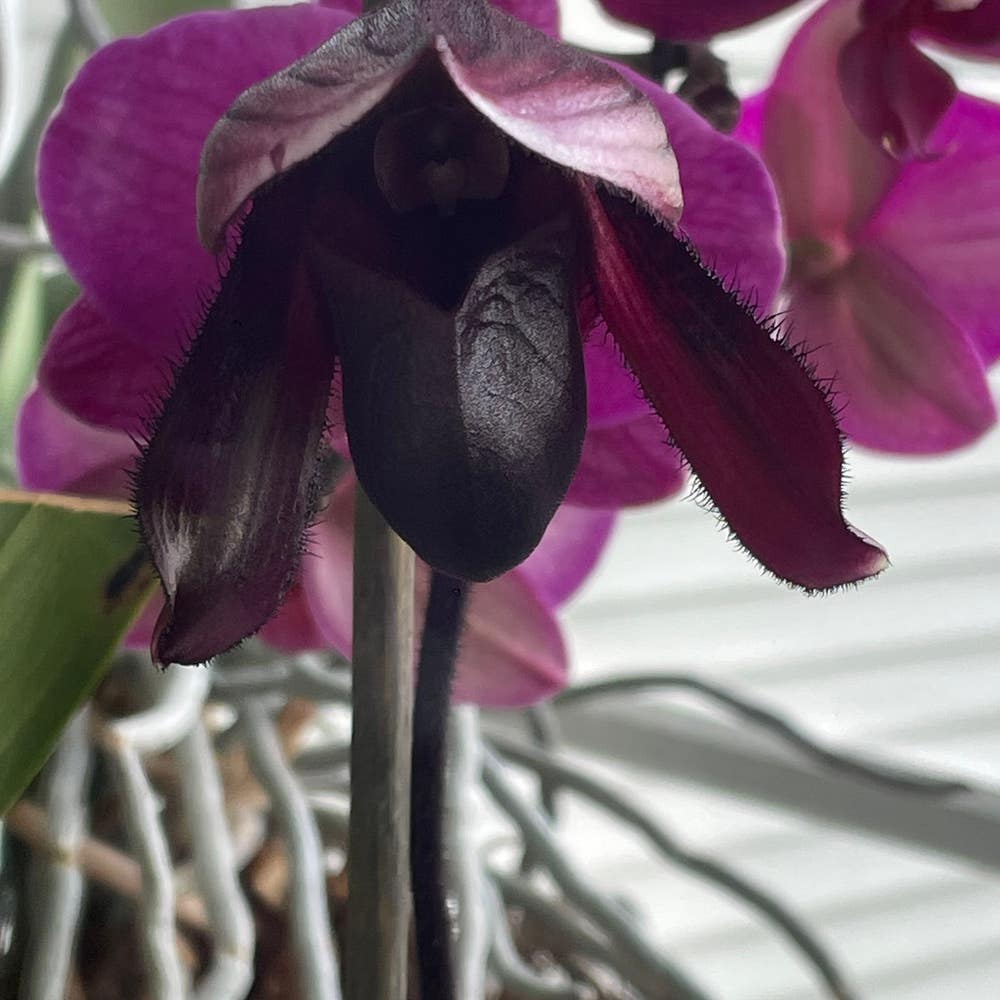
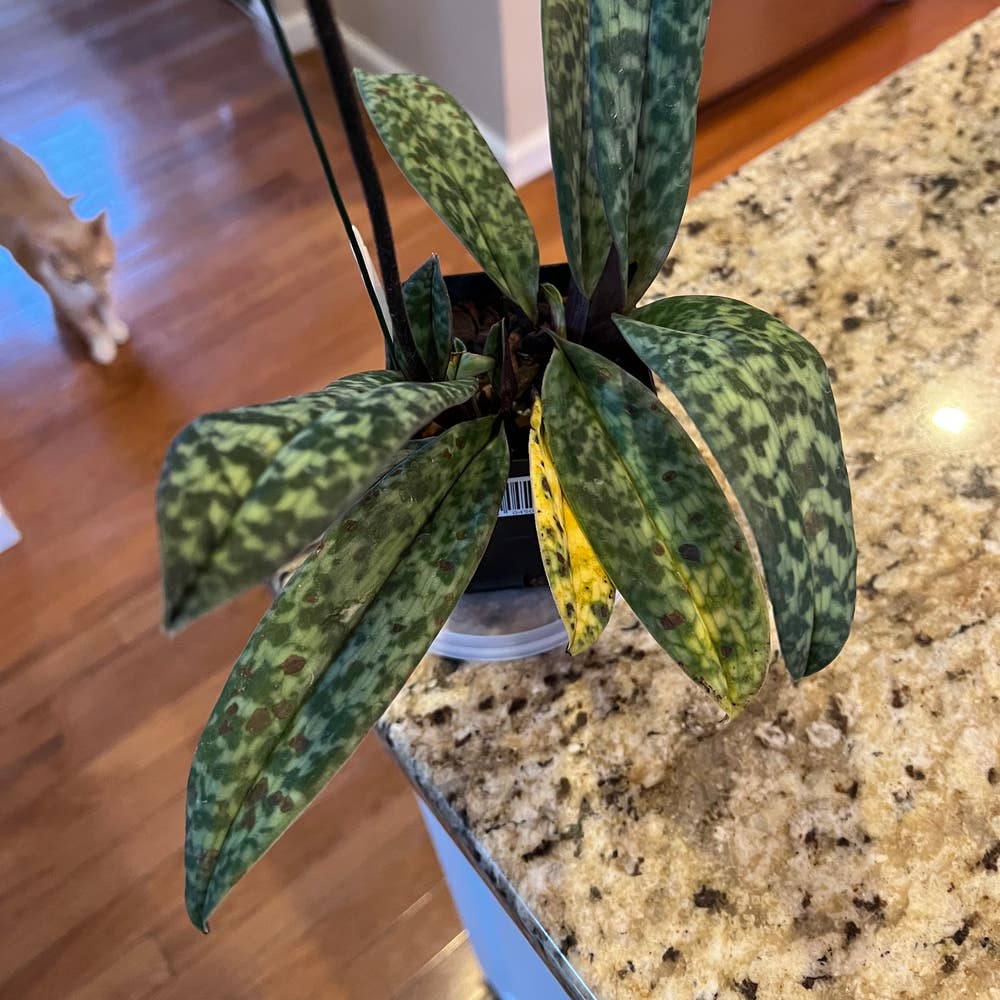
🌸 What to Do About Leaves Falling Over on Your Paphiopedilum
Paphiopedilum hirsutissimum
By the Greg Editorial Team
Oct 25, 2024•6 min read
This article was created with the help of AI so we can cover more plants for you. May contain errors. See one? Report it here.
Revive your Paphiopedilum orchids 🌸 by mastering the secrets to diagnosing and preventing leaf droop!
- 💧 Overwatering causes drooping leaves; ensure proper drainage to prevent root rot.
- ☀️ Bright, indirect light is vital; insufficient light leads to pale, elongated growth.
- 🌱 Regular pest inspections are crucial for early detection and effective treatment.
Causes of Leaf Droop
💧 Overwatering and Root Rot
Overwatering is a common issue that leads to root rot in Paphiopedilum orchids. Symptoms include mushy roots, a foul odor, and yellowing leaves, indicating that the plant is struggling.
To prevent this, it's crucial to use well-draining potting media. This helps avoid excess moisture, which can suffocate the roots and lead to decay.
🚰 Underwatering and Dehydration
On the flip side, underwatering can also cause leaf droop. Signs of dehydration include wrinkled leaves and dry potting media, signaling that your plant needs a drink.
Adjust your watering frequency based on environmental conditions. Factors like temperature and humidity play a significant role in how often you should water.
💡 Insufficient Light Conditions
Paphiopedilum orchids thrive in bright, indirect light. If your plant isn't getting enough light, you may notice elongated growth and pale leaves.
Assess your plant's light exposure regularly. Adjust its placement to ensure it receives the ideal amount of light for healthy growth.
🌫️ High Humidity Levels
These orchids prefer humidity levels between 50-70%. Excessive humidity can lead to fungal issues and contribute to leaf droop.
Monitor humidity levels closely. If they exceed the optimal range, consider using a dehumidifier or improving air circulation.
🐛 Pest Infestations
Pests like aphids, mealybugs, and spider mites can wreak havoc on your Paphiopedilum. Look for signs of pest damage, such as sticky residue, webbing, and leaf discoloration.
Regular inspections are key to early detection. Address any infestations promptly to prevent further damage.
🌱 Nutrient Deficiencies
Paphiopedilum orchids require essential nutrients like nitrogen, phosphorus, and potassium. Symptoms of nutrient deficiencies include yellowing leaves and stunted growth.
Consider using a balanced fertilizer to ensure your plant receives the nutrients it needs. Regular soil testing can help you monitor nutrient levels effectively.
Understanding these causes of leaf droop is essential for maintaining a healthy Paphiopedilum. With the right care, you can keep your orchid thriving and vibrant. Next, we'll explore how to diagnose the specific issues affecting your plant.
Diagnosing the Problem
🌧️ Signs of Overwatering vs. Underwatering
Overwatering can lead to yellowing, drooping leaves and mushy roots. In contrast, underwatering results in dry, wrinkled leaves and hard potting media.
💡 Identifying Light-Related Issues
Assessing light exposure is crucial for your Paphiopedilum. Use a light meter or observe the orientation of the leaves to determine if your plant is getting enough light.
🐞 Recognizing Pest Damage
Regular visual inspections can help you catch pest damage early. Keep an eye out for sticky residue or webbing, and make monitoring a routine part of your plant care.
💧 Assessing Humidity Levels
Humidity plays a vital role in your plant's health. Use hygrometers to measure humidity levels, and watch for signs like leaf curling or browning edges that indicate inadequate moisture.
🌱 Evaluating Nutrient Levels in the Soil
Soil testing kits can help you assess nutrient levels effectively. Look for signs of nutrient imbalance, such as yellowing leaves or stunted growth, to ensure your plant thrives.
Understanding these diagnostic signs will empower you to take action and restore your Paphiopedilum to its vibrant self. Next, let’s explore effective solutions for leaf droop.
Solutions for Leaf Droop
Adjusting Watering Practices 💧
- Establish a consistent watering schedule based on environmental conditions. This helps ensure your Paphiopedilum gets the right amount of moisture.
- Always check the potting media moisture before watering. This prevents overwatering, which can lead to root rot.
- Use pots with drainage holes to prevent water accumulation. Proper drainage is crucial for healthy roots.
Improving Light Exposure ☀️
- Relocate the plant to a brighter area with indirect sunlight. Paphiopedilums thrive in bright, filtered light.
- Consider using sheer curtains to diffuse harsh light. This protects the leaves while still providing necessary illumination.
Managing Humidity Levels 💦
- Utilize humidity trays or humidifiers to maintain optimal levels. Keeping humidity between 50-70% is key for healthy growth.
- Regular misting techniques can also increase moisture around the plant. Just be careful not to overdo it, as excessive moisture can lead to fungal issues.
Treating Pests Effectively 🐞
- Identify the pest type and extent of infestation. Common culprits include aphids and spider mites.
- Use insecticidal soap or neem oil for treatment. These options are effective and less harmful to your plant.
- Implement biological controls like ladybugs for aphids. They can help keep pest populations in check naturally.
Fertilizing Appropriately 🌱
- Opt for balanced orchid fertilizers to provide essential nutrients. This supports healthy growth and vibrant blooms.
- Fertilize every 4-6 weeks during the growing season. Regular feeding ensures your plant has what it needs to thrive.
By addressing these key areas, you can effectively combat leaf droop in your Paphiopedilum. Next, let's explore some preventative measures to keep your plant healthy and vibrant.
Preventative Measures
💧 Best Practices for Watering
To keep your Paphiopedilum thriving, adopt the soak and dry method. This technique involves thoroughly watering the plant and allowing the potting media to dry out before the next watering.
Seasonal adjustments are crucial too. As temperatures and humidity levels change, so should your watering frequency to prevent over or underwatering.
☀️ Ideal Light Conditions
Understanding the light requirements for different Paphiopedilum varieties is essential. Each type may have unique needs, so research your specific plant to provide the best conditions.
Adjust light exposure based on seasonal changes. In winter, you might need to move your plant closer to a light source as natural light diminishes.
💨 Maintaining Optimal Humidity
Regular monitoring of humidity levels is key to a healthy plant. Keep an eye on environmental changes that could affect humidity, especially during dry seasons.
Using humidity gauges can help track levels accurately. This way, you can make timely adjustments to keep your plant happy.
🐜 Regular Pest Inspections
Schedule bi-weekly inspections to catch any pest issues early. Regular checks can prevent infestations from becoming a bigger problem.
Early detection and treatment are vital. The sooner you address any pest presence, the better your plant will fare.
🌱 Fertilization Schedule
Establish a consistent fertilization routine to support your plant's growth. Using a balanced orchid fertilizer every 4-6 weeks during the growing season can make a significant difference.
Adjust nutrient ratios based on your plant's growth stages. This ensures your Paphiopedilum receives the right nutrients at the right time.
By implementing these preventative measures, you can help your Paphiopedilum thrive and minimize the risk of leaf droop. Next, let's explore solutions for leaf droop to address any existing issues.
⚠️ Safety First
This content is for general information and may contain errors, omissions, or outdated details. It is not medical, veterinary advice, or an endorsement of therapeutic claims.
Always consult a qualified healthcare professional before using any plant as food, medicine, or supplement.
Never eat any plant (or feed one to pets) without confirming its identity with at least two trusted sources.
If you suspect poisoning, call Poison Control (800) 222-1222, the Pet Poison Helpline (800) 213-6680, or your local emergency service immediately.
Spotted an error? Please report it here.
Keep your Paphiopedilum perky and flourishing 🌼 by using Greg's tailored watering schedules and care tips to master the art of orchid care!