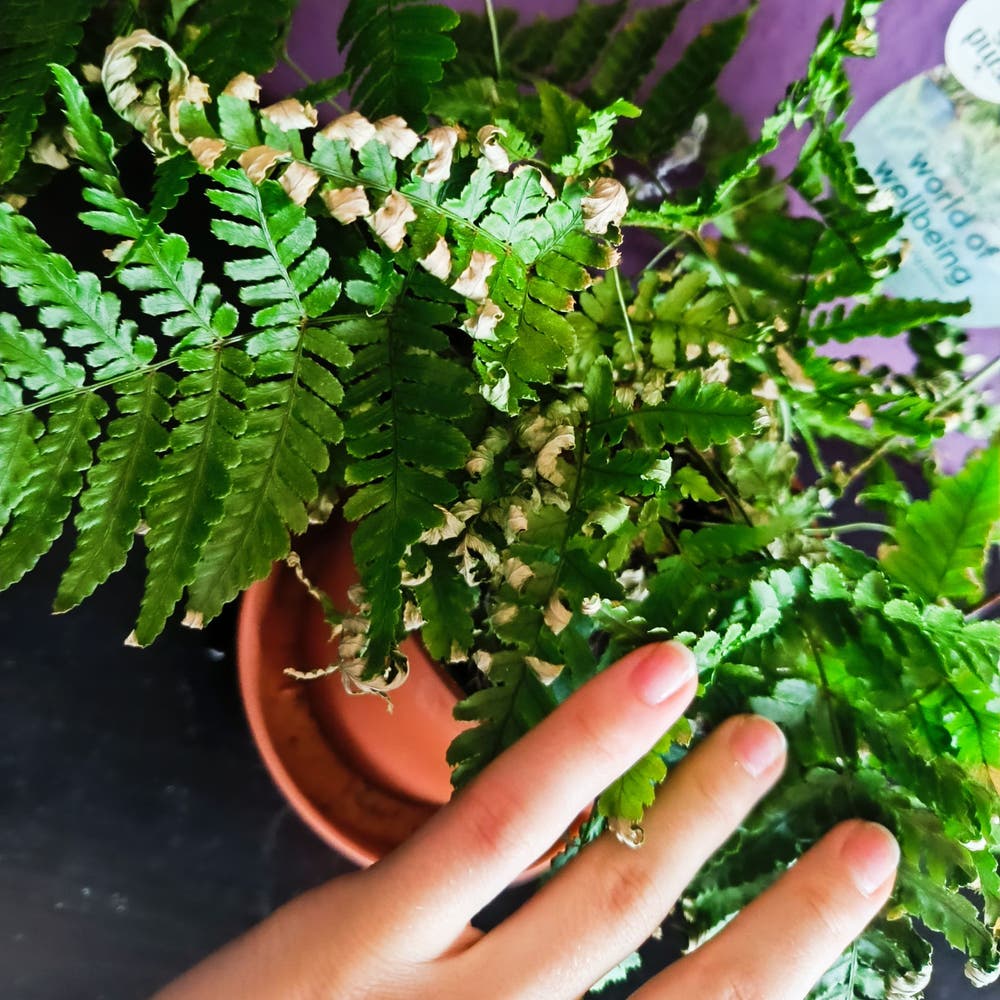
Why Are My Leatherleaf Fern Leaves Falling Over?
Rumohra adiantiformis
By the Greg Editorial Team
Jun 15, 2024•6 min read
This article was created with the help of AI so we can cover more plants for you. May contain errors. See one? Report it here.
- Overwatering leads to droopy leaves; let soil dry and improve drainage.
- Bright, indirect light is key for strong, upright fronds.
- Balance nutrients and humidity to prevent yellowing and falling leaves.
Overwatering and Soil Drainage
💧 Recognizing Overwatering
Drooping leaves are a telltale sign your Leatherleaf Fern might be getting too much H2O. If the soil feels more like a swamp than a garden, you've likely overdone it. Look out for yellow leaves and a general appearance of the plant being under the weather—these are your SOS signals.
🚱 Immediate Steps to Take
First, stop watering and let the soil dry out. Your fern isn't auditioning for a role in "Waterworld." If the pot's as sealed as a drum, it's time to introduce some drainage holes or switch to a pot that doesn't trap water like a dam.
🌱 Improving Soil Drainage
Mix in some perlite, vermiculite, or sand to get that water flowing through the soil like a good conversation—smooth and unimpeded. If your pot's more closed off than a teenager in their room, consider a transplant to one that understands the importance of letting go.
💦 Watering Techniques
When it's time to water again, aim for the base like you're avoiding the plague. Leaves don't need a shower—they prefer to stay dry and mold-free. Use a watering can with a long spout or a drip system that doesn't splash the foliage.
🕵️ Checking for Root Rot
If you suspect root rot has set in, it's time for surgery. Gently remove the plant and inspect the roots. If they're more black and mushy than a horror movie swamp monster, trim the rot away and repot with fresh, dry soil.
Remember, your Leatherleaf Fern is not a fish—it doesn't need to swim. Keep it simple, keep it dry, and your fern will stand tall and proud.

Light Requirements for Upright Fronds
🌞 The Role of Light in Frond Structure
Bright, indirect light is the sweet spot for Leatherleaf Ferns. Direct sunlight can be a frond's worst nightmare, causing leaves to curl and scorch like a bad day at the beach. On the flip side, too little light makes fronds as weak as overcooked spaghetti. They'll droop, lose their vigor, and eventually fall over in a dramatic display of neglect.
🔄 Adjusting Light Conditions
To prevent a frond flop, monitor light levels like a hawk. If your fern's leaves are reaching out like they're trying to grab the sun, they're starved for light. Move them to a brighter spot, but not directly in the sun's line of fire. Think of it as placing them in a well-lit reading nook, cozy and bright but without the glare.
Rotate your plant regularly to ensure even light distribution. This isn't a one-and-done deal; it's like checking your smoke alarm batteries—regular maintenance is key. If your fern is still throwing shade by dropping leaves, consider a grow light. It's like a sun substitute for those dreary corners where natural light fears to tread.
Remember, Leatherleaf Ferns are not sunbathers. They're more like that friend who wears sunscreen on a night out—sensitive to harsh rays. Keep them out of the midday sun's aggressive showdown, and you'll have upright fronds that stand tall and proud.

Nutrient Balance and Frond Health
In the quest for robust fronds, nutrient balance is not just a fancy term—it's a cornerstone. Leatherleaf Ferns, like any diva of the plant world, demand their version of a balanced diet to strut their stuff.
🌿 Identifying Nutrient Deficiencies
Yellowing leaves are the plant's version of a distress signal. Nitrogen, phosphorus, and potassium are the big three in the nutrient world, and a lack of any can lead to a frond flop-fest.
🌱 Correcting the Imbalance
Fertilizer is your go-to here, but think of it as seasoning—too much and you'll spoil the whole dish. A balanced fertilizer, applied with a less-is-more approach, can turn things around.
When to Fertilize
Timing is everything. Regular, but not excessive, applications will keep your fern from becoming a nutrient-starved drama queen or an overfed couch potato.
The Role of Micronutrients
Micronutrients are the unsung heroes. They're like the backup dancers to the lead nutrients—without them, the show doesn't shine. Keep an eye out for signs like leaf spotting or yellowing, which scream "help!"
DIY Soil Testing
Got a hunch it's a nutrient issue? Play detective with a soil test. It's like getting a peek at your plant's diary to see what's really going on beneath the surface.
Organic Alternatives
If chemicals make you cringe, go organic. Compost, manure, and bone meal can be like a gourmet meal for your fern, packed with all the goodies it craves.
Foliar Feeding
For a quick fix, consider foliar feeding. It's like an IV for plants, getting nutrients directly into the bloodstream—or in this case, the leaf veins.
Remember, the goal is to hit that sweet spot where your Leatherleaf Fern's fronds are neither slouching nor stiff as a board, but just right.

Temperature and Humidity Control
In the quest for upright fronds, temperature and humidity are the unsung heroes. Leatherleaf Ferns don't just prefer consistency; they thrive on it.
🌡️ The Impact of Temperature
Too cold or too hot, and your ferns will throw a fit. Aim for a steady range between 65-75°F (18-24°C) during the day, dipping slightly at night.
💧 Humidity: The Invisible Necessity
These ferns are humidity hounds, craving levels around 40-50%. Too dry, and they'll droop like overcooked noodles.
🏞️ Creating a Microclimate
No greenhouse? No problem. A humidifier can be your best friend, or go old-school with a pebble tray and water. Just avoid misting—it's about as effective as a chocolate teapot and can leave your fronds looking speckled.
🚫 Avoiding Environmental Shock
Sudden changes are the nemesis of the Leatherleaf Fern. Keep them away from drafty windows, air conditioners, and heaters. Think of it as avoiding giving your plants the cold shoulder—or a hot flash.
📊 Monitoring and Adjusting
Keep tabs on your fern's environment with a hygrometer. Spot a problem? Adjust like a plant-parent ninja. Move your fern, tweak your humidifier, or throw some shade if the sun's too intense.
Remember, your Leatherleaf Fern isn't just surviving; with the right temperature and humidity, it's living its best life.
Combating Pests and Diseases
🐛 Identifying Pests and Diseases
Insects like spider mites and aphids are the usual suspects when fronds droop. Fungal foes can also wreak havoc, leading to symptoms such as yellowing, lesions, and wilting. Fern Distortion Syndrome (FDS) specifically targets Leatherleaf ferns, causing distorted fronds and stunted growth. Regular inspections are crucial for early detection and treatment.
💉 Effective Treatments
Neem oil and soap sprays are organic solutions that can tackle pests without harming the fern. In severe cases, chemical treatments may be necessary, but always as a last resort. For fungal issues, fungicides containing thiophanate-methyl or myclobutanil can be effective. Prune away affected fronds to prevent spread and encourage new growth. Remember, good sanitation practices are key in disease management—remove fallen leaves and avoid overcrowding.
🛡️ Proactive Care
Stay vigilant with regular plant check-ups. If you spot trouble, act fast—early intervention is the best defense. Adjust watering schedules and ensure proper fertilization to maintain plant health. And, if all else fails, sometimes you just have to say goodbye to infected plants to protect the rest of your green family.
⚠️ Safety First
This content is for general information and may contain errors, omissions, or outdated details. It is not medical, veterinary advice, or an endorsement of therapeutic claims.
Always consult a qualified healthcare professional before using any plant as food, medicine, or supplement.
Never eat any plant (or feed one to pets) without confirming its identity with at least two trusted sources.
If you suspect poisoning, call Poison Control (800) 222-1222, the Pet Poison Helpline (800) 213-6680, or your local emergency service immediately.
Spotted an error? Please report it here.
Ensure your Leatherleaf Fern thrives 🌿 with Greg's tailored watering schedules and environmental monitoring, preventing droopy leaves and keeping your green companion in top shape.