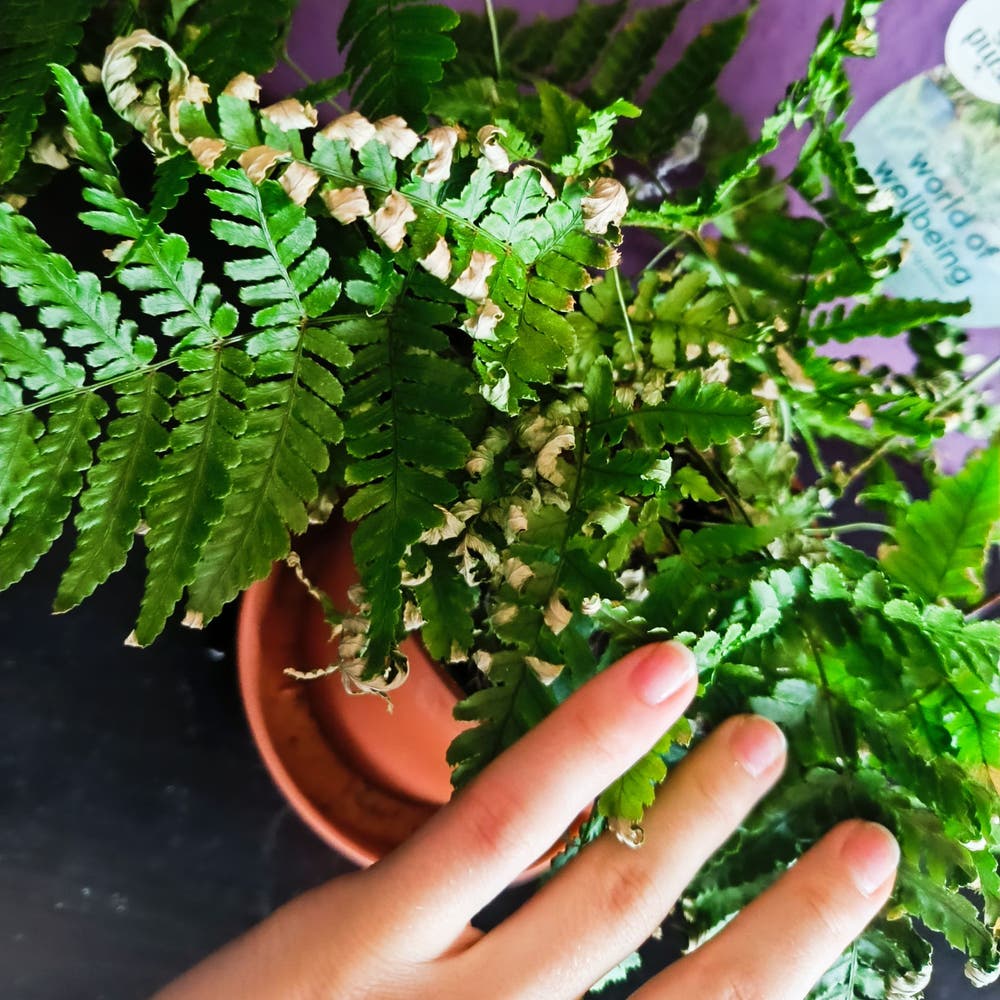
🌿 How to Cure Leaves Falling Over on Your Leather Fern
Rumohra adiantiformis
By the Greg Editorial Team
Oct 19, 2024•6 min read
This article was created with the help of AI so we can cover more plants for you. May contain errors. See one? Report it here.
- 💧 Overwatering and underwatering both cause drooping leaves; maintain balanced moisture levels.
- 🌬️ High humidity (50-70%) is essential; use humidifiers or pebble trays to boost it.
- 🐛 Regularly check for pests like spider mites; early detection prevents drooping leaves.
Causes of Leaves Falling Over
💧 Overwatering and Root Rot
Overwatering is a common culprit behind drooping leaves in Leather Ferns. Symptoms include yellowing leaves, mushy roots, and a foul smell emanating from the soil.
Excessive watering leads to poor drainage, which weakens the plant. This weakness manifests as drooping leaves, signaling that immediate action is needed.
🚰 Underwatering and Drought Stress
On the flip side, underwatering can also cause leaves to fall over. Look for crispy leaf edges, wilting fronds, and dry soil as telltale signs.
Infrequent watering or neglecting to check soil moisture can dehydrate the plant. This dehydration results in drooping leaves, making it crucial to establish a consistent watering routine.
🌬️ Low Humidity Levels
Leather Ferns thrive in high humidity, and low levels can lead to significant issues. Symptoms include brown tips on fronds, leaf curling, and an overall droopy appearance.
Dry indoor air, especially during winter months, can create an inhospitable environment. Without adequate humidity, the plant struggles, leading to drooping leaves.
🥦 Nutrient Deficiencies
A lack of essential nutrients can severely impact your fern's health. Symptoms to watch for include pale leaves, stunted growth, and drooping fronds.
When the soil lacks nutrients, the plant structure weakens. This deficiency can cause leaves to fall over, indicating that it’s time to reassess your fertilization practices.
🐜 Pest Infestations
Pests can wreak havoc on your Leather Fern, leading to drooping leaves. Common pests include spider mites, aphids, and mealybugs, which can be spotted as visible pests or webbing on leaves.
These pests sap nutrients from the plant, weakening it further. Regular monitoring and prompt treatment are essential to keep your fern healthy.
🌡️ Environmental Stress
Environmental factors can also contribute to leaf droop. Sudden temperature fluctuations or drafts can shock the plant, leading to weakened fronds.
Exposure to cold air can exacerbate this issue. Keeping your fern in a stable environment is crucial for maintaining its health and preventing drooping leaves.
Understanding these causes is the first step in addressing the issue of falling leaves. By identifying the problem, you can take effective action to restore your Leather Fern to its vibrant state.
Diagnosing the Problem
🚰 Signs of Overwatering
Overwatering is a common issue for Leather Ferns. If the soil feels soggy and waterlogged, it's a clear sign that your plant is getting too much moisture.
Yellowing and wilting leaves often accompany this condition. These symptoms indicate that the roots may be struggling to breathe, leading to potential root rot.
💧 Signs of Underwatering
On the flip side, underwatering can also cause distress. If the soil is dry and cracked, your fern is likely thirsty.
Crispy edges on the leaves and wilting fronds are telltale signs that your plant needs a drink.
🐛 Identifying Pest Damage
Pests can wreak havoc on your Leather Fern. Conduct a visual inspection, focusing on the undersides of leaves where pests like to hide.
Look for discoloration or webbing, which can indicate a pest infestation. Early detection is key to preventing further damage.
🌫️ Assessing Humidity Levels
Humidity plays a crucial role in fern health. Use a hygrometer to measure the indoor humidity levels.
For optimal growth, aim for a range of 50-70%. This will help keep your fern's fronds lush and vibrant.
🌱 Checking Soil Conditions
The right soil texture is vital for your fern's well-being. Well-draining, rich organic soil is ideal for healthy root development.
Inspect the roots for signs of rot or dryness. This will give you a clearer picture of your plant's overall health.
By diagnosing these issues, you can take the necessary steps to restore your Leather Fern to its former glory. Next, let’s explore effective treatment solutions to address these problems.
Treatment Solutions
🌊 Adjusting Watering Practices
Establishing a consistent watering schedule is crucial for your Leather Fern. Water when the top inch of soil feels dry to the touch.
To help you remember, consider using the Greg plant care app for timely reminders. Additionally, ensure proper drainage by using pots with drainage holes to prevent water from pooling.
💧 Improving Humidity Levels
Leather Ferns thrive in high humidity, so it's essential to create a suitable environment. You can use a humidifier or place pebble trays filled with water near your fern.
Make it a habit to maintain these humidity levels consistently, especially during the dry winter months.
🌱 Soil Amendments and Repotting
The right soil type is vital for your fern's health. Opt for a well-draining, organic potting mix to support robust growth.
If you suspect root rot, it's time to repot. Replace the soil and inspect the roots for any signs of damage.
🌿 Fertilization Techniques
Using the right fertilizer can make a significant difference. A balanced, water-soluble fertilizer is ideal for Leather Ferns.
Fertilize every 4-6 weeks during the growing season to provide essential nutrients and promote healthy growth.
🐛 Pest Control Methods
Pest infestations can wreak havoc on your fern. Consider organic options like neem oil or insecticidal soap to combat these nuisances.
Regularly check for pests, especially on the undersides of leaves, and treat any infestations immediately to keep your fern thriving.
By implementing these treatment solutions, you'll be well on your way to restoring your Leather Fern's health. Next, let’s explore preventive measures to keep your fern flourishing in the long run.
Preventive Measures
Ideal Growing Conditions 🌱
To keep your leather fern thriving, aim for a temperature range of 60°F to 75°F (15°C to 24°C). This warmth, combined with humidity levels between 50% and 70%, creates an ideal environment for healthy growth.
Regular Maintenance Routines 🧹
Establishing a consistent watering schedule is crucial. Regularly wipe the leaves to remove dust and pests, ensuring your fern can breathe and photosynthesize effectively.
Seasonal Care Adjustments 🌦️
In winter, increase humidity and reduce watering frequency to accommodate the plant's slower growth. During summer, ensure your fern receives adequate moisture and light to support its vibrant foliage.
Monitoring Environmental Factors 🔍
Keep an eye on temperature fluctuations by avoiding placement near drafts or heat sources. Use a hygrometer to monitor humidity levels, ensuring they remain optimal for your fern's health.
By implementing these preventive measures, you can create a nurturing environment for your leather fern, minimizing the risk of leaves falling over. Next, let's explore effective treatment solutions to address any existing issues.
⚠️ Safety First
This content is for general information and may contain errors, omissions, or outdated details. It is not medical, veterinary advice, or an endorsement of therapeutic claims.
Always consult a qualified healthcare professional before using any plant as food, medicine, or supplement.
Never eat any plant (or feed one to pets) without confirming its identity with at least two trusted sources.
If you suspect poisoning, call Poison Control (800) 222-1222, the Pet Poison Helpline (800) 213-6680, or your local emergency service immediately.
Spotted an error? Please report it here.
Keep your Leather Fern lush and vibrant 🌿 by using Greg's tailored care reminders and humidity tips to create the perfect environment for thriving leaves!