How to Fertilize Your Leatherleaf Fern
Rumohra adiantiformis
By the Greg Editorial Team
Jun 15, 2024•6 min read
This article was created with the help of AI so we can cover more plants for you. May contain errors. See one? Report it here.
- Balanced N-P-K fertilizer recommended for Leatherleaf Fern health and blooms.
- Spring fertilization during new growth optimizes blooming; adjust for environment.
- Prevent over-fertilization; water before applying, and flush soil if needed.
Selecting the Right Fertilizer for Blooming
💡 Understanding N-P-K Ratios
Nitrogen (N), phosphorus (P), and potassium (K) are the holy trinity of plant nutrition. For Leatherleaf Ferns, you'll want to reach for a balanced fertilizer—think 10-10-10 or 20-20-20. This ensures your fern gets an equal share of each nutrient, promoting overall health and, crucially, those sought-after blooms.
🍽️ The Micronutrient Mix
While N-P-K is front and center, don't sleep on micronutrients. They're like the unsung backup singers to your fern's lead vocals. A fertilizer rich in micronutrients is like a multivitamin, giving your plant a leg up in the blooming department. Look for options that boast a full spectrum—calcium for strong cell walls, magnesium for photosynthesis, and iron for vibrant greenery.
🚰 Liquid vs. Granular Debate
When it comes to application, liquid fertilizers are akin to a fine mist of nutrition—easy to apply, hard to mess up. Granular types, on the other hand, are the slow burners, releasing nutrients over time. But beware, combining the two is a recipe for disaster, leading to the dreaded over-fertilization.
🌸 The Bloom Booster
If you're gunning for blooms that make the neighbors peek over the fence, consider a fertilizer with a higher phosphorus content. Something like a 10-30-20 will have your Leatherleaf Fern popping out flowers like it's going out of style. Just remember, too much phosphorus can backfire, so don't get heavy-handed.
👩🌾 Real Talk on Fertilizer Choices
At the end of the day, whether you're aiming for a green haven or a blooming paradise, the choice of fertilizer will pivot on that goal. General health or big blooms? Choose wisely, and your Leatherleaf Fern will thank you with a show-stopping performance.

Timing Your Fertilization for Optimal Blooms
🌸 Best Seasons for Fertilizing
Spring is the Leatherleaf Fern's time to shine. It's the season of growth, making it prime time for fertilizing. As summer unfurls, continue your fertilization efforts, but once fall whispers its arrival, ease up. The plant's growth slows, and so should your fertilization.
🌱 Stages of Growth
New growth is your cue. When you spot fresh fronds unfurling, it's time to feed. This typically happens in spring and early summer. Keep your eyes peeled and your fertilizer handy.
🌍 Environmental Factors
Leatherleaf Ferns are not fans of the extreme. They prefer their environment like their soil: just right. Temperatures between 60-75°F (15-24°C) are ideal. If the mercury dips below 50°F (10°C) or soars above 85°F (29°C), hold off on the fertilizer; your fern is likely not in the mood for a feast.
🔄 Adjusting Fertilization Schedules
Your Leatherleaf Fern is as responsive to its environment as a teenager to a smartphone. Light, temperature, and humidity all play roles in how your fern will react to fertilization. If conditions are less than ideal, adjust your schedule accordingly. Too hot, too cold, or too dry means your fern might not be ready to handle the nutrients.
💡 Pro Tip
Remember, overzealous fertilization is like overwatering your guests with attention at a party – uncomfortable and unnecessary. Watch for cues from your Leatherleaf Fern and fertilize with a light hand.

Fertilization Techniques for Leatherleaf Fern
Applying fertilizer to your Leatherleaf Fern is like walking a tightrope – too little and your plant yawns with indifference, too much and you're dialing 911 for a nutrient burn emergency. To keep your fern in the green, dilute a balanced fertilizer (think 10-10-10 or 20-20-20) and grace your plant with it every 2-3 weeks during the growing season.
💦 Liquid vs. Granular Fertilizers
🥤 Liquid Fertilizers
Liquid gold for your fern, these fertilizers are easy to mix and quick to act. They're perfect for a controlled feeding, allowing you to adjust the dosage to the plant's response. However, they're like that friend who's always in and out of your life – their effects are short-lived, so you'll need to reapply more frequently.
🐢 Granular Fertilizers
Granular types are the tortoises in the race – slow and steady. They release nutrients over time, which means less frequent applications. But, they can be the divas of the fertilizer world, sometimes releasing nutrients too slowly or too quickly, depending on soil conditions.
🌱 Application Tips
Water before feeding – it's like giving your fern a base coat before the polish. This helps prevent the dreaded fertilizer burn. And remember, the goal is to feed the soil, not the plant. So, keep granules away from the plant's crown to avoid damage.
Less is more when it comes to fertilizing Leatherleaf Ferns. Overdoing it can lead to a nutrient overdose, and nobody wants to deal with a fern going through rehab. Stick to the recommended amounts, and your fern will thank you with lush, green fronds.

Recognizing and Correcting Over-Fertilization
🚨 Signs of Too Much Love
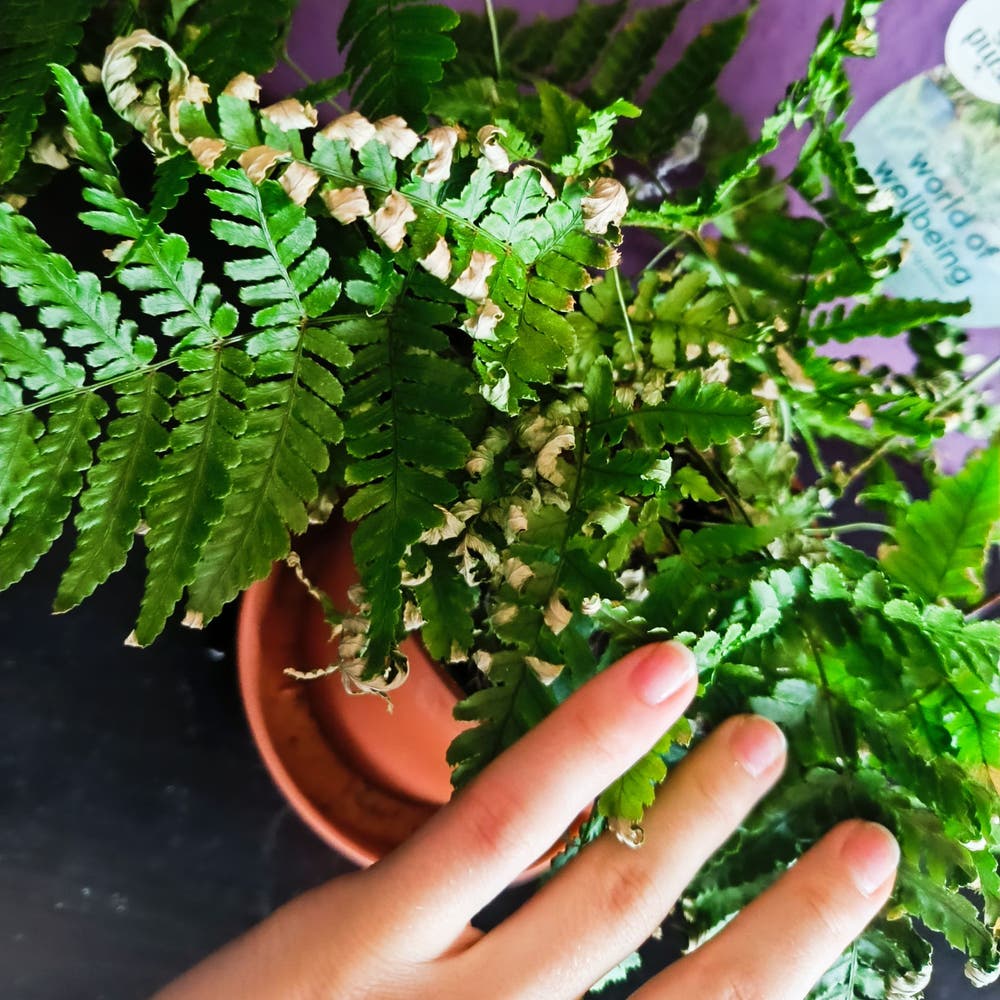
Yellowing leaves or frond tips turning brown? Your Leatherleaf Fern might be screaming, "I'm stuffed!" Over-fertilization can make your fern's roots go from buffet to burn unit. Brittle or cracked leaves are the plant's way of saying, "Ease up on the chow!"
🚿 The Intervention
Caught your fern looking overfed? Flush the soil with water to wash away the excess fertilizer. Think of it as a detox for your plant. If you spot visible fertilizer, remove it with the finesse of a surgeon. And remember, patience is key; your fern won't hit the gym overnight.
🌱 Post-Flush Care
After the flush, let your fern breathe. Hold off on the fertilizer like it's a New Year's resolution—give it a solid six months before the next round. And while you're at it, trim any damaged fronds to help your fern focus on recovery, not repair.
🛡️ Prevention: The Best Medicine
To avoid the over-fertilization blues, monitor your fern like it's a reality TV star. Regular check-ups can prevent a botanical drama. And when you do fertilize, think "less is more." Your fern is a minimalist at heart.
Fertilization Mistakes Specific to Leatherleaf Fern
🌱 Overzealous Fertilizing
Over-fertilization is the equivalent of force-feeding your plant; it's uncomfortable and unhealthy. Signs of excess include crisped leaf edges and a white, crusty soil surface. Stick to a gentle feeding schedule and a balanced N-P-K ratio.
🌿 Ignoring Soil Ecology
Your fern's soil is a living ecosystem. Bombarding it with high-potency fertilizers can disrupt the delicate balance, harming beneficial microorganisms. Opt for organic or low-strength synthetic options to maintain harmony underground.
🕰 Timing Blunders
Fertilizing a newly potted Leatherleaf Fern is like asking a newborn to run a marathon. Wait until the roots are established before introducing fertilizers to avoid overwhelming the plant.
💧 Watering Woes
Fertilizer needs water to be effective, but too much can cause root rot. Ensure your watering practices are consistent and moderate to prevent soggy soil conditions.
💡 Light Mismanagement
Just as with watering, light affects how your fern utilizes nutrients. Too little light, and it can't process the food you're giving it. Aim for bright, indirect light to keep your fern photosynthesizing properly.
🌸 Seasonal Slip-ups
Ferns have growth spurts and dormant periods. Fertilize during the active growth phases, typically spring and summer, and ease off during the cooler months to avoid nutrient overload.
By avoiding these pitfalls, your Leatherleaf Fern will be less drama queen and more green goddess. Remember, it's not just about feeding your plant; it's about nurturing it.
⚠️ Safety First
This content is for general information and may contain errors, omissions, or outdated details. It is not medical, veterinary advice, or an endorsement of therapeutic claims.
Always consult a qualified healthcare professional before using any plant as food, medicine, or supplement.
Never eat any plant (or feed one to pets) without confirming its identity with at least two trusted sources.
If you suspect poisoning, call Poison Control (800) 222-1222, the Pet Poison Helpline (800) 213-6680, or your local emergency service immediately.
Spotted an error? Please report it here.
Ensure your Leatherleaf Fern thrives with precise 🌿 nutrient balance, and rely on Greg to remind you when to fertilize, banishing the guesswork for peak foliage 🍃.