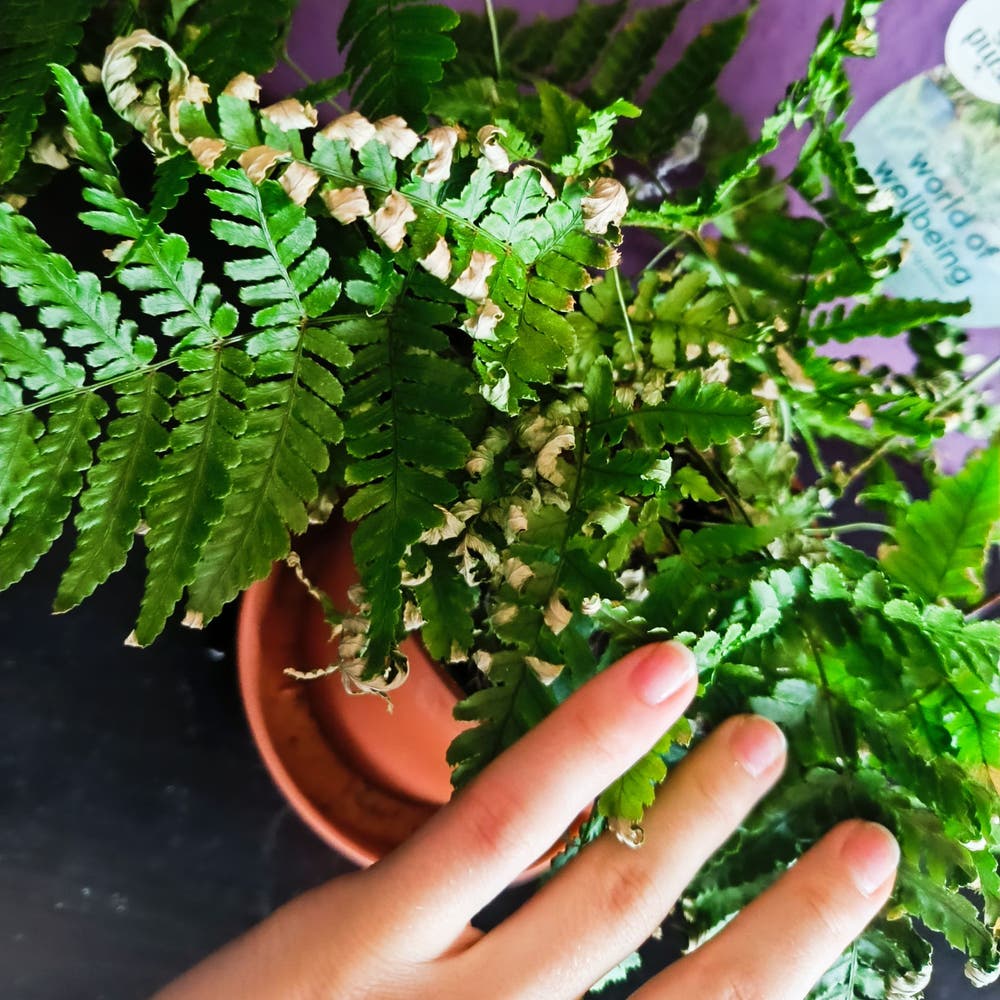
Why Is My Leatherleaf Fern Dropping Leaves?
Rumohra adiantiformis
By the Greg Editorial Team
Jun 15, 2024•5 min read
This article was created with the help of AI so we can cover more plants for you. May contain errors. See one? Report it here.
- Pests and diseases like spider mites and root rot cause leaf drop.
- High humidity and 60-75°F are ideal for Leatherleaf Fern health.
- Inspect, adjust water and light, and use balanced fertilizer to prevent leaf drop.
Diagnosing Leaf Drop in Leatherleaf Ferns
🐛 Identifying Pests and Diseases
Pests like spider mites, aphids, and mealybugs are notorious for causing leaf drop in Leatherleaf Ferns. These tiny invaders can be spotted with a keen eye, often lurking on the underside of leaves or at the stem joints. Look for telltale signs such as webbing, a sticky residue, or the pests themselves.
Diseases can also prompt leaf shedding. Fungal infections like root rot manifest in wilting, yellowing leaves, and a musty smell from the soil. Leaf spot disease, on the other hand, will show up as discolored spots on the foliage.
🔍 Confirming the Cause
- Inspect the plant closely for visual cues of pests or disease.
- Isolate the affected fern to prevent spread to other plants.
- Consult a plant specialist or use a magnifying glass for a more detailed examination if needed.
- Test the soil moisture; overwatering can lead to fungal issues like root rot.
- Check environmental factors like humidity and temperature; extremes can stress the plant, leading to leaf drop.
By systematically ruling out each potential cause, you can pinpoint the culprit behind your Leatherleaf Fern's distress. Once identified, you can take the appropriate steps to remedy the issue and restore your fern to its lush, leafy state.

Environmental Factors Contributing to Leaf Drop
In the realm of Leatherleaf Ferns, humidity and temperature don't just affect the plant; they dictate its mood swings. Too much heat turns your fern into a crispy critter, while a lack of humidity has it shedding leaves faster than a dog sheds fur in summer.
💦 Humidity: The Breath of Life
High humidity is the lifeblood of a Leatherleaf Fern. Imagine it as a mini rainforest in your living room. Without moisture in the air, leaves go from lush to lackluster. To combat dryness, get creative:
- Use a humidifier to pump life back into the air.
- A pebble tray with water beneath the pot can be a simple fix.
- If you're feeling spritzy, mist your fern like it's a hot summer day.
🌡️ Temperature: The Comfort Zone
Leatherleaf Ferns prefer stability over surprises. Keep the thermostat steady, aiming for a Goldilocks zone between 60-75°F (15-24°C). Sudden temperature changes are as welcome as a snowstorm in July, so avoid placing your fern near drafty windows or air conditioning vents.
🌿 Light: The Balancing Act
Direct sunlight is to Leatherleaf Ferns what kryptonite is to Superman. Indirect light is the way to go. Too close to a window, and you'll have a sunburnt fern on your hands. Too far, and it's like living in a cave—depressing and dark.
The Takeaway
Remember, your Leatherleaf Fern isn't just a plant; it's a barometer for its environment. Keep the air moist, the temperature consistent, and the light gentle. It's less about having a green thumb and more about creating a microclimate that doesn't send your fern into a tailspin.

Care Practices to Prevent Leaf Dropping
Watering is key. Leatherleaf Ferns demand a delicate balance—moist, but never soggy soil. Check the top inch; if it feels like a dry handshake, it's time to water. But don't drown your plant in affection; overwatering leads to a root-rot disaster.
💧 Proper Watering Techniques
- Test the soil before watering; it should be dry an inch down.
- Water evenly, avoiding the drama of a waterlogged pot.
- Ensure the pot has good drainage to avoid soggy soil syndrome.
Fertilization is a tightrope walk. Your fern craves nutrients, but too much and you're burning bridges—literally, the roots. A balanced fertilizer with an N-P-K ratio of 10-10-10 or 20-20-20 is your best bet. Apply every 2-3 weeks during the growing season, but ease up before your plant starts a leaf-dropping protest.
🌱 The Role of Fertilization
- Use a balanced fertilizer to keep your fern from going hungry.
- Apply it sparingly; overzealous feeding leads to root burn.
- Stick to the growing season for your fertilization fiesta; winter is a no-feed zone.
Remember, Leatherleaf Ferns aren't fans of the extreme. Like Goldilocks' porridge, everything needs to be just right. Keep that soil moisture consistent, and feed with a gentle hand. Your fern will thank you by holding onto its leaves.

Reviving a Leatherleaf Fern Experiencing Leaf Drop
When your Leatherleaf Fern starts shedding leaves like a dog in summer, it's time to spring into action. First, check for overwatering; soggy roots can spell disaster. Ease up on the H2O and consider a soil switcheroo to something that drains faster than a bathtub.
🐜 Immediate Actions
- Inspect for pests—those sap-sucking freeloaders could be causing chaos. If you spot any, show them the door with a non-oil-based insecticide.
- Assess the environment—too much sun can cook your fern's leaves, while a chill can freeze them stiff. Relocate your plant to a spot that's just right, Goldilocks-style.
🌿 Long-Term Strategies
- Water wisely. Your fern's not a camel, but it's not a fish either. Find that watering sweet spot.
- Humidity is your friend. Ferns love to be misted more than a cat loves a warm laptop. Consider a pebble tray or a humidifier to keep the air moist.
- Temperature control. Keep your fern away from drafts and heat sources. It's not looking for a sauna or an ice bath experience.
Remember, patience is key. It might take a few weeks for your fern to flaunt its new fronds. Keep a close eye on it and adjust your care tactics as needed. With some TLC, your Leatherleaf Fern will be back to its pre-leaf-drop glory days.
⚠️ Safety First
This content is for general information and may contain errors, omissions, or outdated details. It is not medical, veterinary advice, or an endorsement of therapeutic claims.
Always consult a qualified healthcare professional before using any plant as food, medicine, or supplement.
Never eat any plant (or feed one to pets) without confirming its identity with at least two trusted sources.
If you suspect poisoning, call Poison Control (800) 222-1222, the Pet Poison Helpline (800) 213-6680, or your local emergency service immediately.
Spotted an error? Please report it here.
Ensure your Leatherleaf Fern thrives 🌿 with Greg's custom care reminders and environmental tracking to stop leaf drop in its tracks.