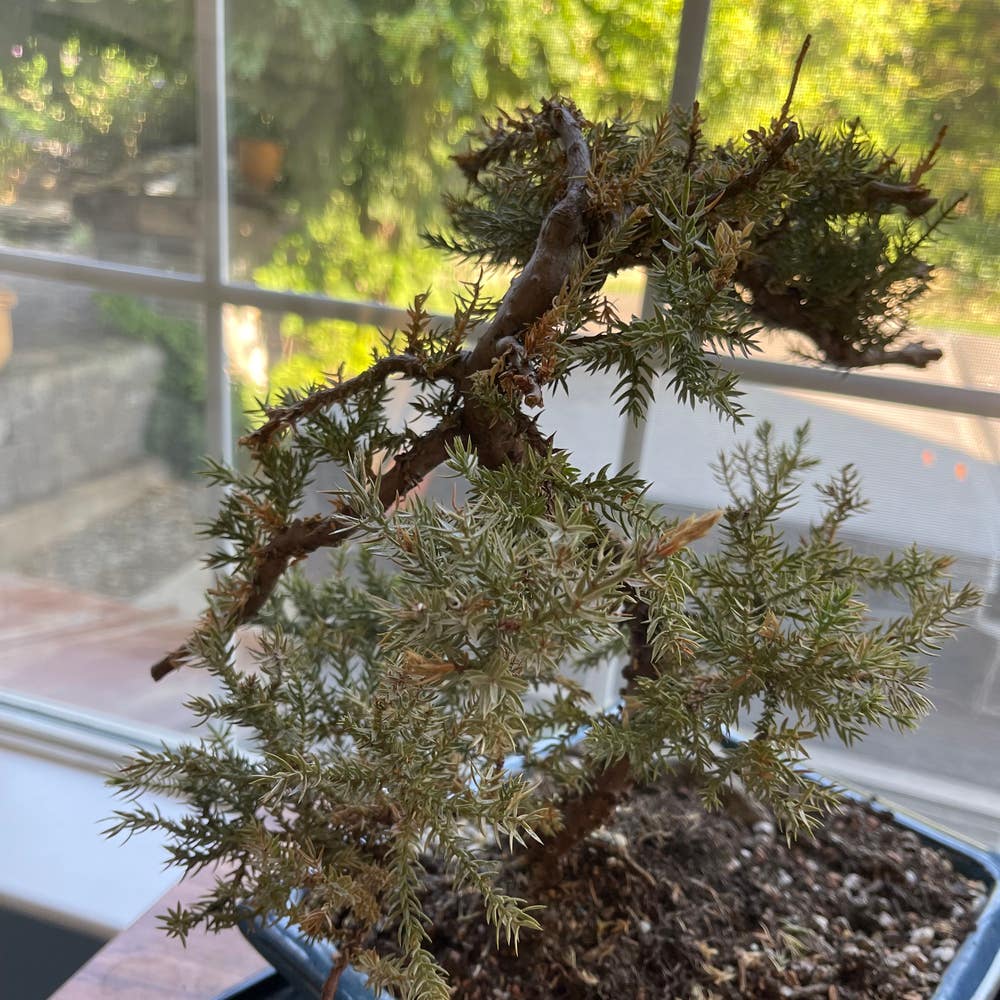
What Temperature Does My Japanese Garden Juniper Need?
Juniperus procumbens
By the Greg Editorial Team
Jun 18, 2024•4 min read
This article was created with the help of AI so we can cover more plants for you. May contain errors. See one? Report it here.
Discover the secret to a lush Japanese Garden Juniper with the perfect 🌡️ temp guide and seasonal survival tips.
- 60°F to 70°F is ideal for Japanese Garden Junipers to thrive.
- 🌞🌡️ Heat stress? Look for wilting leaves and provide shade.
- ❄️ Cold stress? Wrap in burlap, mulch, and monitor humidity.
When It's Just Right: The Sweet Spot for Temperature
♨️ Ideal Temperature Range
Japanese Garden Junipers thrive in a temperature range of 60°F to 70°F. This zone is where they truly flourish, balancing cellular functions and growth. Why this range? It's all about physiological harmony; too hot or too cold, and the plant's systems start to falter.
🌬️ Seasonal Shifts
Winter whispers mean a slight dip in temperatures is natural. Junipers can handle the cold, but they don't want to freeze their needles off. Summer shouts require a bit of shade to keep them from baking. Microclimates in your garden can either be a curse or a blessing, so choose your plant's location wisely to take advantage of these small pockets of ideal conditions.

Uh-Oh, It's Getting Toasty: Recognizing Heat Stress
🌡️ Telltale Signs Your Juniper is Too Hot
Wilting leaves and scorched edges are the Juniper's version of waving a white flag in the blistering heat. If your plant's foliage starts looking like it's been through a desert trial, it's time to act. Leaves may turn a crispy brown or showcase a sunburned pattern, much like a bad tan line.
Long-term exposure to excessive heat can stunt your Juniper's growth, leading to a sparse and unhappy plant. Premature needle drop is the plant's SOS signal, indicating it's conserving energy to survive the heat onslaught.
🌬️ Cooling Things Down
When your Juniper starts to feel the burn, shade is your ally. Rig up a temporary sunblock or reposition your plant to a less intense spot. It's like giving your green buddy a pair of sunglasses during a heatwave.
For a more enduring solution, consider planting heat-reflective ground cover or installing a drip irrigation system to maintain a consistent moisture level without turning the soil into a swamp. Think of it as setting up a hydration station for your plant's marathon through the summer.
Remember, your Juniper isn't trying to give you a hard time. It's just trying to survive in a world that's a few degrees too warm for its liking. Keep it cool, and it'll return the favor with lush, green growth.

Brrr, It's Chilly: Identifying Cold Stress
❄️ Symptoms of a Juniper in the Cold
Even the hardy Japanese Garden Juniper can get the shivers. Browning leaves are your first clue; they're practically waving a white flag, surrendering to the cold. If you see leaves dropping like flies, it's a distress signal for warmer temps.
❄️ The frosty fallout: What happens when Jack Frost overstays his welcome?
Extended exposure to cold can turn your juniper into a botanical ice sculpture, stunting growth and causing dieback. It's not just a bad hair day; it's a full-on plant crisis.
❄️ Warming Up Your Juniper
Caught your juniper with cold feet? Wrap it up in burlap or move it to a sheltered spot stat. It's like giving your plant a warm sweater and a protective hug from the biting wind.
❄️ Planning for warmth in the cold months
Think ahead: mulch is your juniper's best friend, keeping its roots cozy. And if you're really in the tundra, consider anti-desiccant sprays to lock in moisture. It's like lip balm for your juniper's leaves.

A Quick Note on Humidity
💦 Humidity's Supporting Role
Humidity is like the unsung hero in the plant world, often overshadowed by the glitz of temperature. Yet, it's a critical player in your Japanese Garden Juniper's well-being. 50% relative humidity is the sweet spot, striking a balance that keeps your Juniper from drying out or becoming a breeding ground for diseases.
🌡️ The Humidity-Temperature Tango
The dance between temperature and humidity is intricate. Warmer air can hold more moisture, meaning as temperatures rise, so does the potential for higher humidity. This interplay is essential for the Juniper, which thrives when both elements are in harmony.
🕵️ Monitoring Made Easy
Hygrometers are your best bet for keeping an eye on humidity levels. Guesswork has no place in plant care; precision is key. This tool will help you ensure your Juniper's environment is neither a desert nor a swamp.
🌿 Humidity Hacks
Creating a microclimate can be as simple as grouping plants together. This little trick can help maintain a more consistent humidity level, providing a communal oasis for your green companions. Remember, it's not just about watering; it's about the air that envelops your Juniper. Get it right, and your plant will not just survive, but thrive.
⚠️ Safety First
This content is for general information and may contain errors, omissions, or outdated details. It is not medical, veterinary advice, or an endorsement of therapeutic claims.
Always consult a qualified healthcare professional before using any plant as food, medicine, or supplement.
Never eat any plant (or feed one to pets) without confirming its identity with at least two trusted sources.
If you suspect poisoning, call Poison Control (800) 222-1222, the Pet Poison Helpline (800) 213-6680, or your local emergency service immediately.
Spotted an error? Please report it here.
Keep your Japanese Garden Juniper thriving 🌡️ with Greg's environmental tracking, ensuring it always enjoys its ideal climate without the guesswork.