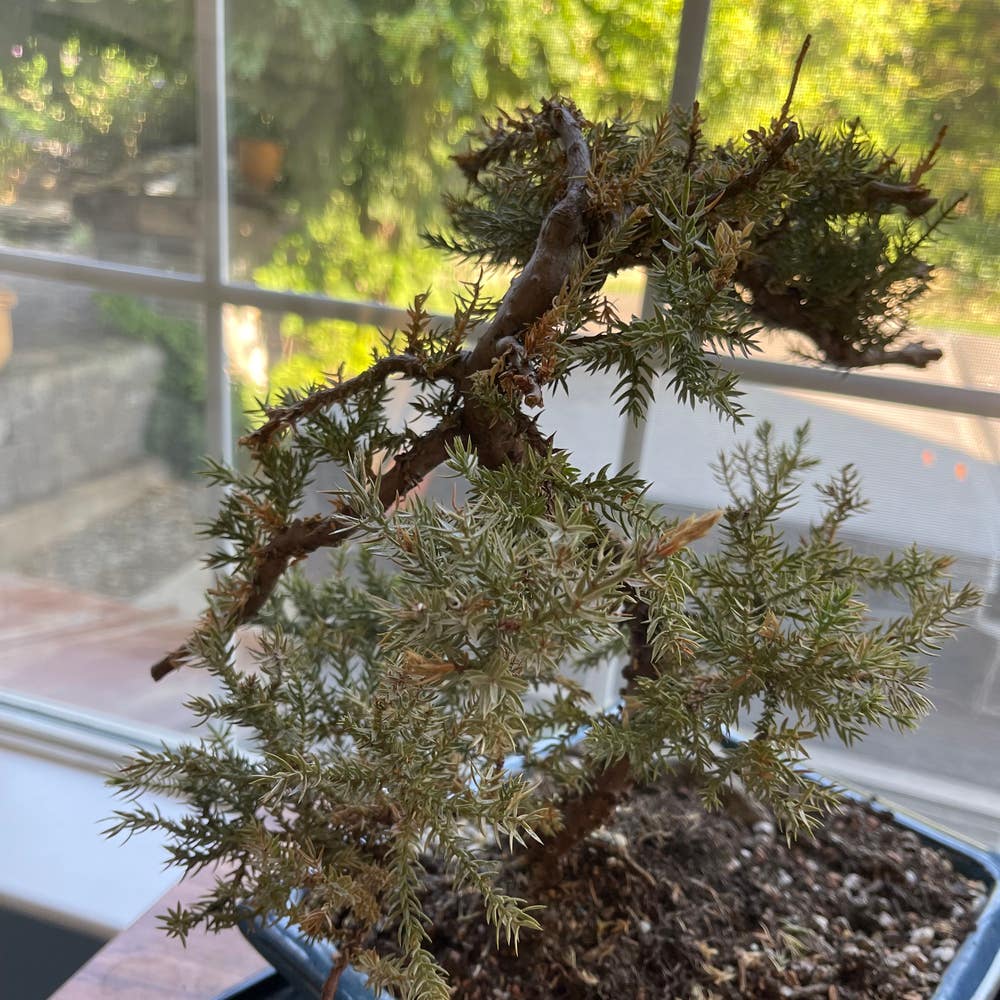
Japanese Garden Juniper Fertilizer: How and When to Use It
Juniperus procumbens
By the Greg Editorial Team
Jun 18, 2024•5 min read
This article was created with the help of AI so we can cover more plants for you. May contain errors. See one? Report it here.
Boost your juniper's health and beauty with our essential guide to perfect fertilization timing and techniques 🌱⏰.
- NPK ratio of 16-4-8 is ideal for Japanese Garden Junipers.
- Spring fertilization jumpstarts growth; ease up in fall for dormancy.
- Over-fertilization signs: yellow leaves, brown tips. Recover with deep watering.
Picking the Perfect Fertilizer for Your Juniper
💡 The NPK Ratio: What Does Your Juniper Crave?
Japanese Garden Junipers are like silent warriors of the garden—resilient yet secretly yearning for the right balance of nutrients. NPK ratio is the combo you're after. Think of it as the juniper's dietary label: nitrogen (N) for foliage growth, phosphorus (P) for root development, and potassium (K) for overall health. An NPK ratio close to 16-4-8 is your target; it's like hitting the gym with a personal trainer tailored to your juniper's needs.
🍽️ Slow-Release vs. Liquid Fertilizers: Pros and Cons for Junipers
When it comes to slow-release versus liquid fertilizers, it's a classic tortoise-and-hare scenario. Slow-release fertilizers are the tortoises, providing a steady supply of nutrients over months, reducing the risk of overfeeding. They're the crockpot of the fertilizer world—set it and forget it. On the flip side, liquid fertilizers are the hares, quick and efficient, giving your juniper a rapid nutrient boost. However, they require more frequent applications and a careful hand to avoid a nutrient overdose.
🌱 Organic Options: Can Natural Choices Cut It?
Going organic isn't just a trend; it's about keeping it real with your juniper. Organic fertilizers offer a buffet of benefits, from improving soil structure to encouraging beneficial microbial activity. They're like the kombucha of the plant world—full of good stuff, but they work at their own pace. While they may not boast the immediate impact of synthetic options, they're a win for the long game, ensuring your juniper thrives without the chemical hangover.

Timing is Everything: When to Fertilize
🌸 Spring Awakening: Kicking Off the Growing Season
In spring, your Japanese Garden Juniper is like a bear emerging from hibernation, ready to soak up nutrients and burst into growth. This is the prime time to apply a balanced fertilizer, kickstarting the season with a monthly feeding schedule. The soil's warming up, and the juniper's metabolism is revving, making it the perfect moment to introduce the first round of fertilizer.
☀️ Summer Touch-Ups: Keeping the Momentum
As summer heats up, so does your juniper's thirst for sustenance. Continue monthly feedings to sustain vigorous growth and help your plant cope with the stress of summer heat. But watch out – overzealous fertilization can be as harmful as a drought. Stick to the recommended amounts and adjust only if your juniper's growth suggests it's necessary.
🍂 Fall Preparations: Setting the Stage for Dormancy
When autumn leaves start to fall, it's a signal to ease up on fertilizing. A light feeding early in the season can bolster your juniper for the coming winter, but as the days shorten, it's time to taper off. This helps your plant wind down and store energy for dormancy. Remember, applying fertilizer too late in the season can stimulate new growth that's vulnerable to frost damage.

The Fertilizing Process: A Step-by-Step Guide
💡 Measuring for Success: How Much Fertilizer Does Your Juniper Need?
Measuring the right amount of fertilizer for your Japanese Garden Juniper isn't rocket science, but it's close. Skip the guesswork by following the instructions on the fertilizer package. A slow-release all-purpose fertilizer is your best bet. For every five feet of tree height, spread it from a couple of feet away from the trunk to one foot beyond the foliage perimeter. Remember, more isn't always better; it's about precision.
🍽️ Application Techniques: Getting to the Root of the Matter
When applying fertilizer, think like a surgeon—be precise and targeted. Start a couple of feet out from the trunk and work your way outward, ensuring you're hitting the root zone where nutrients are eagerly absorbed. Avoid the lazy sprinkle-on-top method; it's about as effective as watering a raincoat.
🚰 Watering It In: Ensuring Nutrient Absorption
Watering after fertilizing isn't just a good idea—it's the law of the land. Irrigate your juniper to help dissolve those precious nutrients, making sure they seep down to the roots rather than evaporating into a missed opportunity. Think of it as chaperoning the nutrients to the root ball's party, ensuring they don't get lost along the way.

Recognizing and Fixing Over-Fertilization
🚨 Spotting Trouble: Symptoms Your Juniper is Overfed
Yellowing leaves or brown tips can be your first hint that your juniper is getting more than its fair share of nutrients. If the soil feels like a wet sponge yet your juniper wilts, you might be looking at fertilizer burn. A crust of fertilizer on the soil's surface is like a red flag at a bullfight—it's time to take action. And if your juniper's roots look more like they've been through a bonfire than a growth spurt, it's a clear cry for help.
💊 The Recovery Plan: Steps to Heal an Over-Fertilized Juniper
First things first, scrape away any visible fertilizer from the base of your juniper. Next, unleash a flood—water the area deeply to flush out the excess fertilizer. Keep this up every few days, watching for signs of recovery. If the leaves look like they've seen better days, trim the brown spots. For a fresh start, swap out the top layer of soil with something less nutrient-rich. Hold off on the fertilizer for a month or so—let your juniper catch its breath. Remember, patience is key; your juniper didn't get in this mess overnight, and it won't get out of it that quickly either.
⚠️ Safety First
This content is for general information and may contain errors, omissions, or outdated details. It is not medical, veterinary advice, or an endorsement of therapeutic claims.
Always consult a qualified healthcare professional before using any plant as food, medicine, or supplement.
Never eat any plant (or feed one to pets) without confirming its identity with at least two trusted sources.
If you suspect poisoning, call Poison Control (800) 222-1222, the Pet Poison Helpline (800) 213-6680, or your local emergency service immediately.
Spotted an error? Please report it here.
Ensure your Japanese Garden Juniper flourishes with vibrant health 🌿 by using Greg to remind you when and how to fertilize, following the golden rules from this guide.