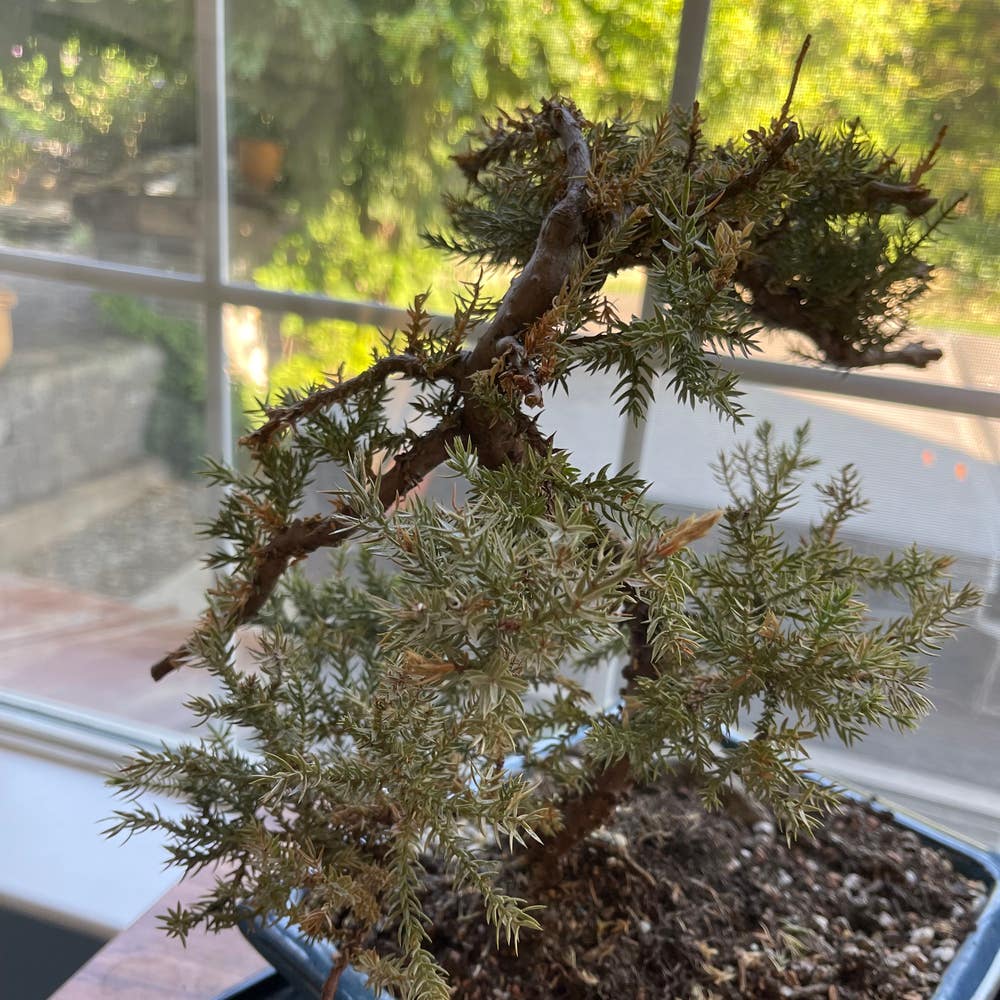
☀️ Light Requirements For Your Green Mound Juniper
Juniperus procumbens
By the Greg Editorial Team
Oct 17, 2024•4 min read
This article was created with the help of AI so we can cover more plants for you. May contain errors. See one? Report it here.
Master the light needs of your Green Mound Juniper 🌱 for vibrant growth and a thriving garden!
- ☀️ Green Mound Junipers thrive in full sun, needing 6-8 hours of direct light daily.
- 🌱 Insufficient light causes leggy growth and pale foliage; adjust light exposure promptly.
- 💡 Indoor junipers need bright, indirect light; consider grow lights for optimal growth.
Importance of Light for Growth
🌞 Role of Light in Photosynthesis
Light is the lifeblood of plants, fueling the process of photosynthesis. This energy production is crucial for the overall health, growth rate, and vigor of your Green Mound Juniper.
🎨 Impact on Foliage Color and Density
When your juniper receives adequate light, it showcases vibrant foliage colors that are truly eye-catching. Conversely, insufficient light can result in leggy growth and a noticeable reduction in density, leaving your plant looking sparse and unhealthy.
Understanding these light requirements is essential for nurturing a thriving Green Mound Juniper. With the right conditions, you can ensure your plant remains lush and vibrant, ready to enhance your garden or indoor space.
Ideal Light Conditions (Indoor vs. Outdoor)
Outdoor Light Conditions 🌞
Full Sun Requirements
For your Green Mound Juniper, optimal sunlight exposure is crucial. Aim for 6-8 hours of direct sunlight daily to promote healthy growth and vibrant foliage.
Partial Shade Tolerance
If full sun isn't an option, your juniper can tolerate partial shade. This means it can thrive in conditions with 3-6 hours of filtered sunlight, making it suitable for areas with dappled light or beneath taller plants.
Indoor Light Conditions 💡
Light Intensity Needs
When growing indoors, bright, indirect light is ideal for your juniper. Be cautious of direct sunlight, as it can lead to leaf scorch and damage.
Placement of Plant Indoors
Position your plant near south or west-facing windows for the best results. Rotating the plant occasionally ensures even light exposure, promoting balanced growth and health.
By understanding these light conditions, you can create an environment that supports the thriving nature of your Green Mound Juniper. Next, let’s explore the effects of insufficient light and how to mitigate them.
Effects of Insufficient Light
🌱 Signs of Low Light Conditions
When your Green Mound Juniper isn't getting enough light, it will start to show some telltale signs. Look out for leggy growth, where the branches stretch out in search of sunlight, and pale foliage that lacks the vibrant color you expect.
These symptoms can lead to reduced vigor, making your plant less resilient. Over time, insufficient light can increase its vulnerability to pests and diseases, creating a cycle that's tough to break.
💡 Mitigation Strategies
If you notice these signs, don’t panic! One of the simplest solutions is to relocate your plant to a brighter area.
If natural light is still lacking, consider using supplemental lighting. Grow lights can provide the necessary boost, ensuring your juniper thrives even in less-than-ideal conditions.
By addressing light deficiencies promptly, you can help your Green Mound Juniper regain its health and vitality. This proactive approach not only enhances its appearance but also fortifies it against potential threats.
Next, let’s explore how indoor growing conditions can be optimized for your juniper’s success.
Indoor Growing Considerations
🌱 Using Grow Lights
When growing Green Mound Junipers indoors, choosing the right grow lights is crucial. LED and fluorescent lights are excellent options, providing the necessary spectrum for healthy growth.
Aim for a light duration of 12-16 hours per day. This consistent exposure mimics natural sunlight, helping your juniper thrive indoors.
⏰ Light Duration and Intensity
Consistent light exposure is vital for maintaining the health of your juniper. Regular light helps prevent issues like leggy growth and pale foliage.
Adjust the light intensity based on how your plant responds. If you notice signs of stress, consider lowering the intensity or changing the light's position for optimal results.
With the right setup, your indoor Green Mound Juniper can flourish, bringing a touch of nature into your space.
Flowering and Light
🌼 Do Green Mound Junipers Flower?
Green Mound Junipers are not known for their flowers. Instead, they shine with their lush foliage and unique form, making them a favorite in landscaping.
💡 Role of Light in Flowering (if applicable)
While these junipers have limited flowering potential, adequate light can enhance any minor blooms. Ensuring they receive the right light conditions can help maximize their overall health and vigor, even if flowering isn't their main attraction.
In summary, focusing on light quality and quantity will keep your Green Mound Juniper thriving, even if it's primarily a foliage star. Next, let’s explore how to ensure your juniper gets the ideal light conditions, both indoors and outdoors.
⚠️ Safety First
This content is for general information and may contain errors, omissions, or outdated details. It is not medical, veterinary advice, or an endorsement of therapeutic claims.
Always consult a qualified healthcare professional before using any plant as food, medicine, or supplement.
Never eat any plant (or feed one to pets) without confirming its identity with at least two trusted sources.
If you suspect poisoning, call Poison Control (800) 222-1222, the Pet Poison Helpline (800) 213-6680, or your local emergency service immediately.
Spotted an error? Please report it here.
Ensure your Green Mound Juniper gets the ideal light exposure 🌞 it craves by using Greg's tailored care tips and reminders for vibrant, healthy growth!