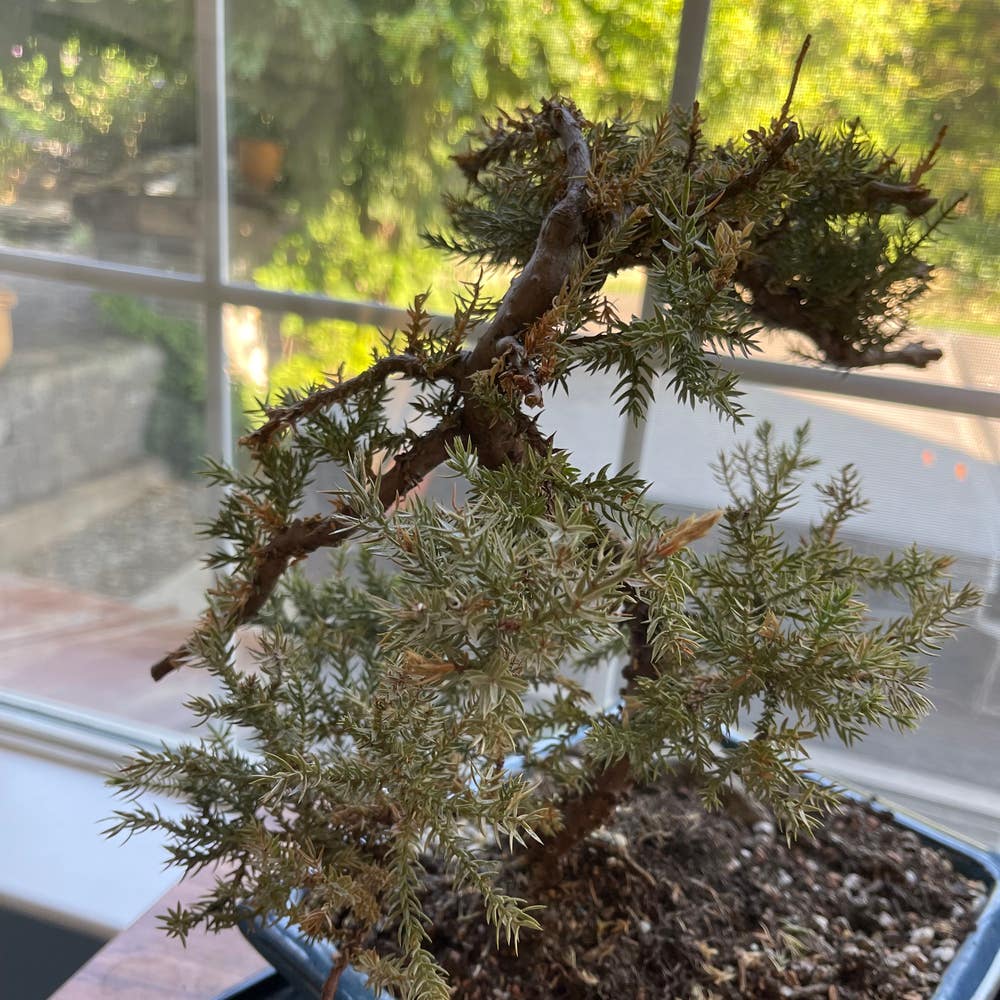
How to Cure Dropping Leaves on Your Green Mound Juniper 💧
Juniperus procumbens
By the Greg Editorial Team
Oct 17, 2024•6 min read
This article was created with the help of AI so we can cover more plants for you. May contain errors. See one? Report it here.
Transform your Green Mound Juniper's health 🌿 by mastering leaf drop prevention and care techniques today!
- 💧 Overwatering causes root rot, leading to yellow leaves and mushy roots in junipers.
- 🌞 Ensure 6 hours of sunlight daily to promote healthy growth and prevent leaf drop.
- 🐛 Regularly check for pests like spider mites to maintain your juniper's health.
Causes of Leaf Drop
💧 Overwatering and Root Rot
Overwatering can lead to yellowing leaves, mushy roots, and wilting, even when the soil seems moist. This condition often results in root rot, a serious issue caused by waterlogged soil that invites fungal infections.
To prevent root rot, ensure your juniper is planted in well-draining soil. This simple step can save your plant from significant damage.
🌵 Underwatering and Drought Stress
On the flip side, underwatering manifests as brown, crispy leaf tips and overall wilting. Drought stress can cause substantial leaf drop, particularly during hot, dry spells.
Maintaining consistent soil moisture is crucial for the health of your green mound juniper. A little attention goes a long way in keeping your plant vibrant.
🐛 Pest Infestations
Common Pests
Spider mites are a common threat, identifiable by webbing and stippled leaves. Scale insects, on the other hand, present as small, raised bumps on stems and leaves.
Both pests can wreak havoc on your juniper, so vigilance is key.
Impact on Leaf Drop
Pests weaken the plant, making it more vulnerable to environmental stress and diseases. Regular inspections can help catch these infestations early, preventing further damage.
🍄 Fungal Diseases
Phomopsis Blight
Phomopsis blight is a fungal disease that causes browning and dropping of foliage, especially in older growth. High humidity and poor air circulation create ideal conditions for this disease to thrive.
Early detection is vital for effective treatment. Keeping an eye on your juniper can help you catch these issues before they escalate.
Understanding these causes of leaf drop is the first step in ensuring your green mound juniper thrives. Next, we’ll explore how to diagnose these issues effectively.
Diagnosing Leaf Drop Issues
🌊 Identifying Symptoms of Overwatering vs. Underwatering
Understanding the signs of overwatering is crucial. Look for yellow leaves and mushy roots, which indicate root rot.
On the flip side, underwatering manifests as brown, crispy leaf tips and overall wilting. Both conditions can lead to significant leaf drop if not addressed promptly.
🐛 Recognizing Pest Damage
Pests can wreak havoc on your Green Mound Juniper. Spider mites often leave behind webbing and cause stippled leaves, while scale insects present as small, raised bumps on stems and leaves.
Regular inspections are vital for early detection. Catching these pests early can save your plant from further damage.
🦠 Signs of Disease
Fungal diseases like Phomopsis blight can be detrimental. Symptoms include browning and dropping foliage, especially in older growth.
Monitoring for discoloration and leaf drop is essential. Early detection can make a significant difference in treatment effectiveness.
🌤️ Assessing Environmental Factors
Environmental conditions play a key role in your plant's health. Ensure your Green Mound Juniper receives a minimum of 6 hours of direct sunlight daily.
Additionally, check soil moisture levels and drainage conditions. Proper sunlight and drainage are critical for preventing leaf drop and promoting overall vitality.
With a clear understanding of these diagnostic steps, you can effectively address leaf drop issues. Next, let’s explore preventive measures to keep your Green Mound Juniper thriving.
Preventive Measures
Proper Watering Techniques 🌊
Water your Green Mound Juniper deeply every 1-2 weeks, adjusting based on rainfall. Allow the soil to dry out between waterings to prevent overwatering and root rot.
Soil Drainage Solutions 🏞️
Improve drainage by incorporating soil amendments like sand or perlite. Consider using raised beds or mounds to enhance water management and prevent waterlogging.
Choosing the Right Location for Sunlight Exposure ☀️
Aim for full sun to partial shade for optimal growth. Avoid placing your juniper in shaded or overly damp areas to reduce stress on the plant.
Regular Monitoring for Pests and Diseases 🔍
Conduct monthly inspections during the growing season to catch any issues early. Early intervention is key to preventing pest infestations and diseases from taking hold.
By implementing these preventive measures, you can significantly enhance the health of your Green Mound Juniper. This proactive approach will set the stage for effective treatment options should any issues arise.
Treatment Options
Adjusting Watering Schedules 🌧️
To effectively manage your Green Mound Juniper's health, start by assessing the current soil moisture.
Next, adjust your watering frequency based on recent weather conditions, ensuring the plant receives adequate hydration without becoming waterlogged.
Monitor the plant's response over the next 2-3 weeks to fine-tune your approach.
Applying Fungicides for Fungal Infections 🦠
If you suspect Phomopsis blight, applying the right fungicides is crucial.
Look for products specifically labeled for this fungal infection and plan to apply them in early spring or fall when conditions are most favorable for treatment.
Pest Control Methods 🐛
For pest infestations, consider using insecticidal soap or neem oil.
Follow the application instructions carefully, paying attention to timing for maximum effectiveness. Always adhere to label instructions to ensure safety for both you and your plants.
Pruning Affected Areas ✂️
Pruning is an essential step in promoting new growth and maintaining plant health.
Begin by identifying and removing any dead or diseased branches. Use clean, sharp pruning shears to make precise cuts, and be sure to dispose of the cuttings properly to prevent the spread of disease.
By following these treatment options, you can effectively address the issues causing leaf drop in your Green Mound Juniper.
Next, let's explore seasonal care tips to keep your plant thriving throughout the year.
Seasonal Care
🍂 Fall Care Tips to Prepare for Winter
As temperatures drop, mulching becomes essential. A layer of mulch not only insulates the soil but also retains moisture, protecting your Green Mound Juniper's roots from freezing.
Watering is equally important before the frost sets in. Ensure the soil is adequately moist, as this helps the plant withstand the cold winter months.
🌱 Spring Growth Monitoring
Spring is a time of renewal, and your juniper should show signs of healthy growth. Look for new shoots and vibrant foliage, which indicate that your plant is thriving.
Adjust your care routine based on spring conditions. Increased sunlight and warmer temperatures may require more frequent watering to keep your juniper healthy.
☀️ Summer Watering Adjustments
Summer heat can be intense, so be prepared to increase your watering frequency. Regular checks on soil moisture are crucial to prevent drought stress, ensuring your juniper remains lush and vibrant.
Stay vigilant during these hot months. A little extra attention can make a significant difference in maintaining the health of your Green Mound Juniper.
With these seasonal care tips, your juniper will be well-equipped to thrive throughout the year. Next, let’s explore treatment options to address any issues that may arise.
⚠️ Safety First
This content is for general information and may contain errors, omissions, or outdated details. It is not medical, veterinary advice, or an endorsement of therapeutic claims.
Always consult a qualified healthcare professional before using any plant as food, medicine, or supplement.
Never eat any plant (or feed one to pets) without confirming its identity with at least two trusted sources.
If you suspect poisoning, call Poison Control (800) 222-1222, the Pet Poison Helpline (800) 213-6680, or your local emergency service immediately.
Spotted an error? Please report it here.
Keep your Green Mound Juniper thriving 🌱 by using Greg's tailored watering reminders and pest alerts to prevent leaf drop and ensure vibrant growth!