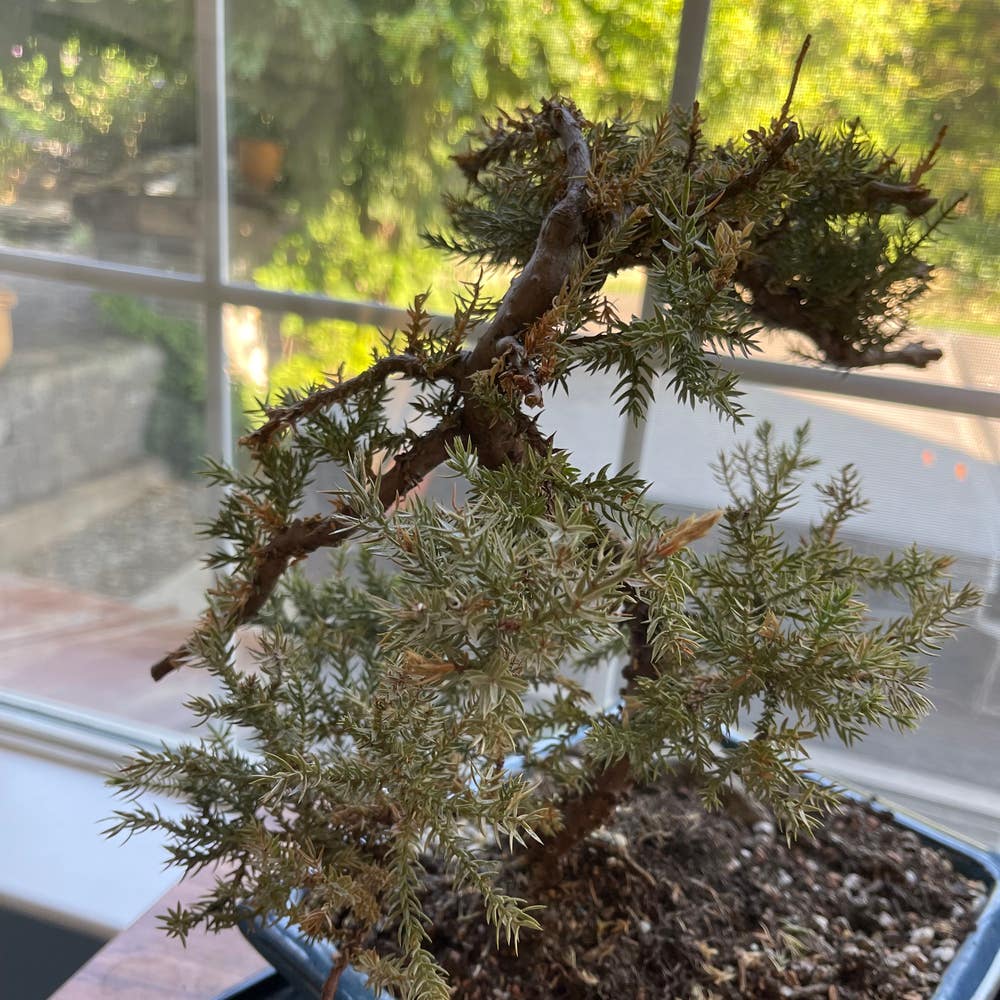
🌳 How to Fix Leaves Falling Over on Your Green Mound Juniper
Juniperus procumbens
By the Greg Editorial Team
Oct 17, 2024•5 min read
This article was created with the help of AI so we can cover more plants for you. May contain errors. See one? Report it here.
Transform your drooping Green Mound Juniper 🌱 into a thriving beauty with essential care tips for lasting vitality!
- 🌧️ Overwatering and underwatering cause leaves to fall; maintain consistent moisture levels.
- ☀️ Excessive sun exposure leads to sunburn; ensure at least six hours of sunlight daily.
- 🐛 Regular pest checks are vital; use neem oil for effective organic control.
Causes of Leaves Falling Over
🌍 Environmental Stress Factors
Leaves falling over on your Green Mound Juniper can often be traced back to environmental stress. Overwatering is a common culprit, leading to root rot that can devastate your plant.
Underwatering is equally problematic, causing dehydration that leaves leaves drooping and lifeless. Additionally, excessive sun exposure can result in sunburn, which damages the foliage and weakens the plant.
🐛 Pest-Related Issues
Pests can also play a significant role in leaf droop. Infestations can sap the strength of your juniper, making it more susceptible to other stressors.
Regularly checking for pests is crucial to maintaining the health of your plant.
🌱 Soil Conditions
Soil conditions are another key factor. Poor drainage can lead to root problems, exacerbating issues like overwatering and root rot.
Ensuring your soil has good drainage is essential for a thriving Green Mound Juniper. By addressing these causes, you can take the first steps toward restoring your plant's health.
Diagnosing the Problem
Assessing Environmental Conditions 🌞
To keep your Green Mound Juniper thriving, start by evaluating its sunlight exposure. It needs a minimum of six hours of direct sunlight daily to maintain healthy leaves.
Temperature extremes can also affect leaf health. Both scorching heat and freezing cold can lead to stress, causing leaves to droop or fall.
Identifying Pest Infestations 🐜
Pests can be a significant threat to your Juniperus horizontalis. Common culprits include spider mites, which leave webbing and cause stippled leaves, and aphids, known for their sticky residue and curled foliage.
Regular inspections are crucial for early detection. Make it a habit to check your plants frequently for any signs of these pests.
Checking Soil Moisture Levels 💧
Soil moisture is another key factor in diagnosing leaf droop. Use a moisture meter or perform a finger test to assess the soil's wetness.
Look for signs of overwatering, such as soggy soil and symptoms of root rot. Conversely, dry, crumbly soil and wilting leaves indicate underwatering.
By carefully assessing these factors, you can pinpoint the issues affecting your Green Mound Juniper. This understanding will guide you toward effective solutions, ensuring your plant remains healthy and vibrant.
Solutions for Leaf Droop
🌊 Adjusting Watering Practices
To keep your Green Mound Juniper healthy, establish a consistent watering routine. Aim to water weekly during dry spells, ensuring the soil remains moist but not soggy.
Deep watering is key to promoting robust root growth. This technique encourages roots to reach deeper into the soil, enhancing the plant's resilience against drought.
🏞️ Improving Soil Drainage
Well-draining soil is crucial for preventing root rot. If your soil retains too much moisture, consider amending it with sand or perlite to improve drainage.
Another effective method is creating raised beds. This allows excess water to flow away from the roots, providing a healthier environment for your juniper.
🐞 Implementing Pest Control Measures
Pest infestations can also contribute to leaf droop. Start with organic pest control options like neem oil and insecticidal soap, which are effective and environmentally friendly.
If the problem persists, you may need to consider chemical treatments. Use these sparingly and only when necessary, as regular monitoring can often keep pest populations in check.
By addressing watering practices, soil drainage, and pest control, you can significantly improve the health of your Green Mound Juniper. This proactive approach not only resolves current issues but also sets the stage for long-term vitality.
Next, let’s explore preventative care strategies to keep your juniper thriving year-round.
Preventative Care
Best Practices for Watering 🌊
Establishing a consistent watering schedule is crucial for your Green Mound Juniper. Adjust your watering frequency based on seasonal changes to ensure the plant receives adequate moisture without becoming waterlogged.
To avoid waterlogging, use deep watering techniques. This encourages roots to grow deeper, promoting a healthier plant overall.
Seasonal Care Tips 🌸
Spring is the perfect time for fertilization and monitoring new growth. As temperatures rise, keep an eye on your juniper to ensure it thrives.
In summer, increase your watering and stay vigilant against pests. This proactive approach helps maintain the plant's health during the hottest months.
As fall approaches, prepare your juniper for winter dormancy. This includes reducing watering and ensuring the plant is ready for the colder months ahead.
Proper Pruning Techniques ✂️
Timing is everything when it comes to pruning your Green Mound Juniper. Prune during the late winter or early spring for optimal health and growth.
When pruning, focus on removing dead or damaged branches. This not only improves the plant's appearance but also encourages new growth and vitality.
By implementing these preventative care strategies, you can significantly enhance the health and resilience of your Green Mound Juniper. With proper attention, your plant will thrive, setting the stage for effective monitoring and maintenance.
Monitoring and Maintenance
Regular Health Checks 🌱
Regular health checks are essential for keeping your Green Mound Juniper thriving. Aim for monthly inspections to catch any signs of stress early.
Look for changes in leaf color, drooping, and overall vigor. These indicators can help you determine if your plant is happy or if it needs some extra care.
Signs of Recovery 🌈
As you implement care adjustments, keep an eye out for signs of recovery. New growth and vibrant color are excellent indicators that your plant is bouncing back.
Recovery timelines can vary, but with consistent care, you should see improvements within a few weeks. Patience is key, as plants often take time to respond to changes.
Long-Term Care Strategies 🛠️
Establishing a care routine is crucial for the long-term health of your Juniper. Consistency in watering and monitoring will set your plant up for success.
Be prepared to adapt your care practices based on how your plant responds. Flexibility ensures that you meet its evolving needs, keeping it healthy and vibrant for years to come.
With these monitoring and maintenance strategies, your Green Mound Juniper will flourish, setting the stage for a beautiful landscape.
⚠️ Safety First
This content is for general information and may contain errors, omissions, or outdated details. It is not medical, veterinary advice, or an endorsement of therapeutic claims.
Always consult a qualified healthcare professional before using any plant as food, medicine, or supplement.
Never eat any plant (or feed one to pets) without confirming its identity with at least two trusted sources.
If you suspect poisoning, call Poison Control (800) 222-1222, the Pet Poison Helpline (800) 213-6680, or your local emergency service immediately.
Spotted an error? Please report it here.
Keep your Green Mound Juniper thriving 🌱 by using Greg for personalized care reminders and tips that ensure your plant gets the right moisture and sunlight it needs to flourish!