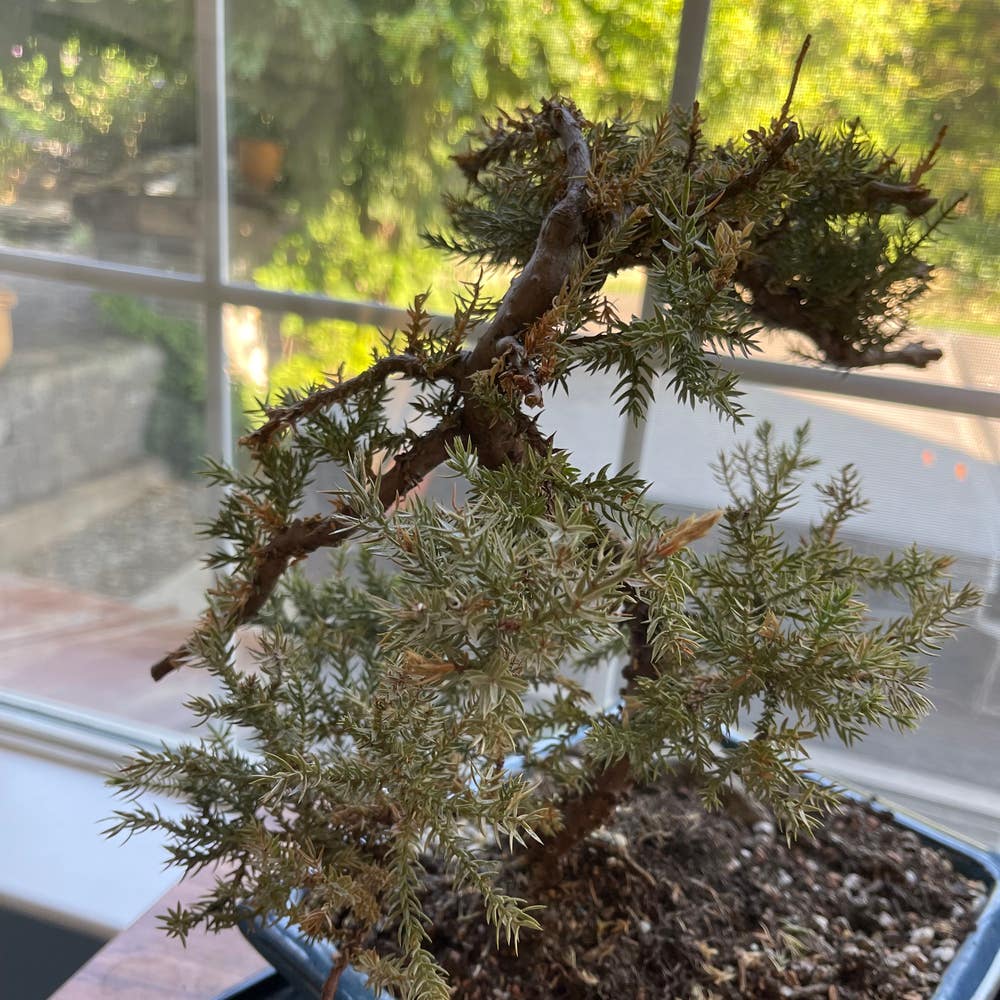
3 Secrets to Thriving Outdoor Green Mound Juniper
Juniperus procumbens
By the Greg Editorial Team
Oct 17, 2024•6 min read
This article was created with the help of AI so we can cover more plants for you. May contain errors. See one? Report it here.
Transform your garden with a thriving green mound juniper 🌱 by mastering sunlight, watering, and soil care essentials!
- ☀️ Green mound juniper needs 6+ hours of sunlight daily for optimal growth.
- 💧 Deep watering establishes roots; water every 2-3 weeks during dry spells.
- 🌱 Well-draining soil with pH 6.0-7.0 is crucial for nutrient uptake and health.
Sunlight Needs
Ideal Sunlight Exposure 🌞
Outdoor green mound juniper thrives in full sun, requiring at least six hours of direct sunlight daily. While it can tolerate some partial shade, this may hinder its growth and overall health.
Effects of Insufficient Sunlight 🌑
Insufficient sunlight leads to stunted growth, resulting in reduced vigor and spread. Additionally, plants in low-light conditions become more susceptible to pests and diseases, compromising their resilience.
Understanding these sunlight needs is crucial for ensuring your juniper flourishes. Next, let’s explore the watering requirements essential for its health.
Watering Requirements
General Watering Guidelines 🌧️
When planting your outdoor green mound juniper, start with deep watering to help establish strong roots. After that, aim to water every 2-3 weeks during dry spells, adjusting based on rainfall to keep your plant thriving.
Signs of Overwatering and Underwatering 🚨
Be mindful of your watering habits. Overwatering can lead to yellowing foliage and root rot, while underwatering often results in browning tips and wilting leaves.
Understanding these signs will help you maintain a healthy juniper, ensuring it flourishes in your garden.
With proper watering, your juniper will be well on its way to thriving. Next, let’s explore the ideal soil preferences for optimal growth.
Soil Preferences
Ideal Soil Conditions 🌱
For thriving outdoor green mound juniper, the right soil is crucial. This plant flourishes in well-draining sandy or rocky soil, which allows excess water to escape and prevents root rot.
The pH level is also important; aim for slightly acidic to neutral conditions, ideally between 6.0 and 7.0. This range supports optimal nutrient uptake, ensuring your juniper stays healthy and vibrant.
Soil Preparation Techniques 🛠️
If your soil isn't up to par, don't worry—there are ways to improve it. Start by incorporating organic matter, like compost, to enhance drainage and nutrient content.
Testing your soil is a smart move. Use a pH meter or a soil test kit to check the conditions, ensuring your juniper has the best possible environment to thrive.
With the right soil conditions and preparation, your green mound juniper will be set for success. Next, let’s explore the best planting options for this resilient plant.
Planting Options
🌱 Container Planting: Benefits and Drawbacks
Benefits
Container planting offers remarkable mobility. You can easily relocate your green mound juniper to optimize sunlight or aesthetics.
Another advantage is the controlled environment. This allows for better management of soil quality and drainage, ensuring your plant thrives.
Drawbacks
However, container planting comes with its challenges. The limited root space can restrict growth, potentially stunting your juniper's development.
Additionally, it often leads to increased watering needs. You'll need to check moisture levels more frequently to keep your plant healthy.
🌍 In-Ground Planting: Benefits and Drawbacks
Benefits
In-ground planting provides a more natural growth environment. Your juniper has ample space for roots to expand, promoting robust health.
Moreover, it offers better moisture retention. This means less frequent watering, which can be a relief during hot spells.
Drawbacks
On the flip side, in-ground planting has its downsides. Once established, your juniper is in a permanent location, making relocation difficult.
Lastly, you may face soil condition challenges. Depending on your garden's soil, amendments might be necessary for optimal growth.
Understanding these planting options will help you make an informed decision that best suits your gardening style and your juniper's needs. Next, let's explore effective protection strategies to keep your plant thriving.
Protection Strategies
🌦️ Weather Protection Techniques
Mulching is essential for your outdoor green mound juniper. Apply a 2-3 inch layer of mulch around the base to retain moisture and regulate soil temperature.
Windbreaks are another effective strategy. Use fencing or plant other shrubs nearby to shield your juniper from strong winds, which can cause damage.
🐛 Common Outdoor Pests and Diseases
Pests
Spider mites are a common nuisance. Look for webbing and stippled leaves as signs of their presence.
Scale insects can also pose a threat. They appear as small, raised bumps on stems and leaves, indicating an infestation.
Diseases
Root rot is a serious concern, often caused by overwatering and poor drainage. Keep an eye on your plant's health to prevent this issue.
Juniper blight is another fungal disease to watch for. It leads to browning foliage and can weaken your plant significantly.
🧼 Pest Control Methods
For pest management, consider organic options like neem oil and insecticidal soap. These methods are effective and environmentally friendly.
Cultural practices also play a crucial role. Regular inspections and maintaining plant health can help prevent infestations before they start.
By implementing these protection strategies, you can ensure your outdoor green mound juniper thrives. Next, let’s explore the seasonal care needed to keep your plant healthy throughout the year.
Seasonal Care
Spring Care: Pruning and Fertilization 🌱
Spring is the perfect time to give your Green Mound Juniper some TLC. Start by pruning away any dead or damaged branches to promote healthy new growth.
Next, apply a slow-release fertilizer according to the guidelines. This will provide essential nutrients as your plant wakes up from dormancy.
Summer Care: Watering and Heat Protection ☀️
As temperatures rise, your juniper will need more water. Increase the frequency of watering during hot, dry spells to keep it thriving.
Consider using shade cloth to protect your plant from extreme heat. This simple step can make a significant difference in its health.
Fall Care: Preparing for Winter 🍂
Before winter sets in, ensure your juniper is adequately hydrated. A final watering will help prepare it for dormancy.
Adding mulch around the base is crucial. This layer protects the roots from freezing temperatures and helps retain moisture.
Winter Care: Protecting from Cold and Snow ❄️
Winter can be tough on your juniper, so take some precautions. Gently brush off heavy snow to prevent branch breakage.
Additionally, use burlap screens in windy areas. This will provide extra protection against harsh winter winds.
With these seasonal care tips, your Green Mound Juniper will not only survive but thrive throughout the year. Next, let’s explore the best climate zones for optimal growth.
Climate Zone Considerations
🌍 Best Zones
Outdoor green mound juniper thrives in USDA Hardiness Zones 3-9. This adaptability allows it to flourish in various climates, but it performs best in well-drained soils.
🛡️ Adaptation Strategies
In hot climates, increase watering frequency and provide afternoon shade to protect the plant from scorching sun. For cold climates, use mulch and windbreaks to shield the juniper from harsh winter conditions.
By understanding these climate zone considerations, you can ensure your outdoor green mound juniper not only survives but thrives in its environment. Next, let’s explore effective protection strategies to keep your plants healthy and vibrant.
⚠️ Safety First
This content is for general information and may contain errors, omissions, or outdated details. It is not medical, veterinary advice, or an endorsement of therapeutic claims.
Always consult a qualified healthcare professional before using any plant as food, medicine, or supplement.
Never eat any plant (or feed one to pets) without confirming its identity with at least two trusted sources.
If you suspect poisoning, call Poison Control (800) 222-1222, the Pet Poison Helpline (800) 213-6680, or your local emergency service immediately.
Spotted an error? Please report it here.
Help your outdoor green mound juniper thrive in any season 🌱 with Greg's tailored watering reminders and expert tips to keep pests at bay and ensure optimal growth!