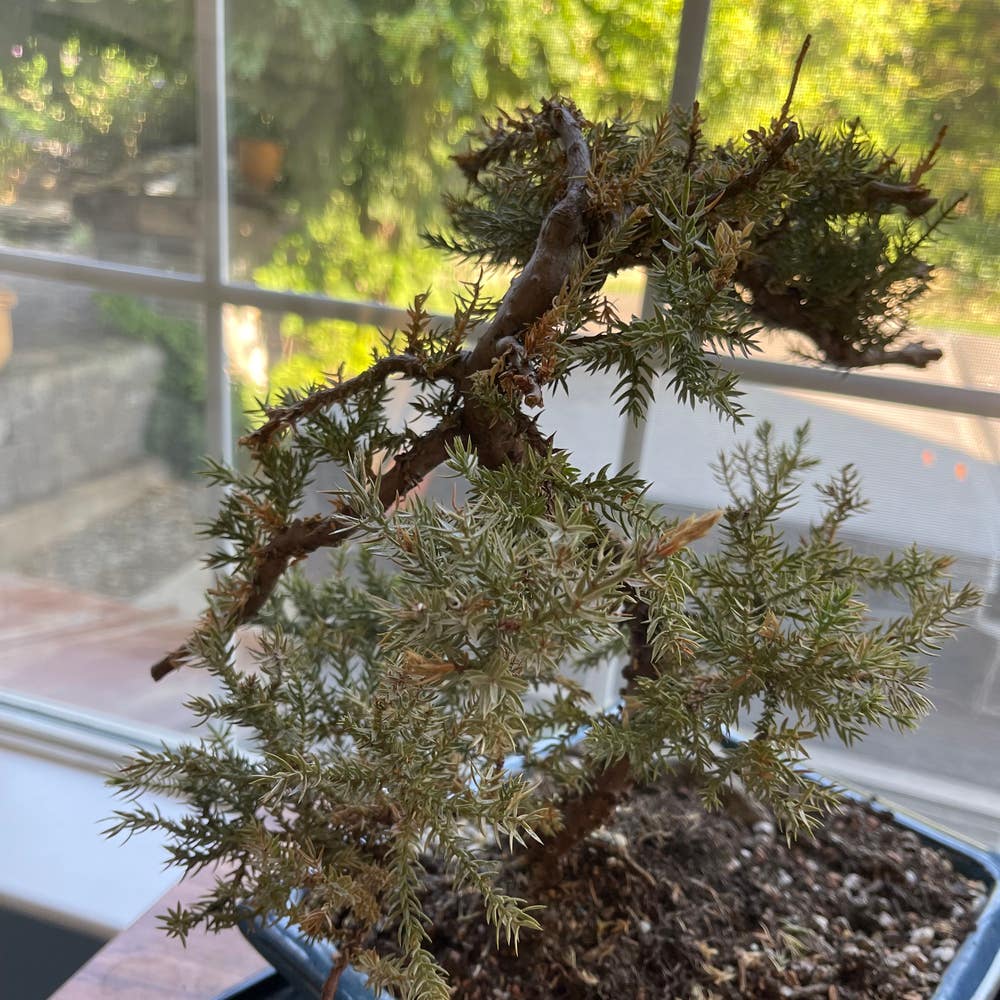
Understanding Brown Spots on Your Green Mound Juniper Leaves
Juniperus procumbens
By the Greg Editorial Team
Oct 17, 2024•5 min read
This article was created with the help of AI so we can cover more plants for you. May contain errors. See one? Report it here.
Transform your Green Mound Juniper's health 🌱 by uncovering the secrets to preventing and treating brown spots! 🌿
- 🌱 Brown spots on junipers often result from fungal infections like Phomopsis and Kabatina blight.
- 💧 Environmental stressors like drought and overwatering contribute to brown spots on leaves.
- 🐛 Pest infestations such as spider mites can cause visible damage and brown spots.
Causes of Brown Spots
🦠 Fungal Infections
Brown spots on your Green Mound Juniper leaves can often be traced back to fungal infections. Two common culprits are Phomopsis blight, which causes needle browning and dieback, and Kabatina blight, known for leading to brown spots and needle drop.
These fungi thrive in conditions of high humidity and poor air circulation. Overcrowded plantings can also trap moisture, creating an ideal environment for these diseases to flourish.
🌵 Environmental Stress
Drought
Drought stress is another significant factor contributing to brown spots. When your juniper doesn’t receive enough water, the leaves may turn brown and crispy, signaling that they’re struggling to survive.
This often occurs during dry spells when insufficient watering takes place. Keeping a consistent watering schedule can help mitigate this issue.
💧 Overwatering
On the flip side, overwatering can also lead to brown spots. Initially, leaves may turn yellow before browning, often accompanied by root rot.
Poor soil drainage and excessive rainfall can exacerbate this problem. Ensuring your juniper has well-draining soil is crucial for its health.
🥦 Nutrient Deficiencies
Nutrient deficiencies can manifest as brown spots as well. A common issue is nitrogen deficiency, which causes yellowing and browning of older leaves.
Another concern is iron deficiency, leading to interveinal chlorosis and browning. Regular soil testing can help you identify and correct these deficiencies.
🐛 Pest Infestations
Pests can also be a source of brown spots on your juniper. Spider mites are notorious for leaving tiny webs and stippled leaves, while bagworms cause brown spots from their feeding damage.
Signs of pest damage include visible insects, webbing, and frass. Regular inspections can help you catch these infestations early, preventing further damage.
Understanding these causes is essential for maintaining the health of your Green Mound Juniper. By addressing these issues proactively, you can keep your plant thriving and vibrant.
Diagnosing the Problem
🌤️ Assessing Environmental Conditions
Soil Moisture Levels
To effectively diagnose brown spots on your Green Mound Juniper, start by checking the soil moisture. Use a soil moisture meter or simply perform a finger test; the soil should feel moist but not soggy.
Sunlight Exposure
Next, assess the sunlight exposure. Your juniper thrives in full sun, ideally receiving 6 to 8 hours of direct sunlight daily. If you notice stretched growth or pale foliage, it may be a sign that your plant isn’t getting enough light.
🐛 Inspecting for Pests
Common Pests
Pest infestations can also lead to brown spots. Look for common culprits like spider mites, bagworms, and juniper scale. Identifying these pests early can help mitigate damage.
Signs of Infestation
Keep an eye out for visual cues indicating an infestation. Discoloration, webbing, and the presence of pests on the foliage are all signs that your juniper may need immediate attention.
By carefully assessing environmental conditions and inspecting for pests, you can pinpoint the underlying issues affecting your Green Mound Juniper. This proactive approach sets the stage for effective treatment and care.
Treatment Options
🌱 Fungal Treatment Methods
Recommended Fungicides
To combat fungal infections on your Green Mound Juniper, consider using copper-based fungicides or systemic fungicides. These chemical options are most effective when applied in early spring or fall, coinciding with the plant's active growth phases.
Organic Treatment Options
If you prefer a more natural approach, neem oil is a great choice. It's effective against various fungal infections and is easy to apply. Another simple solution is a baking soda mix; combine 1 tablespoon of baking soda with 1 gallon of water for a foliar spray that can help manage fungal issues.
💧 Correcting Watering Practices
Proper Watering Techniques
- Always check soil moisture before watering to avoid over-saturation.
- Water deeply but infrequently; this encourages deep root growth and resilience.
- Avoid watering in the evening to minimize humidity around the foliage, which can promote fungal growth.
Importance of Soil Drainage
Ensuring well-draining soil is crucial for your juniper's health. Use sandy loam or amend heavy soils with perlite to improve drainage. Be on the lookout for signs of poor drainage, such as water pooling around the base of the plant, which can lead to root rot.
By implementing these treatment options and correcting your watering practices, you can significantly enhance the health of your Green Mound Juniper. Next, let’s explore preventive measures to keep your plant thriving year-round.
Preventive Measures
Best Practices for Care 🌱
Regular Inspections
Conducting monthly checks for pests and diseases is essential. This proactive approach allows you to spot issues early and remove any dead or damaged foliage promptly.
Proper Fertilization Techniques
Using a balanced NPK fertilizer during the growing season can significantly benefit your Green Mound Juniper. Apply it in early spring and mid-summer to ensure your plant gets the nutrients it needs.
Seasonal Care Tips 🌦️
Adjusting Care
In spring, increase watering as growth resumes to support new foliage. During summer, keep an eye out for pests and adjust your watering frequency based on the weather conditions.
Fall Preparation
As fall approaches, prepare your juniper for winter by reducing watering and applying mulch. This helps protect the roots and retains moisture during colder months.
By following these preventive measures, you can maintain the health and vitality of your Green Mound Juniper, ensuring it thrives throughout the seasons. Next, we’ll explore how to diagnose any issues that may arise.
⚠️ Safety First
This content is for general information and may contain errors, omissions, or outdated details. It is not medical, veterinary advice, or an endorsement of therapeutic claims.
Always consult a qualified healthcare professional before using any plant as food, medicine, or supplement.
Never eat any plant (or feed one to pets) without confirming its identity with at least two trusted sources.
If you suspect poisoning, call Poison Control (800) 222-1222, the Pet Poison Helpline (800) 213-6680, or your local emergency service immediately.
Spotted an error? Please report it here.
Combat those pesky brown spots on your Green Mound Juniper 🌿 with Greg's tailored care tips and reminders, ensuring your plant stays healthy and vibrant all year long!