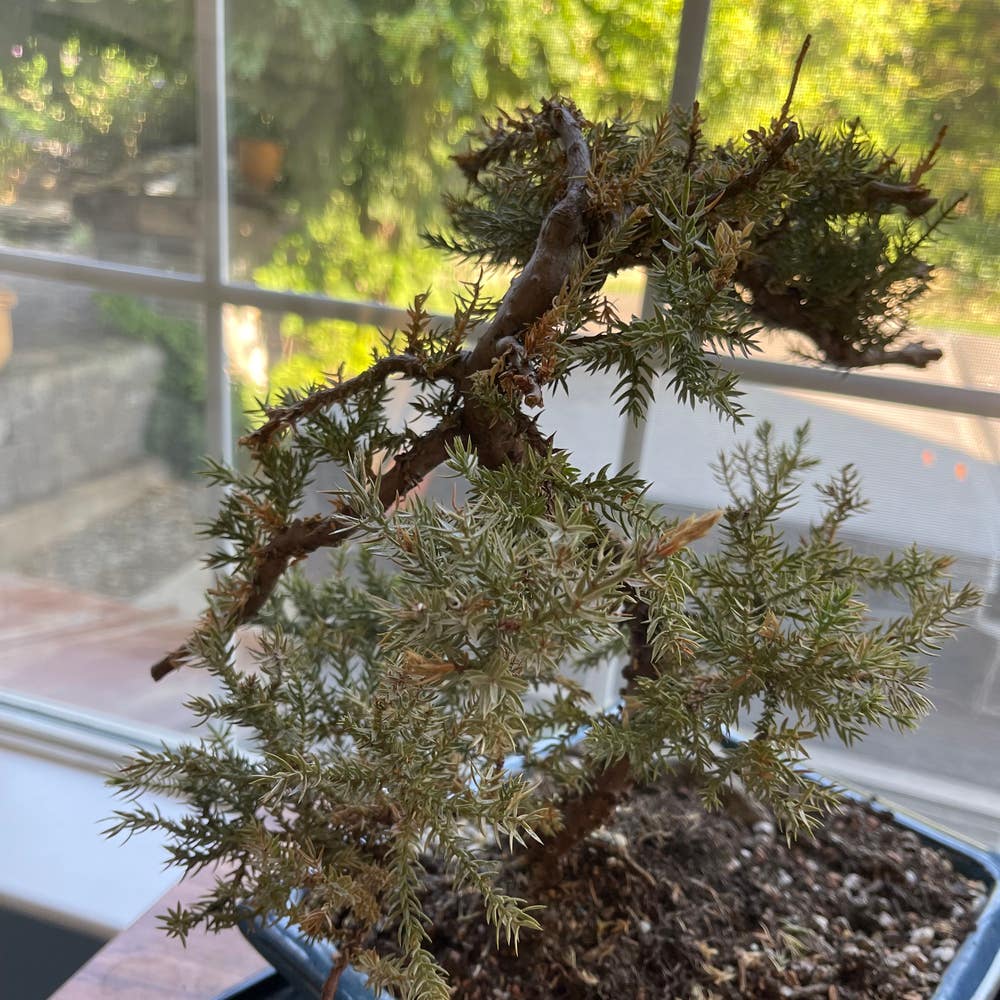
🔍 What to Do About Black Spots on Your Green Mound Juniper
Juniperus procumbens
By the Greg Editorial Team
Oct 17, 2024•6 min read
This article was created with the help of AI so we can cover more plants for you. May contain errors. See one? Report it here.
Revive your green mound juniper and banish black spots with essential diagnosis and treatment tips! 🌿
- 🔍 Inspect regularly for black spots and pests to maintain juniper health.
- 💧 Ensure proper watering and drainage to prevent root rot and black spots.
- 🌱 Use organic treatments like neem oil for effective black spot management.
Diagnosing the Problem
👀 Visual Inspection Techniques
Start by closely examining the affected leaves of your green mound juniper. Look for any changes in texture or color that might indicate a problem.
Next, assess the overall health of the plant. Observe its growth patterns and vigor to get a sense of how well it’s thriving.
Using a magnifying glass can be a game-changer. This tool helps you identify small pests or fungal spores that might be lurking on the leaves.
🌧️ Environmental Factors Contributing to Black Spots
Temperature and humidity levels play a crucial role in juniper health. Extreme conditions can lead to stress, making your plant more susceptible to issues.
Sunlight exposure is equally important. Adequate light helps prevent fungal growth, so ensure your juniper is getting enough sun.
Wind and air circulation are vital for reducing moisture retention. Good airflow can help keep the foliage dry and less prone to disease.
🌱 Soil and Watering Conditions Affecting Juniper Health
Soil drainage is essential for junipers. Ideal conditions prevent root rot, which can be detrimental to your plant's health.
Follow proper watering guidelines to avoid overwatering. Too much water can suffocate the roots and lead to black spots.
Testing soil moisture is a practical technique. Use your finger or a moisture meter to determine when it’s time to water, ensuring your juniper stays healthy.
By diagnosing these issues early, you can take proactive steps to protect your green mound juniper. Next, let’s explore treatment options to address any problems you uncover.
Treatment Options
🌱 Organic Treatments for Black Spots
Organic treatments can be a safe and effective way to combat black spots on your green mound juniper.
Neem Oil Application
Neem oil is a powerful natural remedy against fungal infections. To use it effectively, mix one to two tablespoons of neem oil with a gallon of water and spray it on the affected areas, ensuring even coverage.
Baking Soda Solution
A baking soda solution is another great option. Combine one tablespoon of baking soda with one gallon of water and a few drops of dish soap. Spray this mixture on the leaves to help eliminate black spots.
Benefits of Organic Treatments
Using organic treatments is not only safe for your juniper but also for the environment. They minimize harm to beneficial insects and surrounding plants, making them a responsible choice for gardeners.
⚗️ Chemical Fungicides for Junipers
When organic methods fall short, chemical fungicides can provide a more robust solution.
Types of Fungicides
There are several effective chemical fungicides available, including those containing chlorothalonil and propiconazole. These products target a range of fungal issues, ensuring your juniper gets the help it needs.
Application Guidelines
Timing is crucial when applying fungicides. Aim to treat your juniper during dry weather, ideally in the early morning or late afternoon, to maximize effectiveness and minimize evaporation.
Safety Precautions
Always take safety precautions when using chemical treatments. Wear gloves and a mask, and be mindful of nearby plants and beneficial insects to protect the ecosystem.
📝 Step-by-Step Guide to Applying Treatments
Applying treatments effectively can make all the difference in restoring your juniper's health. Follow these steps for the best results:
- Identify the type of black spots: Determine if they are fungal or pest-related.
- Choose the appropriate treatment: Decide between organic or chemical options based on your findings.
- Prepare the treatment: Mix solutions or ready fungicides according to instructions.
- Apply the treatment: Use a spray bottle or garden sprayer for even coverage.
- Monitor results: Check back in a few weeks to see if the treatment is working.
By following these guidelines, you can effectively tackle black spots on your green mound juniper and promote its overall health. Next, let’s explore preventive measures to keep your juniper thriving.
Preventive Measures
Best Practices for Watering and Drainage 💧
Watering your Green Mound Juniper correctly is crucial for its health. Aim for a schedule that aligns with environmental conditions, typically watering deeply but infrequently.
Improving soil drainage is equally important. Incorporate organic matter like compost to enhance drainage and prevent waterlogging.
Be vigilant for signs of overwatering. Yellowing leaves and a mushy root system are red flags that can lead to serious damage.
Importance of Air Circulation Around Junipers 🌬️
Proper spacing is key to ensuring good airflow around your junipers. Position them at least 2 to 3 feet apart to allow for optimal air circulation.
Pruning is another effective technique. Trim back excess foliage to enhance light penetration and airflow, which helps reduce humidity levels.
Good air circulation offers multiple benefits. It minimizes the risk of fungal growth and keeps your junipers looking vibrant and healthy.
Seasonal Care Tips to Prevent Black Spots 🍂
Spring is the perfect time for maintenance. Prepare your junipers for the growing season by checking for any signs of distress or disease.
During summer, keep an eye out for pests and environmental stressors. Regular monitoring can help catch issues before they escalate.
As fall approaches, focus on preparations for winter dormancy. Ensuring your junipers are healthy now will set them up for a strong comeback in spring.
By following these preventive measures, you can significantly reduce the risk of black spots and keep your Green Mound Juniper thriving. Next, let’s explore ongoing care and maintenance strategies to ensure long-term health.
Ongoing Care and Maintenance
🕵️♂️ Regular Inspection and Monitoring
Regular inspections are crucial for maintaining the health of your green mound juniper. Aim to check for black spots and pests at least once a week.
Keeping a care journal can be a game-changer. Documenting changes in plant health helps you spot trends and address issues before they escalate.
✂️ Pruning Techniques to Improve Plant Health
Timing is everything when it comes to pruning. The best time to prune junipers is in late winter or early spring, just before new growth begins.
Use sharp, clean tools for effective pruning. This not only ensures clean cuts but also minimizes the risk of disease.
Pruning encourages new growth and reduces disease risk. It’s a simple yet powerful way to keep your juniper thriving.
🌱 Fertilization Tips for Resilient Junipers
Choosing the right fertilizer is key. Look for formulations specifically designed for junipers, as they provide the necessary nutrients.
Timing your fertilization is equally important. Apply nutrients in early spring and again in late summer for optimal growth.
Watch for signs of nutrient deficiency, such as yellowing leaves or stunted growth. Recognizing these signs early allows you to act quickly and keep your juniper healthy.
By implementing these ongoing care strategies, you’ll set your green mound juniper up for success. Next, let’s explore preventive measures to keep those pesky black spots at bay.
⚠️ Safety First
This content is for general information and may contain errors, omissions, or outdated details. It is not medical, veterinary advice, or an endorsement of therapeutic claims.
Always consult a qualified healthcare professional before using any plant as food, medicine, or supplement.
Never eat any plant (or feed one to pets) without confirming its identity with at least two trusted sources.
If you suspect poisoning, call Poison Control (800) 222-1222, the Pet Poison Helpline (800) 213-6680, or your local emergency service immediately.
Spotted an error? Please report it here.
Keep your green mound juniper spotless 🌿 by using Greg's tailored care reminders and expert tips to monitor health and apply treatments effectively!